
Opinions
15:52, 08-Feb-2018
Opinion: Propaganda and Other Empty Words
 ["north america"]
Share






Copied

With YouTube labeling government-funded news sources, Google and Facebook censoring “fake news,” and the FBI, CIA, and the NSA calling Russia Today (RT) a “propaganda machine,” it all makes one wonder: What do terms like propaganda mean, and why are they being used?
Propaganda is a term that has many definitions based on who is defining it. To my former Chinese classmates, propaganda is the external communication of the government. To American Baby Boomers - a generation who lived during and throughout the Cold War - propaganda has an inherently evil connotation; a brainwashing technique used by the Nazis and the Soviet Union.
Merriam-Webster says that Pope Gregory XV first used propaganda to describe 17th century “Catholic missionary” activities. In his 1928 book Propaganda, Edward Bernays made propaganda secular, using the term to describe public relations and marketing. He later reverted back to “public relations” - a term he coined in his 1923 book Crystallizing Public Opinion - to describe it.

VCG Photo
VCG Photo
As a biographer of Bernays Larry Tye points out, his uncle - Sigmund Freud - influenced Bernays’ social engineering theory. Bernays believed in the libidinal desires of the subconscious, and none of his work better proved this than with the “Torches of Freedom” campaign. This campaign encouraged women that smoking was a way to becoming independent. His former work implied that women who smoke could be skinny, but this campaign struck a nerve at the essence of many women at the time: their liberation.
His career included working with the US Committee on Public Information. Here, he coined another term: “Psychological warfare.” Using the same tactics as later campaigns, he devised strategies that have been refined and used widely from everyone in the Psychological Operations (PSYOPS) branch in the military to the USSR. Even modern marketing owes a great deal to him, as group psychology would be nowhere without his work.
Propaganda is a term that has powerful ramifications. But why is it that RT is propaganda, but fast food commercials aren’t? If anything, fast food commercials are propaganda in its purest form: Using the viewer’s subconscious libidinal desires to convince them to think or act in a certain way. Despite this, one is more imminently dangerous than the other. One is just a commercial for a cheeseburger, and the other is a successful news outlet with a major following on YouTube.
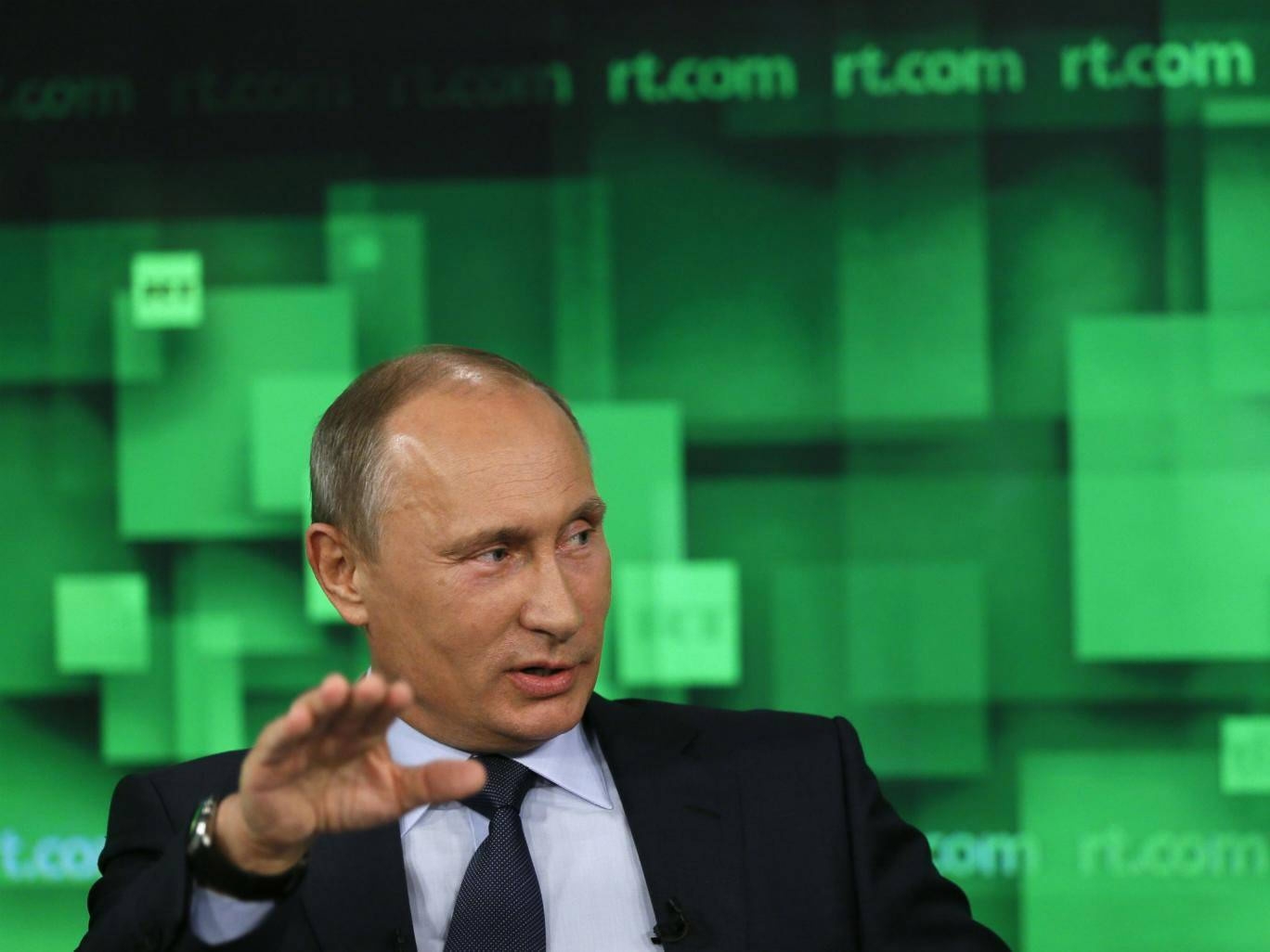
Russian President Vladimir Putin speaks during his visit to the new studio complex of Russia Today television network in Moscow, Russia. June 11, 2013. /Reuters Photo.
Russian President Vladimir Putin speaks during his visit to the new studio complex of Russia Today television network in Moscow, Russia. June 11, 2013. /Reuters Photo.
The recent decision to have RT register as a foreign agent and the even more recent decision for YouTube to notify users if a news outlet is funded by a government entity makes that decision for the audience. The both decisions are part of what one of Bernays’ contemporaries, Walter Lippmann, described as the manufacture of consent. Whereas Bernays saw news media as an opportunity to make money, Lippmann saw the potential for news media to fall under the control of public and private entities.
To place all of the blame onto sites like YouTube, Google and Facebook for reacting to misleading or “fake news” in the way they did shifts away from the imminent danger that the US press faces. They are just part of a paradoxical media landscape that says that news media simultaneously affects wholly, while also not at all. Alternative news sources like RT America use psychological warfare to brainwash their viewers, while establishment media like CNN or Fox News can’t affect their viewers even if they tried.
Pinning this all on the establishment is another simplification of the issue. The establishment that is encouraged to do this is the same one that works to vindicate it. Viewing structures like neoliberalism in Freudian terms as a creation of a biological libidinal force overlooks the importance of the results. Bernays did not consider this as he, unlike Lippmann, only saw the opportunity to contribute to profit motivations. The other side of Bernays’ methods is the enabling of manipulation to take place.
Instead of words like propaganda having a clear meaning, they are empty vessels that are defined when stated. In the case of propaganda and fake news, they are vessels that seek to reinforce the establishment. Trump uses fake news to delegitimize CNN and other outlets, and then these outlets use it in a similar way. There are no winners of using these words.
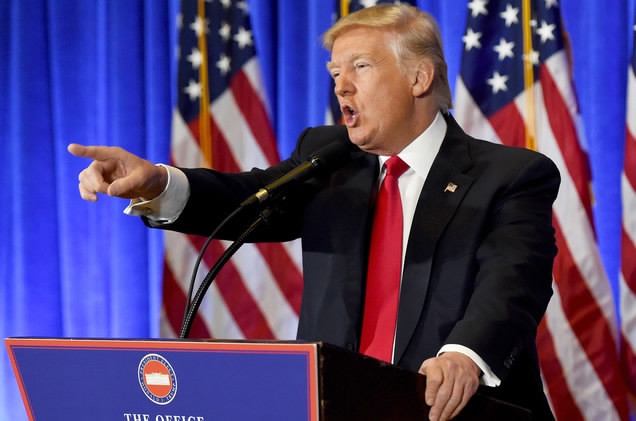
US president Donald Trump speaks during a press conference at Trump Tower in New York City, the US, Jan. 11, 2017. /AFP Photo.
US president Donald Trump speaks during a press conference at Trump Tower in New York City, the US, Jan. 11, 2017. /AFP Photo.
What is left is the media and the government using language that is becoming further distanced from the truth. Perhaps most importantly: Their power is threatened and so they have to use this language to say that the individual is incapable of choosing a news source.
(Timothy Ulrich is a copy editor at CGTN for general news, a science fiction author, and produces a podcast. The article reflects the author's opinion, and not necessarily the view of CGTN.)