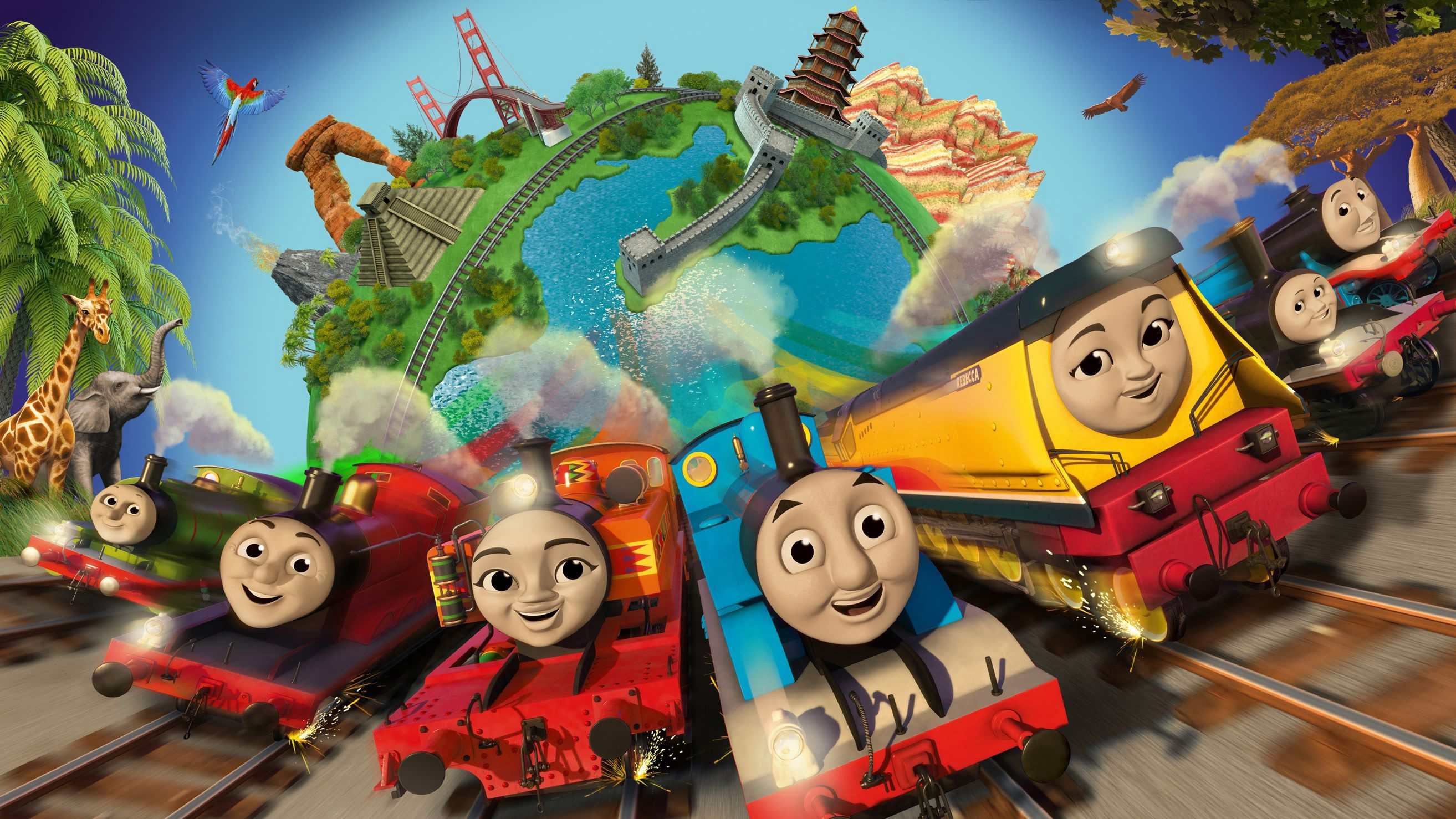
Thomas the Tank Engine is poised to zoom into a new age of diversity and gender equality next year with characters from China, India, Africa and Australia including two new female steam engines making their debut.
The 2018 season of the popular British children’s TV animation series will see Thomas leaving the fictional island of Sodor in the Irish Sea for the first time to visit real countries and experience new cultures including China, India and Australia, according to the brand Mattel, which owns the Thomas brand.

A screenshot of Thomas & Friends' official Twitter announcing the new season.
A screenshot of Thomas & Friends' official Twitter announcing the new season.
During his adventures across continents, Thomas will make new friends - Ashima from India, Yong Bao from China and Shane from Australia.
“Thomas & Friends” is the television spin-off of “The Railway Series” books by English vicar Reverend Wilbert Awdry. With steam engines Nia and Rebecca making debuts in the next season, the series will have three girls and four boys in the Steam Team, replacing the previous crew which had only one girl, according to Mattel.
The major overhaul had come after research involving hundreds of parents and children and even the United Nations. In all, the company spent about two years working on the makeover.
“It’s such a huge shift. We want to make sure we’re here another 70 years,” Kate Schlomann, a vice president of branding at Mattel, was quoted as saying in an AP report.
Nia, Rebecca brings gender equality

Nia is the first tank engine from Africa in "Thomas & Friends: Big World! Big Adventures!" Nia's engine design is based on the East African Railway's ED1 class and her decoration was inspired through research of African prints and textiles. /Photo Mattel, Inc. via AP
Nia is the first tank engine from Africa in "Thomas & Friends: Big World! Big Adventures!" Nia's engine design is based on the East African Railway's ED1 class and her decoration was inspired through research of African prints and textiles. /Photo Mattel, Inc. via AP
Nia, an engine from Kenya, will make her debut next summer in the movie “Big World! Big Adventures!” and then join the TV series in the fall. AP reported that experts at the UN advised producers with Nia’s name - it means “purpose” in Swahili - and helped select the African pattern that runs across Nia’s body.
Nia's engine design is based on the East African Railway's ED1 class and her decoration was inspired through research of African prints and textiles. “When you’re designing an engine from any country, you want to be spot on,” Schlomann said.
Rebecca’s origins are less exotic. She’ll come from the Mainland near the fictional island of Sodor. She’ll first appear on screens in the TV series next fall. Henry and Edward will be ousted from Tidmouth Sheds to make way for the two new girls, but the boy engines will still appear on the show from time to time, AP reported.
“We have added new female characters before, but I think, with a show like Thomas, they tend to fall into the background after initial introduction,” Ian McCue, a “Thomas & Friends” producer told AP. “What we wanted to do here was really bring these two female characters to the forefront.”

Rebecca is one of two new female characters to join the new Steam Team in the 2018 series. The newly aligned Steam Team will now consist of four boys and three girls, giving the show more gender balance. /Photo Mattel, Inc. via AP
Rebecca is one of two new female characters to join the new Steam Team in the 2018 series. The newly aligned Steam Team will now consist of four boys and three girls, giving the show more gender balance. /Photo Mattel, Inc. via AP
Thomas will meet other female characters, such as an airplane in Australia. And in India, there’s a female train controller in charge of the railway, another first for the show, Mattel said. “Gender equality is something that’s really important to us in this new series and going forward,” said producer Micaela Winter.
Viewership of “Thomas & Friends” is evenly split between girls and boys, AP reported, quoting Mattel. Girls are also more likely than boys to watch the series every week, it said. Girls will be in more Thomas toy commercials and on the box. Nia toys will be on sale next fall after the movie release, and Rebecca toys will follow in 2019. More T-shirts, pajamas and bed sheets will be aimed at girls, the report said.
Increasing push for diversity
The new multiracial and girl-friendly edition "maintains all the core values and attributes that have kept 'Thomas & Friends' on track for over 70 years, but it broadens Thomas' world to reflect the global community in which we all live," Christopher Keenan of Mattel Creations was quoted as saying by AFP.
At a MIPJunior debate on diversity, Keenan stressed that "children's entertainment has an enormous responsibility to lead the way. We are talking about the global citizens of tomorrow. I think it is important for us to boldly go where no toy company has ever gone before."
Mattel has made changes to its other toy brands in an attempt to be more inclusive and appeal to today’s parents. Barbie and Ken dolls now come in different skin colors, body shapes and hair types. And the first boy doll was added to the American Girl lineup earlier this year.
The latest move could be seen in line with the increasing push for diverse representation in movies, including animation films.

Last year, Hollywood Reporter’s annual animation roundtable drew severe flak for having an all-white male panel for a discussion on “Avoiding Ethnic Stereotyopes and How to ‘Break the Mold’ of Princesses.” /Photo Twitter @senari
Last year, Hollywood Reporter’s annual animation roundtable drew severe flak for having an all-white male panel for a discussion on “Avoiding Ethnic Stereotyopes and How to ‘Break the Mold’ of Princesses.” /Photo Twitter @senari
While the animation industry has made rapid strides towards breaking cultural stereotypes in recent years through films such as “Moana” and “Coco”, in an ironical incident last year, Hollywood Reporter’s annual animation roundtable drew severe flak for having an all-white male panel for a discussion on “Avoiding Ethnic Stereotypes and How to ‘Break the Mold’ of Princesses”.
Despite the irony of the event, prominent women members of the animation industry still believe that there is a genuine all-round effort towards seeing diversity in films and television.
“Unfortunately, we saw only seven white males at the [Hollywood Reporter] roundtable but there is definite proof of diversity in films and TV – for example, my story. I'm female and English is not my first language. But I made a pilot with Amazon about a coming-of-age story, which has a female protagonist who drives a flying ship,” Seoul-born artist Niki Yang told Elle Magazine.
Asian-American filmmaker Emily Dean felt that while the industry wants more diversity the decision-makers don't want to risk hundreds of millions of dollars on a first-timer. “The system has historically not supported minorities into roles where they have acquired the necessary creative, technical, and leadership experience to give the studios confidence that they could successfully helm and deliver a large-budget film,” she told Elle.
Breaking the mold
A 2015 study from the Media, Diversity, & Social Change Initiative at the University of Southern California, shows that while most Hollywood movies are still about straight white men, animated films have seen an increase in speaking characters that don't fit that tired, old description.

Set in the South Pacific with a Polynesian protagonist, "Moana" is one of the most culturally diverse animation films of recent times. /Photo Walt Disney Animation Studios
Set in the South Pacific with a Polynesian protagonist, "Moana" is one of the most culturally diverse animation films of recent times. /Photo Walt Disney Animation Studios
With films like "The Book of Life", "Inside Out", and "Home" giving voices to often marginalized characters, animation is championing more inclusive storytelling - and it's only going to get more diverse from here, the report said.
With “Moana”, Disney attempted to break the mold of its most iconic princesses who have for long been portrayed as white and thin.
“Moana”, on the other hand is a Polynesian princess who sails out on a daring mission to fulfill her ancestors' unfinished quest. Set in the South Pacific and paying tributes to the region’s rich history and cultural traditions, "Moana" is one of the most culturally diverse animation films of recent times.
"It's very important to us... to have female and ethnic characters," Disney animation head John Lasseter had said before “Moana” was released. "It's grown in importance over time. As you'll see in future films, we're really paying attention to that," he added.
Oscar-winning animator Brenda Chapman in an interview with Elle acknowledged that there is a trend at the moment to bring in more diversity but whether it’s truly changing for the better or just a current fad is yet to be seen.
“There are certainly more young women in film schools now, yet the rate of growth on the professional side of things for women hasn't come close to matching that. We still have a long way to go. But it seems to be getting better, even if it moves more slowly than it should,” Chapman said.
(With input from agencies)

 ["europe","china","africa"]