Berlin tackles Germany's dark colonial past... via street signs
By Sim Sim Wissgott
["europe"]
Share
Copied
Local councilors in Berlin agreed this week to rename three streets in the city’s African Quarter seen as glorifying Germany’s colonial past.
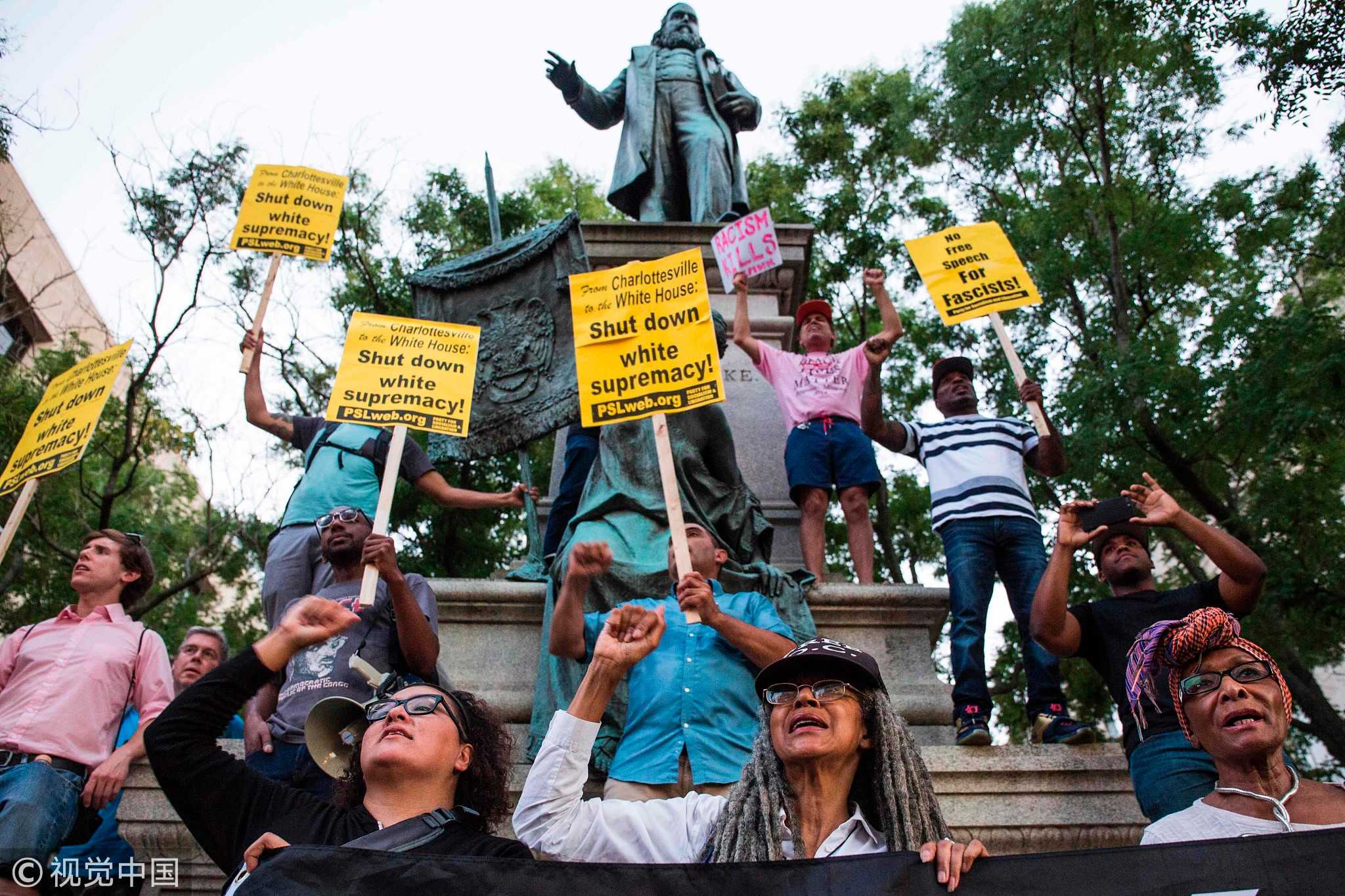
In the US, a debate has been raging over whether to tear down Confederate monuments and rename streets and squares honoring proponents of segregation and slavery, culminating in violent clashes in Charlottesville last summer.
As former colonial powers grapple with dark pages of their history, efforts have multiplied to scrub controversial names off street signs, even as others argue that this amounts to a bigger cover-up of history than keeping distasteful figures in full sight.
Demonstrators stand in front of the statue of Confederate General Albert Pike on August 13, 2017 in Washington, DC, the only member of the Confederate military with an outdoor statue in the US capital. /VCG Photo
Demonstrators stand in front of the statue of Confederate General Albert Pike on August 13, 2017 in Washington, DC, the only member of the Confederate military with an outdoor statue in the US capital. /VCG Photo
Here is a quick look at the arguments being voiced and some of the cities and countries discussing changes.
African Quarter, Berlin
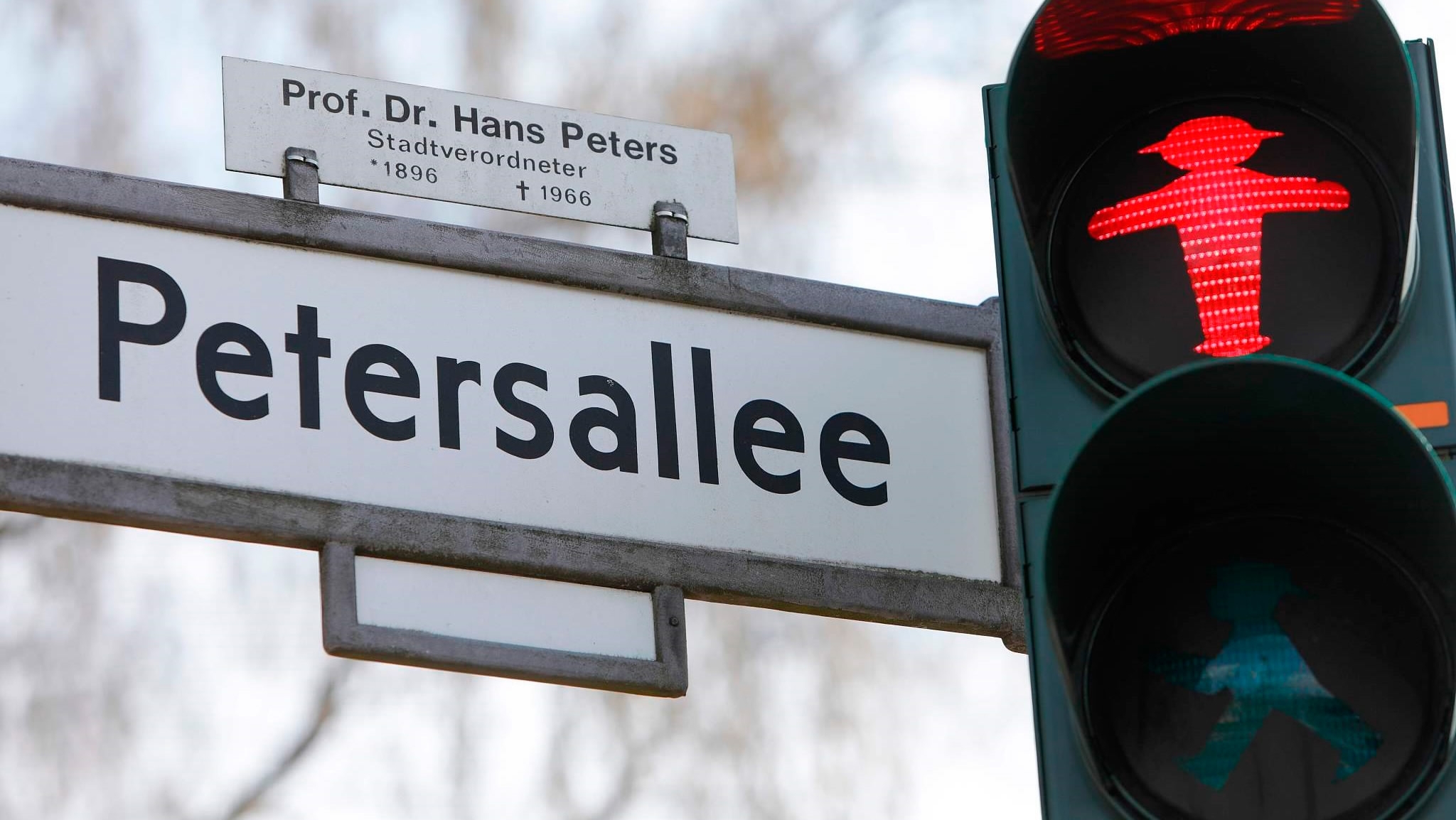
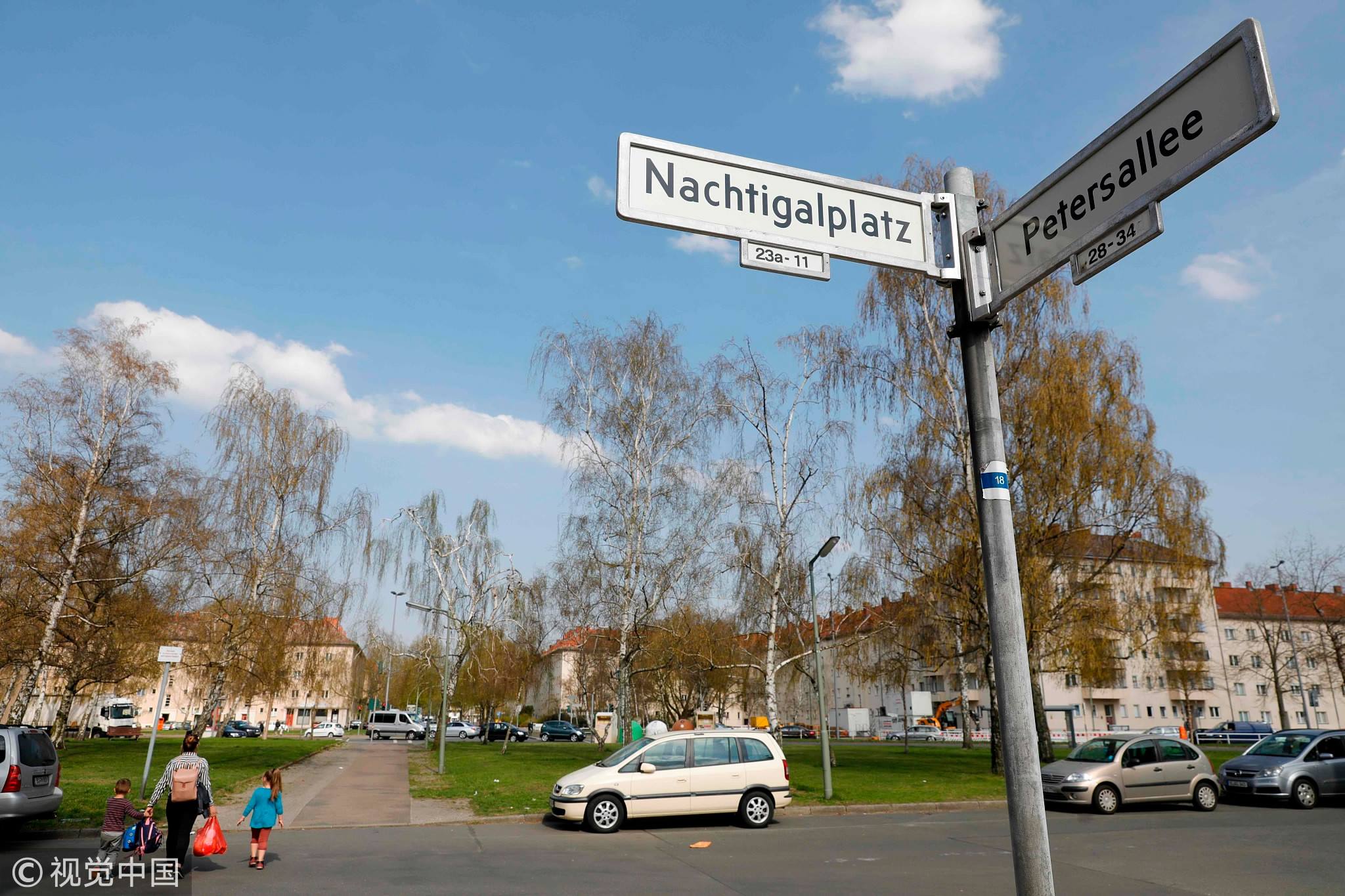
On Wednesday, city councilors in Berlin approved name changes for three streets in the hip multi-ethnic neighborhood of Wedding. Gone will be Petersallee, Lüderitzstraße, and Nachtigalplatz – named after Carl Peters, Adolf Lüderitz and Gustav Nachtigal, German colonialists in Africa in the late 19th and early 20th century.
In their place will be streets paying tribute to Anna Mungunda, a Namibian national hero, Cornelius Frederiks, the leader of an uprising in German South West Africa in the early 1900s, and Maji-Maji-Allee, in honor of the armed revolt against colonial rule in German East Africa in 1905-1907.
Street signs with the names Petersallee and Nachtigalplatz in the African Quarter of Berlin, Germany, April 12, 2018. /VCG Photo
Street signs with the names Petersallee and Nachtigalplatz in the African Quarter of Berlin, Germany, April 12, 2018. /VCG Photo
“The African Quarter continues to glorify colonialism and its crimes. This is incompatible with our understanding of democracy and damages in the long-term the reputation of the city of Berlin,” the councilors said in a statement, quoted by the daily Der Tagesspiegel, to explain their move.
Montreal, Bristol and Charlottesville
Berlin is not the only city seeking to right old wrongs with new names on streets and buildings.
Montreal, Canada announced last year it was removing the name of Jeffery Amherst, an 18th-century British general, from a street in the city center.
Amherst, whose name also adorns a university in Massachusetts and towns and streets around the US and Canada, repeatedly called for the extermination of indigenous people, advocating the use of smallpox “to extirpate this execrable race."
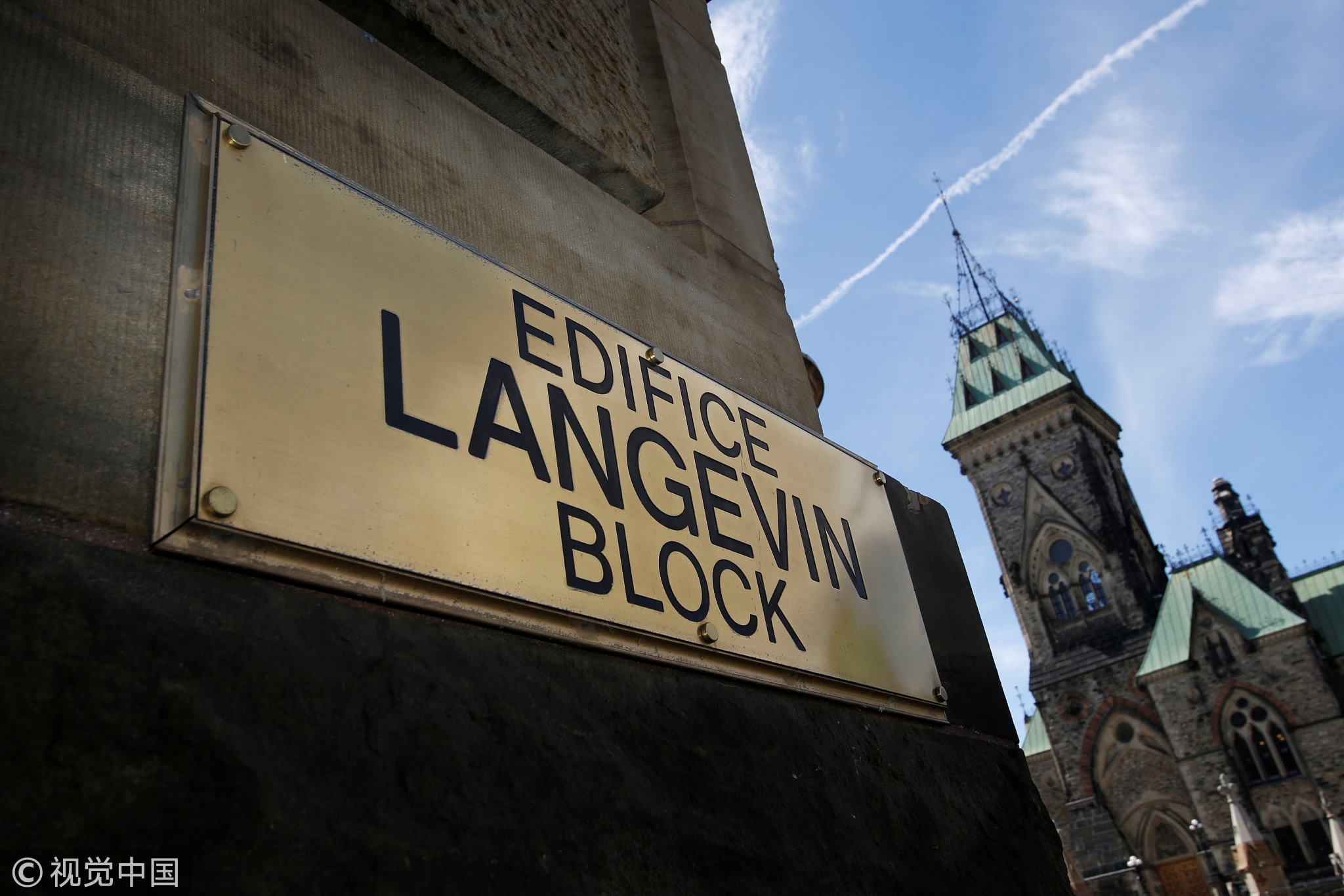
Canadian Prime Minister Justin Trudeau also dropped the name of Hector-Louis Langevin – who helped set up the residential school system, which tore indigenous children from their parents to assimilate them into Canadian culture – from the building housing his office.
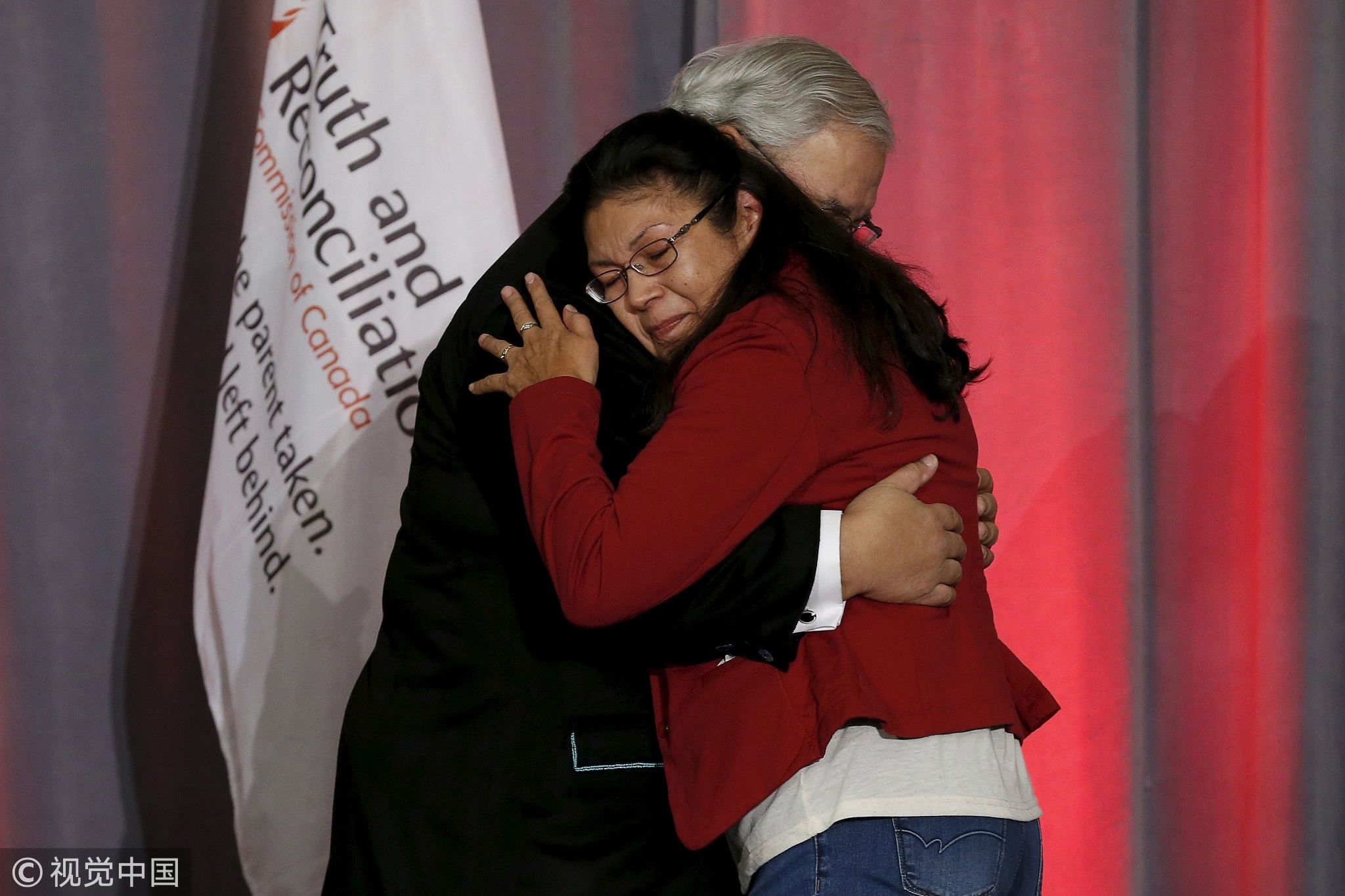
Residential school survivor Madeleine Basile (R) hugs Justice Murray Sinclair during the release of the Truth and Reconciliation Commission's final report in Ottawa, Canada, December 15, 2015. /VCG Photo
Residential school survivor Madeleine Basile (R) hugs Justice Murray Sinclair during the release of the Truth and Reconciliation Commission's final report in Ottawa, Canada, December 15, 2015. /VCG Photo
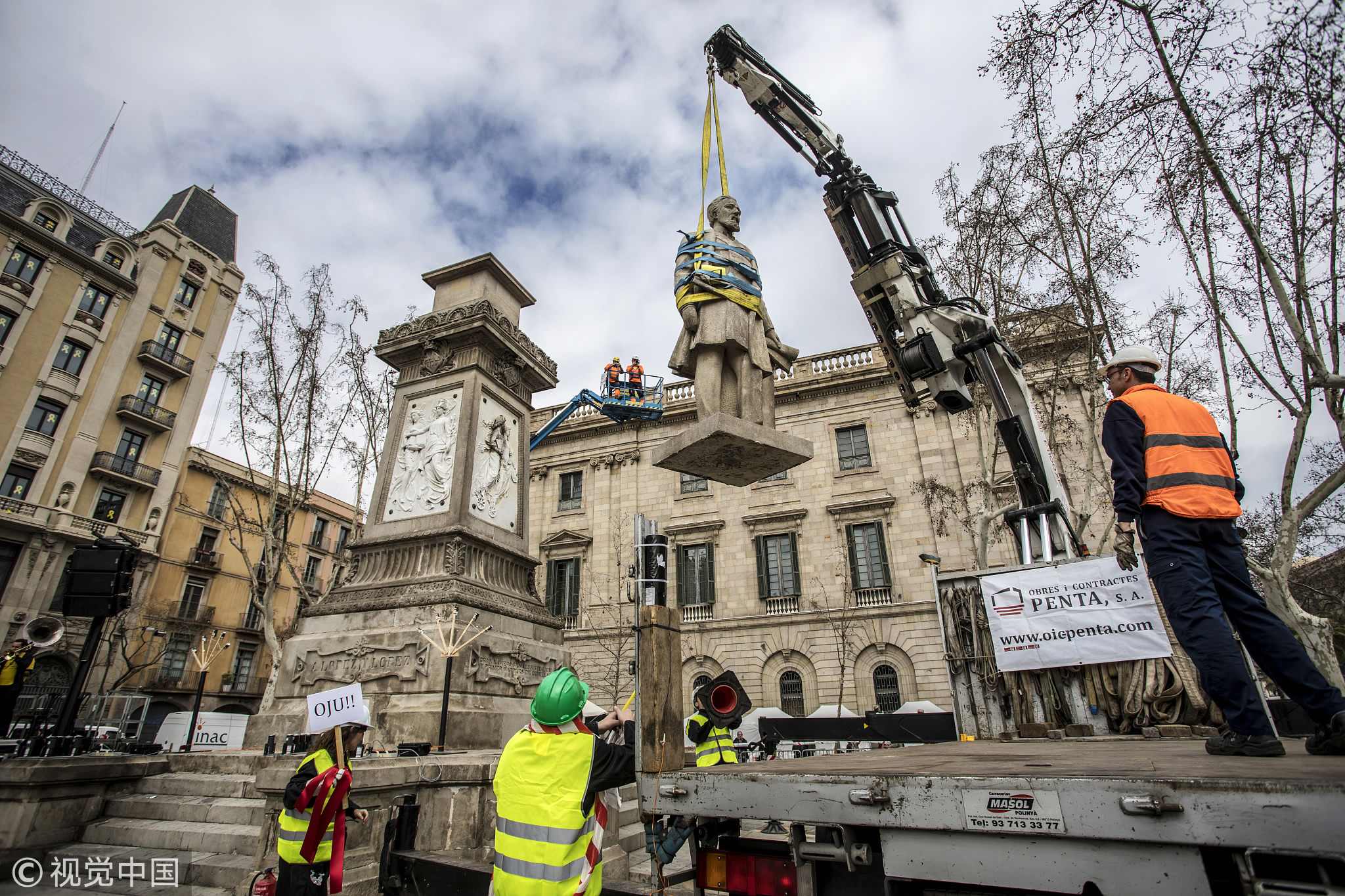
Meanwhile, the Spanish city of Barcelona took down last month a statue of Antonio López, a wealthy slave merchant, after pressure from social media groups.
The Colston Hall concert venue in Bristol, in southwest England, is due to reopen under a new name to avoid awkward links with Edward Colston, another 17th-century slave trader.
And in the US, the names and statues of Confederate heroes like General Robert E. Lee and Stonewall Jackson have been removed from schools and parks over the past few years following a major backlash.
To keep or not to keep?
“We’ve had, in the end, a public culture that has been relatively unreflective of the post-colonial moment, and that’s no longer a tenable position,” Nicholas Draper, an expert on the British slave trade at University College London, told the Guardian newspaper last year.
A sign is pictured outside Langevin Block, across from Parliament Hill, in Ottawa, Ontario, Canada, June 21, 2017. /VCG Photo
A sign is pictured outside Langevin Block, across from Parliament Hill, in Ottawa, Ontario, Canada, June 21, 2017. /VCG Photo
Two French authors have now compiled a “Guide du Paris colonial et des banlieues” (Guide to colonial Paris and its suburbs), listing place names with links to the country’s colonial past.
These include streets honoring Thomas Robert Bugeaud, Bertrand Clauzel or Jean-Baptiste Colbert – known for their brutal subjugation of Algeria and for encouraging slavery – according to co-author Patrick Silberstein.
Around France, similarly controversial place names can be found in over a dozen port cities that were involved in the slave trade, from Le Havre in the north to Nantes and Bordeaux on the west coast, according to Memoires & Partages, a group looking at France’s colonial past.
But whether or not authorities should scrub controversial names off the map is a subject of heated debate.
The city council of Barcelona, Spain, withdraws the statue of Antonio Lopez, a famous slave merchant who built his wealth on the trafficking of slaves, March 4, 2018. /VCG Photo
The city council of Barcelona, Spain, withdraws the statue of Antonio Lopez, a famous slave merchant who built his wealth on the trafficking of slaves, March 4, 2018. /VCG Photo
For rights campaigners and minority representatives, keeping up the names of former slave owners, colonialists and segregationists – even when most people do not remember who they are – amounts to celebrating oppressors and war criminals.
For others, removing all trace of figures with a distasteful past is like whitewashing history.
One solution is to put up explanatory plaques to explain the origins of disputed street names.
“If we rename, we’re erasing our memory,” Memoires & Partages founder Karfa Diallo, who backs this solution, told French daily Liberation. “The names of slave traders must remain so that nobody forgets the crimes that were committed,” he said.
Former colonial powers still have dozens of place names honoring dubious historic characters. Amherst Street may no longer exist in Montreal, but Canada still has the towns of Amherst Cove and Amherst Island. Bristol still has a Colston Street and Colston Avenue and there are a myriad of place names commemorating Confederate heroes in different parts of the US.

 ["europe"]