
21:48, 21-Jun-2019
New Profession: Data labellers lay the groundwork for AI technology
Updated
17:16, 09-Jul-2019

Share






Copied
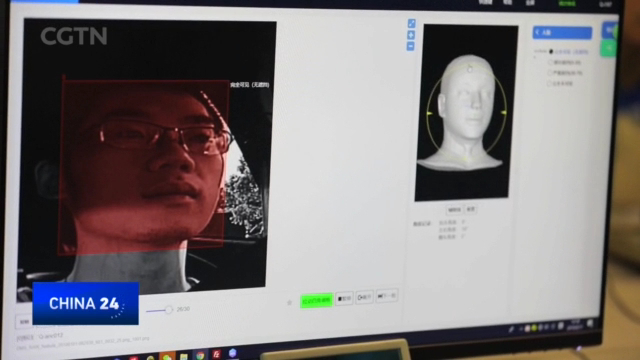
Technological advancements and automation have put many manual jobs at risk. But there's one labor-intensive job that's burgeoning as a result of artificial intelligence. Cui Hui'ao tells us more.
With a keyboard and mouse, 22-year-old Lin Xue is labelling every object on this traffic photo, whether it's cars, trucks, or buildings.
This is data-labelling, an offshoot of artificial intelligence that emerged four or five years ago. It essentially teaches machines to learn what humans already know, preparing them to perform complicated tasks like autonomous driving.
LIN XUE DATA LABELLER "My job is to familiarize machines with the real environment on the road, helping it recognize things like traffic lights, pedestrians, and railway platforms."
There are more than a hundred labellers like Lin at this office. Accuracy is a key measurement on performance.
DU LIN CEO, BASIC FINDER "For example, if you annotate autonomous driving scene, if you make some mistakes, the (next) second the car will make some accidents."
Du says one big challenge in the AI world is how to train machines to deal with unpredictable scenarios. The current industry solution is to compensate with more data for machines to learn. And this means more labellers are needed for the groundwork.
CUI HUI'AO BEIJING "Some have dubbed data labelling a new kind of blue-collar job in the AI era. But according to Du, this is a misconception. As tasks on the job are becoming more and more complicated, highly skilled data labellers are finding themselves in increasingly high demand."
For instance, reading cells and bone structures of an MRI image is now a task that falls to data labellers, a result of the medical industry tapping into AI technology. This is why both fast learners and specialized professionals are desperately needed by data companies like Du's.
DU LIN CEO, BASIC FINDER "I always tell them you are making the revolution for AI because each of your input, your annotation, you are converting your intelligence to artificial intelligence."
And for Lin Xue, this is exactly what keeps at this job - that she can be part of perhaps the greatest technological advancement this century. Cui Hui'ao, CGTN, Beijing.