
14:41, 14-Aug-2019
Highlight - CPC policy-making is refined by CPPCC

Share






Copied

Since it launched reform and opening-up four decades ago, China has transformed itself from a backward economy to now the world's second largest.
China's remarkable success has benefited from the Communist Party of China (CPC)'s approach to policy-making, which seeks to be responsive to feedback from the Chinese people, with leaders correcting mistakes and updating measures as they gain new information.
Such approach is exemplified by the Chinese People's Political Consultative Conference (CPPCC), an important organ for CPC-led multiparty cooperation and political consultation. It is a major channel for soliciting advice from influencers in different fields and from the general public to refine the CPC's policy-making.
In the 2019 Two Sessions, political advisors in the CPPCC submitted 5,113 proposals, ranging from the "three critical battles" against major risks, poverty and pollution to developing artificial intelligence.
For example, Baidu CEO and CPPCC member Robin Li Yanhong called for more government-led research and design of ethical issues related to artificial intelligence.
"Society can benefit more from AI through establishing a set of ethical norms and dealing properly with the new relationship between humans and machines," Li said in his speech at a plenary meeting of the second session of the 13th CPPCC National Committee.
With the rapid development of science and technology in recent years, the CPPCC has brought artificial intelligence into the agenda of the two sessions. In the 2019 Two Sessions, Premier LiKeqiang included AI in the government's work report for the third time.
And there are other proposals which related to the livelihood of the people from the CPPCC that have been taken seriously by the CPC, for example, streamlining government and delegating authorities, reforming price, controlling pollution, etc. In terms of supervising China's economic and social development and refining the policy-making of the CPC, the CPPCC has played an important role.
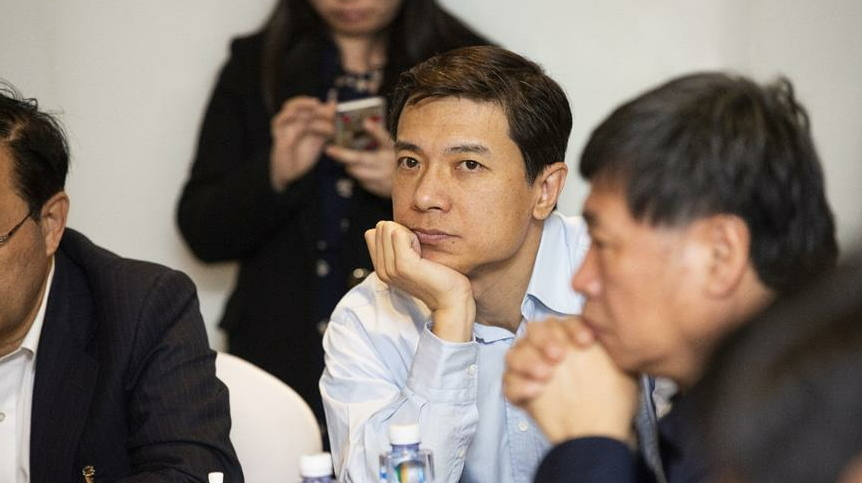
Robin Li Yanhong, Baidu CEO and member of CPPCC, at a plenary meeting of the second session of the 13th CPPCC National Committee. /VCG photo
Robin Li Yanhong, Baidu CEO and member of CPPCC, at a plenary meeting of the second session of the 13th CPPCC National Committee. /VCG photo
As socialism with Chinese characteristics has entered a new era, how to further enhance the role that the CPPCC plays in CPC's policy-making? Robert Lawrence Kuhn explores this question with Li Junru, former vice-president, Party School of the CPC Central Committee.
According to Minister Li Junru, after the 18th CPC National Congress, several documents were issued to guide the CPPCC to better exercise its rights and responsibilities of consultation and supervision.
CPC General Secretary Xi Jinping stressed that the CPPCC should not only supervise economic and social development, but also should shoulder two more responsibilities: supervise Party building and the legislative process.
To serve the central tasks of the Party, the CPPCC should perform better in carrying out its dual responsibilities of offering suggestions and building consensus, and should carry out its political responsibilities of implementing the CPC Central Committee's decisions and plans and of pooling the wisdom of all Chinese people.
All political advisors must strengthen their sense of responsibility, continue to give full play to their strengths and offer suggestions on major issues concerning high-quality development in every aspect so as to generate momentum for building China into a stronger country.