
22:16, 03-Aug-2018
China Income Taxes: People looking for higher monthly deductions
Updated
22:02, 06-Aug-2018
 []
[]
Share







Copied
02:23
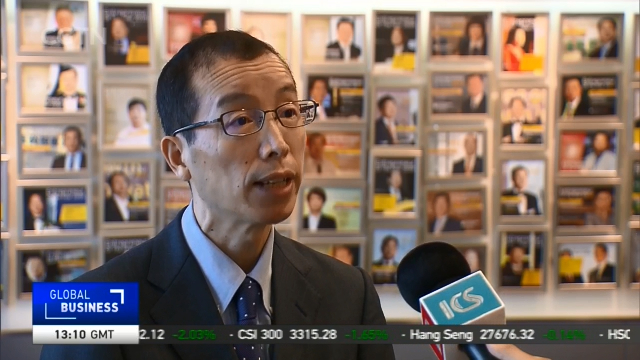
The National People's Congress two months ago asked for comments on a proposal to increase China's personal income tax exemptions. Guess what? They got 130,000 replies with people looking for higher monthly deductions, from 3,500 yuan to 5,000 or even more. Yu Wen takes a closer look.
Since the introduction of personal income tax exemptions in 1980, China has seen the threshold for income taxes raised three times -- from 800 yuan a month to 1,600 yuan in 2006, then to 2,000 yuan in 2008, and finally to 3,500 yuan in 2011. Will people get another break this year? No question, the Shanghai street is in favor of the idea.
Of course that would be good news for me. I think the higher the better, it's only a question of when they implement it.
I'm for the rise. Six thousand yuan would be good for me. Prices are going up, and an increase would give us more spending money.
According to figures from the National Statistics Bureau, inflation continues to rise. Experts say a fixed personal income deduction is not necessarily the best option, and many favor a more dynamic approach, which would have the advantage of helping the government with the reallocation of income.
FREEMAN BU, TAX PARTNER EY "Living costs for clothing, food, housing, and transportation have risen a lot. I personally don't think the threshold will reach 6,000 yuan this time. I favor a dynamic system of personal tax exemption should be introduced, based on changing prices and living costs. The basic principle of income re-distribution is to raise the level of low-income group, to enlarge the size of the medium-income group, and to regulate the income of the high-income group. There are several ways to do this -- personal income taxes, and asset taxes, like the real estate tax that is being studied. These would narrow the gap between the rich and poor."
The National People's Congress is still discussing whether a new personal tax exemption should be a single standard to be applied nationwide, or whether different income levels across the country should also be considered.