
19:50, 02-Oct-2018
Asian Idol Industries: Reality talent shows provide big stage for young artists to shine
Updated
19:38, 05-Oct-2018
 []
[]
Share







Copied
03:45
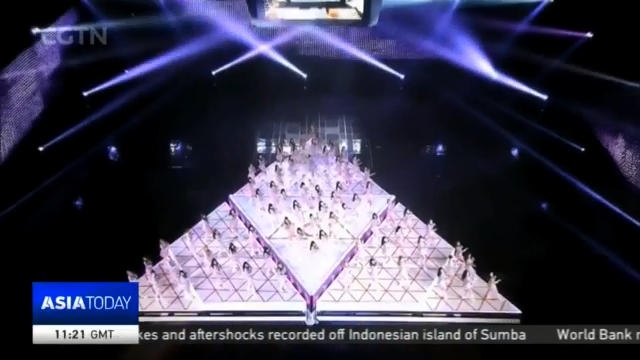
A music audition show in South Korea is turning heads all over Asia. Contestants are professionally-trained entertainers still waiting for their big break. From album sales to world tours, winners go on to dominate the charts. And as Joseph Kim reports, the show is changing the industry.
The dancing, singing and look of South Korea's K-pop music has caught the attention of the world. And this is one of K-pop's biggest stages. It's called Produce 101, a music survival show for young aspiring talents. I had the chance to sit down recently with two former winners to find out what it's all about.
"You both were on Produce 101, what was your experience like?"
KIM DO-YEON MEMBER OF WEKI MEKI "All the activities I'm currently in is all thanks to the program. Even this interview we're doing."
CHOI YOO-JUNG MEMBER OF WEKI MEKI "Thanks to the program, we went abroad for the first time and were able to meet international fans for the first time. It was surreal because they were holding up signs with my name written in Korean! And when I saw that, it was so emotional."
It's rare for K-pop trainees to receive name recognition. But together, Do-yeon and Yoo-jung have debuted as part of the eight-member girl group, Weki Meki. And off the stage, they can be seen modelling everything from clothes to cosmetics. This is what makes Produce 101 stand out. Contestants are professionally trained to become stars for years, under what's called an 'idol system'. The show partly unveils what happens within this system, giving viewers more of a sense of ownership over these young boys and girls, especially since so few ever make it.
KIM DO-YEON MEMBER OF WEKI MEKI "People have told me, that when they watch the show, it's sad. That they want to become the caretakers of the contestant because we're going through so much hardships but through their voting, they can debut us. And it gives them that desire."
And according to industry insiders, the program has replaced the A&R process and by doing so, has levelled the playing field.
HONG YUNE-HYUK PRODUCER, MBC PLUS "These programs were made with the intention to allow idols from different labels to come out more because the industry is so centered around SM, JYP and YG."
JOSEPH KIM SEOUL "It's interesting to see the impact the Produce series has had. It's created a platform for countless boy bands and girl groups, who trained for years to receive rare limelight, which has typically only been given to big labels such as JYP, SM and YG. However, K-pop trends and audiences are fickle, but the lasting by-product of the Produce series is that it's sped up the process by which these young acts have to become perfect and camera-ready."
They're called idols and as the name suggests, they're expected to uphold a spotless image. There are concerns, however, that despite being very young, these new stars have to handle the pressure and stress of celebrity almost overnight—while being at risk of exploitation. Some say it's a small price to pay for fame.
KYOUNG WON-GYEONG STUDENT, WEKI MEKI FAN "We traveled to Japan to see Weki Meki this past May so of course we came here today."
This success is why many feel the rigid idol system is vindicated, perpetuated by management and fans alike. And evidence shows the popularity of K-pop is still growing.