
Opinions
22:53, 28-Jan-2018
Can China and the US play nice?
 ["china"]
Share







Copied

The world is talking about trade – free trade, fair trade and the future of trade.
But what is happening in trade? The US just imposed a 30-percent tariff on solar panels from other countries. But will makers of solar cells go back to the US because there are low taxes and high tariffs? I've spoken to GCL, one of the largest panel makers in China. Their answer is "probably not," because they won’t make money.
Globalization is a game - there are winners and losers. For example, when China trades with the US, Chinese producers and US consumers benefit. Some US and Chinese workers are losing their jobs because they are not competitive enough.
But that is not the end of the world. All trade policies are local. A wise politician knows how to clean the house, spread the benefits and empower the weak. That is what China is doing: Re-training and re-employing its workers!
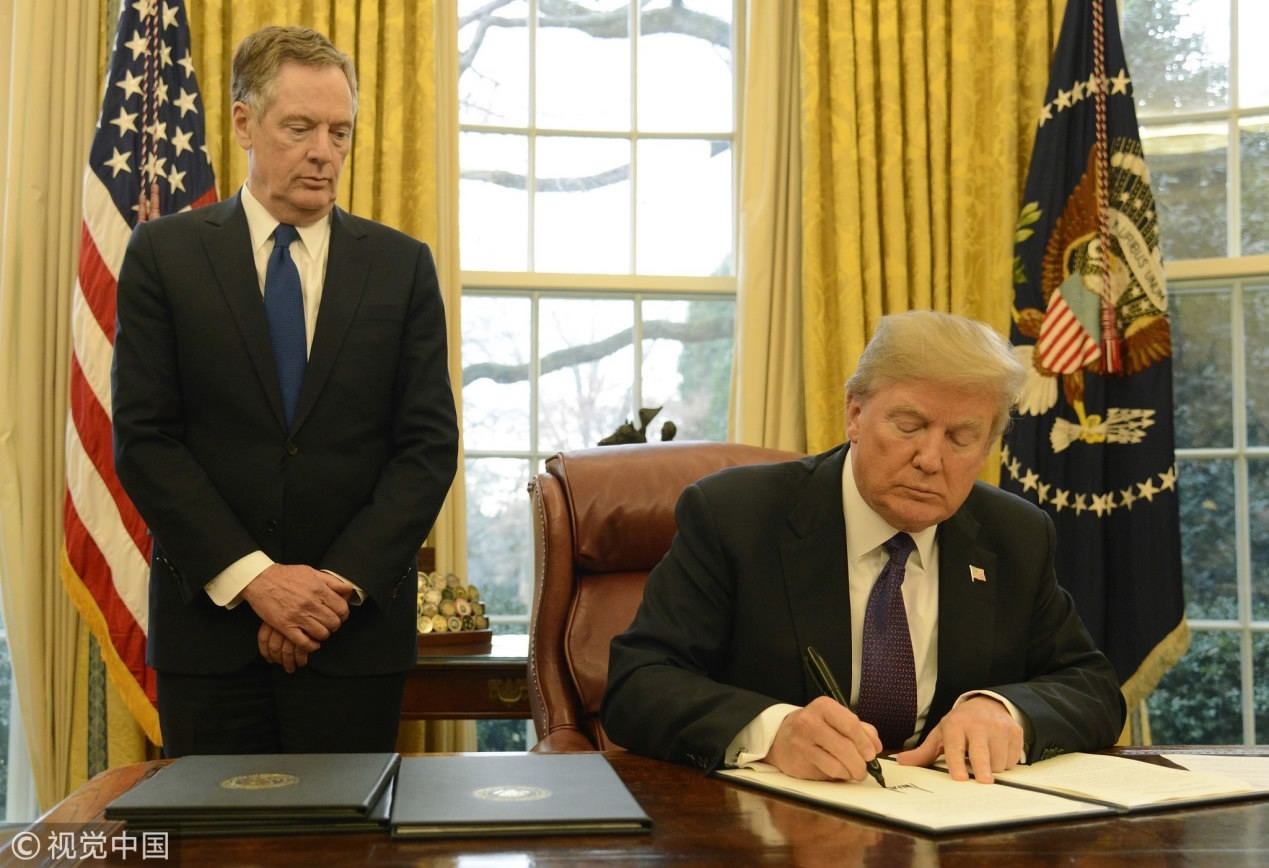
President Donald Trump (R) signs a Section 201 action as US Trade Representative Robert Lighthizer (L) looks on, at the White House, Washington DC, Jan. 23, 2018. /VCG Photo
President Donald Trump (R) signs a Section 201 action as US Trade Representative Robert Lighthizer (L) looks on, at the White House, Washington DC, Jan. 23, 2018. /VCG Photo
So Mike from Toledo, Ohio, better not blame Ming from Tangshan, north China's Hebei Province, for stealing his job. Instead, he should blame Washington for failing to give him an alternative job.
China is a beneficiary of global trade. But there is a reason – by nature and by nurture.
Nature is that China has the biggest pool of well-trained and hardworking laborers. Nurture is that China has established an efficient supply chain and transport. And luckily, the Chinese have joined the global system at the right time.
But US trade officials openly regret accepting China into the WTO 17 years ago and even threaten to leave if their demands are not met. Sure, China needs to refrain from being economically heavy-handed and better protect IPR. But to say China succeeded simply by ripping off competitors is simply nonsense.
Global trade is like a marathon.
Imagine Mike from the US is a veteran runner and Ming from China is a rookie. Mike has taken the lead in the first 10 miles, but he is losing speed, his muscles are aching and his body sweating. Ming, however, is catching up. Mike then says, "Ming, I am tired. You look full of energy. How about you do 10 push-ups every mile? And if not, I will quit".
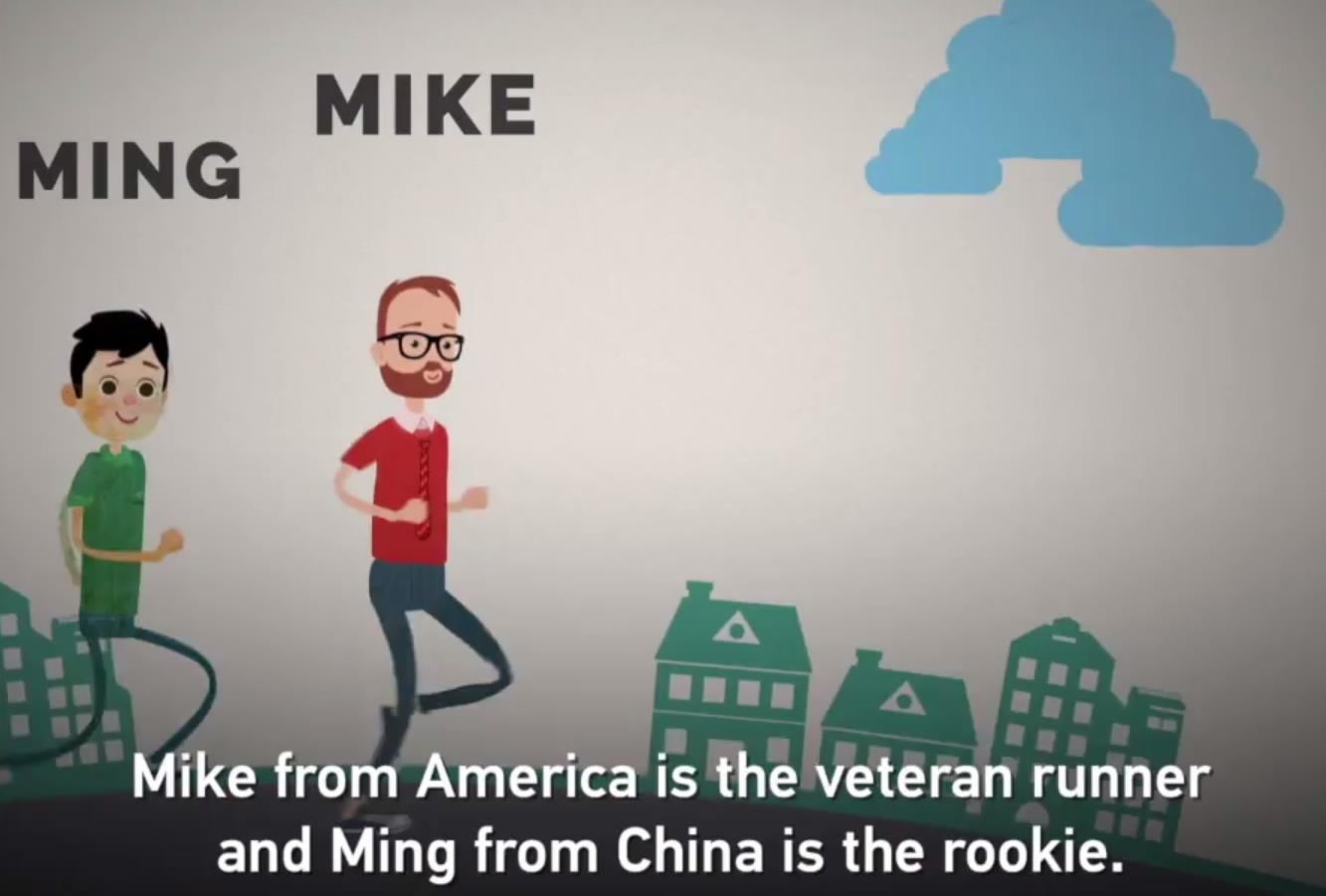
CGTN screenshot
CGTN screenshot
What Mike is doing is not just immoral, but also self-defeating.
Every country is a selfish trader. Probably there is no objective way to judge who is right and who is wrong. That is why we need to talk rules. And that is why there are global institutions. The US is out of the Paris Accord and the TPP; it is also threatening to leave NAFTA and even the WTO. Trump says he is protecting America, but protection for what? Walls and tariffs will not protect the players, it will destroy the game.
So Mike better understand: It’s not just your game, it is our game. The game is on, and there is no turning back!