
12:03, 20-Mar-2019
Brazil Land Rights: Tribal activists prepare to fight against commercialization
Updated
12:00, 23-Mar-2019
 []
[]
Share







Copied
03:30
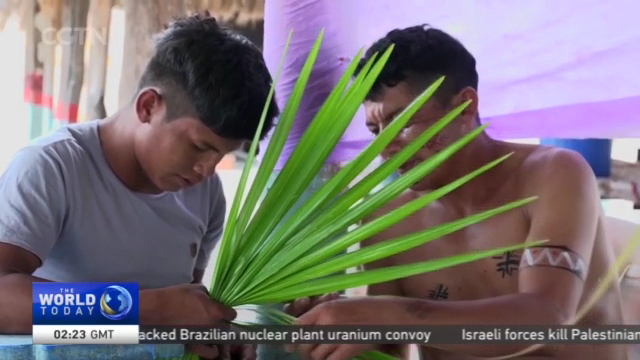
Brazil's indigenous people have been fighting for their economic activity rights and unique culture for a long time. Although the law confirmed some rights of indigenous groups to the land before, they fear that could change under the new administration. CGTN's correspondent Paulo Cabral has more.
The demarcation of the Raposa Serra do Sol Indigenous Land was among the most controversial in Brazil's recent history - often turning violent. Rice growers from the region resisted the establishment of the reservation for over a decade, but in 2009 a Supreme Court decision confirmed the rights of five indigenous groups to the land - and the farmers were forcibly removed with help of the army and the police. But now many Indians like this Macuxi chief are afraid that the under the conservative government of Jair Bolsonaro, their rights and lands are under threat once more.
VALERIO EURICO MACUXI CHIEF "I think they want to take our land because of all its wealth. We have preserved it for many years and now they want to take it from us."
Joenia Wapichana - the first indigenous woman ever elected to Brazil's Parliament, mainly with votes from the Raposa Serra do Sol reservation - says indigenous groups will resist any attack on their rights.
JOENIA WAPICHANA BRAZILIAN FEDERAL DEPUTY "Demarcation is not a matter of ideology, of government decision. It's a duty of the Brazilian State that he has to fulfill. If he carries through with the threat not to grant the land, he will be disrespecting the constitution which says that indigenous lands have to be demarcated."
GENERAL FRANKENBERG RIBEIRO, PRESIDENT NATIONAL INDIGENOUS FOUNDATION "President Bolsonaro did say there will not be another centimeter of land for the indigenous people, but there are demarcation processes going on right now and there is legislation that regulates how this has to happen. So, this will all be followed and in the end, it will need the signature of the President."
PAULO CABRAL RAPOSA SERRA DO SOL, BRAZIL "After the rice farmers were removed from the Raposa Serra do Sol region, they had to find other areas for their plantations like this one. Rice remains one of the main agricultural commodities of the state of Roraima, but its production dropped dramatically."
This rice producer who lost his farm in 2009 regrets the economic potential that he considers wasted in the indigenous area.
AGENOR FACCIO RICE FARMER "I have no grievances with the Indians but with the people that were behind them. I think the Indians have been manipulated. I think the government should develop now some sort of program for the indigenous populations to awaken their ambition, so they will also produce in the areas where we were working."
Right now Brazilian law says that only indigenous people themselves can develop economic activity within reservations - but there are growing calls for new legislation to facilitate access to natural resources - like minerals - in these regions. But the prospect of mining here raises fears that the long term survival of these peoples and their unique culture is again under threat. Paulo Cabral, CGTN, Raposa Serra do Sol Reservation, in Brazil.