
22:34, 29-Jul-2019
Multilateralism & International Law: Jointly uphold the UN-centered International System based on International Law
Updated
22:47, 29-Jul-2019

Share






Copied
Heading into the 2020's, the world faces many question marks over issues like global trade and international law and order. These and other items were top of mind Monday as hundreds of United Nations and other international experts descended on Beijing. Many of them say developing countries play a bigger role than most think. CGTN's Liu Yang reports.
It starts with the question of "where will the world go?" It moves onto talk about the growing influence of multilateralism and economic globalization on international law and order. A colloquium of 300 representatives from the United Nations and other international groups have descended on Beijing to discuss a wide range of such issues.
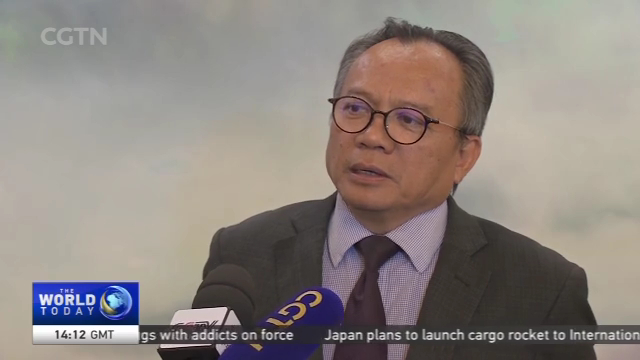
RAHMAT MOHAMAD, DEPUTY VICE-CHANCELLOR INDUSTRY, COMMUNITY, ALUMNI & ENTREPRENEURSHIP NETWORK "I think it is about time we remind ourselves the importance of reform of the Bandung declaration that to work much multilaterally is better than working unilaterally, in fact that is the mantra of UN that countries must work together for the sake of humanity."
In a congratulatory message sent by Chinese Foreign Minister Wang Yi, he emphasized that mankind is a community of common destiny.
He added that developing countries need to build consensus, strengthen international law, and act in accordance with international relations, while firmly upholding the international system.
LIU YANG BEIJING "Experts emphasized the value of international law as a stabilizer of international relations, saying it plays an important role in shaping the international order. At present, the world is undergoing unprecedented changes and facing mounting challenges. Unilateralism and bullying by the United States are becoming more and more serious, and the authority and role of international law are facing the gravest challenge since the end of the cold war."
Vice Foreign Minister Luo Zhaohui says all developing countries need to work together to uphold multilateralism in international rule-making, and to be firm in preserving the WTO-centered, rules-based multilateral trading system.
AMBASSADOR SANI MOHAMMED, DIRECTOR AFRICAN INSTITUTE OF INTERNATIONAL LAW "The world needs to be ruled by consensus by all the countries, no one single power should be dictating everything. This is what we had before. This is what led towards conflict. I believe there is a need of consensus, agreement and negotiations."
Experts say developing countries account for two-thirds of the UN's membership, and 40 percent of the global economy. All have made historic contributions to enriching the principles of international law, and promoting its development in fields like the environment and human rights. Therefore, more power and responsibility are needed to uphold justice and rules. Liu Yang, CGTN, Beijing.