
19:53, 15-Feb-2019
Halal Beauty Industry: Halal cosmetics on the rise in Indonesia
Updated
19:50, 18-Feb-2019
 []
[]
Share







Copied
03:14
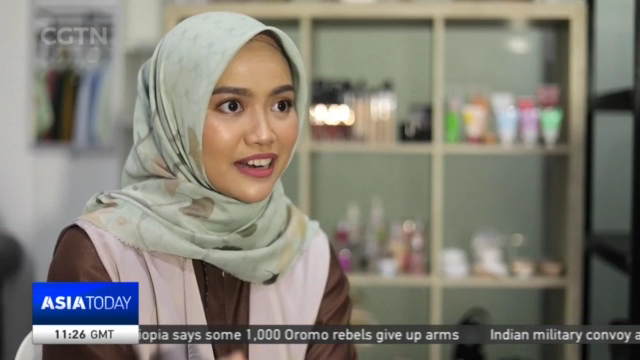
Indonesia is seeing a rapid increase in its halal beauty industry, with the government working to ensure all local products are certified. It's hoped that will help the industry make more of an impression, both at home and abroad. CGTN's Silkina Ahluwalia has more from the capital, Jakarta.
In Indonesia, halal beauty is on the verge of going mainstream, with many local companies beginning to cater to the rise in demand for halal cosmetics. ZAM cosmetics is new to the market, but their products are already revolutionising Indonesia's booming beauty industry. The company began by selling their popular lip creams and now they're branching into the world of halal skincare.
ZASKIA ADYA MECCA CO-FOUNDER, ZAM "We aim to be natural and pure in our products. In the past six years, the halal industry has massively increased from skincare to detergents, that's why we are creating halal products now. We think labelling our products halal is important because as Muslims we want to make sure that what we are putting on our skin is safe and doesn't contain any traces of animals that are considered haram in our religion."
Indonesia has more than 260 million people, where nearly 90 percent of the population are Muslims, making the country a huge market for halal products and services.
SILKINA AHLUWALIA JAKARTA, INDONESIA "Asia as a whole is becoming the driving force for halal beauty. But in Indonesia, its middle-class population continues to rise annually. Experts believe their increase in spending power is the reason why halal products are gaining momentum in the country."
The market is expected to be worth more than 50 billion US Dollars in 2025, with Indonesia driving much of that growth. The country also has plenty of local brands that have gained global attention. Wardah, the country's first halal cosmetic manufacturer, has become a leading cosmetics brand in Indonesia with much of their products gaining attention in Africa and the Middle East.
DIAJENG LESTARI CEO, HIJUP "The knowledge of Islam now, especially in Indonesia, is spreading very well, and the understanding about the Islamic law is also very good now in Indonesia, and it is mandatory for us as a Muslim to consume Halal products, not only foods but also make-up, since make-up ingredients can be absorbed by the skin. For example, like the case of Wardah, because the brand promises Halal, the brand can grow very well and become the winner in Indonesia."
The Indonesian government is working on a mandatory halal certification law, where all food, beverage, cosmetics and medical products are obligated to have the official halal certificate in 2019. The law will help local halal brands to expand, not just locally but internationally as well. Silkina Ahluwalia, CGTN, Jakarta.