
Opinions
16:32, 08-Apr-2018
Opinion: Fake News vs Fake Claims
 ["china"]
Share







Copied
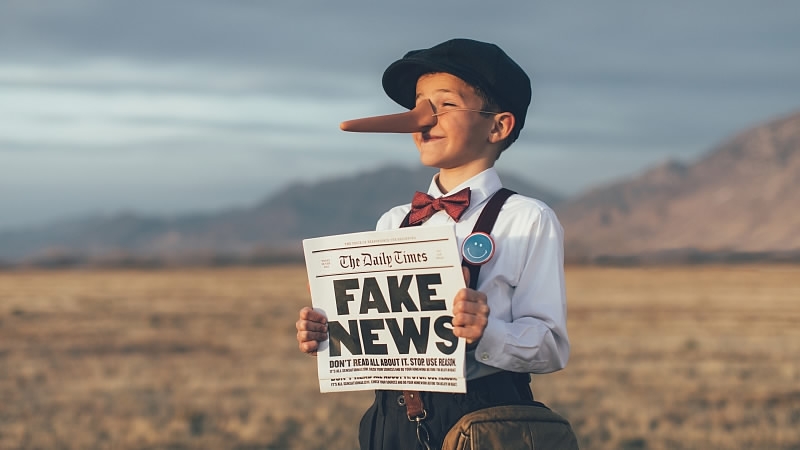
Earlier this year, US President Donald Trump issued “Fake News Awards,” which made headlines in the American media at the time. Over the past week, President Trump has intensified his criticism against Amazon via Twitter, which became headlines again in the American media.
President Trump has reportedly accused Amazon of paying the US Postal Service too little to deliver its packages and making USPS lose billions of dollars at the taxpayers’ expense. But according to reports by major news organizations, including CNBC, the Fox News and the New Yorker, President Trump made these claims “without presenting any evidence to back up his assertion.”
VCG Photo
VCG Photo
First, the USPS began to lose money at the turn of the century, long before Amazon became an online giant. The main reason behind the post office’s financial problems resulted from its employee benefit arrangement. According to the 2017 annual report by the Postal Regulatory Commission, an independent agency to oversee USPS’s business operations, the post office’s shipping and packages business “helped the financial picture of the Postal Service.”
Second, Amazon struck a five-year deal with the post office in October 2013. Although the specific terms of the contract are not available to the public, the US Congress ruled in 2006 that the USPS couldn’t set its prices lower than its costs, which made it impossible for the latter to subsidize the former 1.46 US dollar per parcel as claimed by the President.
It’s no wonder that the US media pinned down the motivation behind Trump’s claims over the Amazon-USPS deal to his dislike of the “Amazon Washington Post” [a term coined by Trump on Twitter] and its owner Jeff Bezos, who is also Amazon’s CEO.
VCG Photo
VCG Photo
Another case in mind is the current China-US trade conflict. President Trump has been rambling about the issue, claiming that the US has “a Trade Deficit of $500 Billion a year, with Intellectual Property Theft of another #300 Billion,” which “have destroyed thousands of American factories and millions of American jobs.” Before these figures could be verified and proper countermeasures could be worked out based on a clear understanding of the root causes of the trade deficits, President Trump ordered 50 billion US dollars in tariffs on imports from China to correct the problem last Tuesday.
When China answered with an equivalent amount of tariffs on US imports, the President quickly announced last Thursday an additional 100 billion dollars in tariffs on products imported from China, again without sufficient consultation with the Chinese side or feasibility studies with relevant parties at home. But this time, his aides quickly clarified that they would consider tariffs against 100 billion dollars in goods, not 100 billion dollars in actual tariffs.
VCG Photo
VCG Photo
Even so, the threat of tariffs on an additional 100 billion dollars in Chinese goods has reportedly aroused some criticism domestically. The Information Technology Industry Council called the decision “irresponsible and destabilizing.” Its chief executive Dean Garfield called on both sides “to halt unproductive and escalatory rhetoric, recognizing that these words and actions have global consequences.” The National Retail Federation warned that the US and China were on a “dangerous downward spiral” that could “spell disaster for the US economy.” Some US lawmakers fear a deepening trade war will hurt jobs and businesses in their states, and they worry it could cost Republican votes in the 2018 midterm elections. “Hopefully the president is just blowing off steam again, but if he’s even half-serious, this is nuts,” Sen. Ben Sasse (R-Neb.) said in a statement Thursday night.
So, what’s the reason behind President Trump’s seemingly irrational behavior? Maybe it’s because of his adoption of business tactics into politics. Although a businessman needs guts and chance to beat others in competitions, a politician needs wisdom and compromise to win others in campaigns. Meanwhile, I think it could be the time to reward President Trump the title “Fake Claims Maker.”
(With a doctoral degree in communications from the Communication University of China, the author has been working in the field of international journalism for 30 years. The article reflects the author's opinion, and not necessarily the views of CGTN. )