
17:32, 15-Mar-2019
Highlight - What will China do to boost its slowing economy?
Updated
12:00, 19-Mar-2019

Share






Copied
China's Two Sessions political meetings garner worldwide attention. At the opening meeting of this year's National People's Congress, Premier Li Keqiang declared that China faced severe challenges caused, in part, by growing pains of economic transformation.
Moreover, China is encountering a rough terrain of increasing complexity, with multiple targets to attain, such as ensuring stable growth and preventing risks, as well as multiple tasks to complete,like promoting economic and social development.
In particular, with tough challenges ahead in 2019, it is a daunting task for China to reach its long-championed goal of building a moderately prosperous society in all respects by 2020.
And China's GDP growth target for 2019, at between 6.0 percent and 6.5 percent, is lower than in previous years. So, confronted with such uncertainty, what will China do to boost its slowing economy?
China is skewing toward more stimulus through reductions in taxes and fees. To promote its economy, China will create more business-friendly environment by reducing taxes and fees.We wait and see its effect.
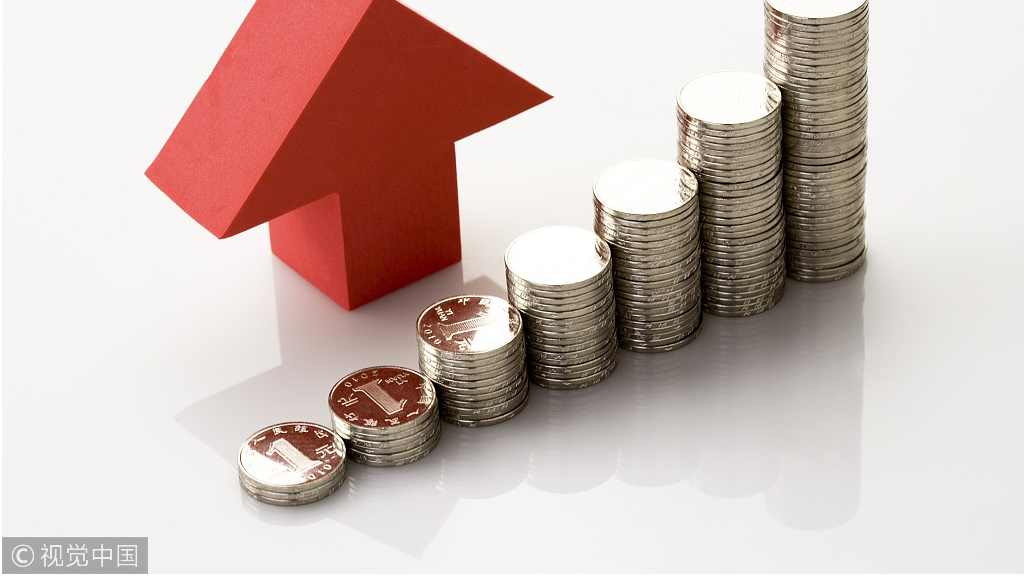
China is to stimulate its economic growth by cutting taxes and fees. VCG/·Photo
China is to stimulate its economic growth by cutting taxes and fees. VCG/·Photo
According to Liu Shangxi, President of China Academy of Fiscal Sciences, the expected scale of the tax and fee cuts is around 2 trillion yuan, while the real number may be even higher. To achieve this tax and fee reduction target,China must work on both sides of the equation.
For taxes, the value-added tax rate will be lowered from 16% to 13%, down 3 %. Rates for the transportation and construction sectors will be cut from 10% to 9%,down 1%. And finally,the whole manufacturing sector, including research & development, will also enjoy favorable tax policies.
All these are policies for reducing taxes. Regarding cutting fees, China is looking at lowering the contribution ratio for social security and basic pensions. However, tax cuts will reduce China's fiscal revenue and put pressure on government finances.So how can China cope with this pressure?
The first way is to moderately increase the deficit rate, to expand the deficit. This year, 380 billion was added to the deficit.
The second is to let state-owned enterprises,and the banks,pay more (moderate) taxes on their own profits and/or increase the dividends they pay the government (their shareholder).
The third is to allocate some general expenditures to the existing structures, like the Three Public Funds and government consumption.
These are all ways to relieve fiscal pressures brought about by the tax and fee reductions. Of course,there are some other measures,such as implementing budget performance management to ensure governments spend their money efficiently as well as effectively.
That is called"doing more with less", which is equivalent to driving costs down and saving money. Therefore,this comprehensive implementation of budget performance management will also help to cope with the increased financial pressure.
The government will be called on to tighten its belt. Facing this new situation of fiscal reductions, government at all levels must calculate carefully and not seek to solve every problem by spending more money.