
19:51, 08-Mar-2019
Int'l Women's Day 2019: War in Syria changes social conventions in employment
Updated
19:50, 11-Mar-2019
 []
[]
Share







Copied
03:13
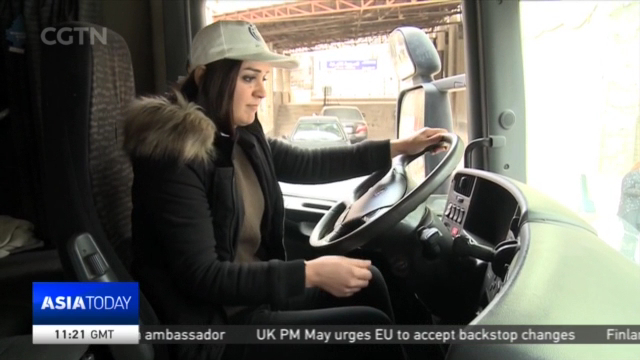
Today is International Women's Day-one in which women are recognized for their fine achievements across the globe. Nowhere is this more pertinent than in Syria, where the ongoing civil war has drastically changed conventions. So many men have been drafted into the army, died or fled the country to avoid conscription, that many women are now doing jobs usually dominated by men. Our correspondent Alaa Ebrahim has this story.
This is just like any other bus you might see on a Damascus street any day, designated to transport public employees of a government-owned company. But this bus is now the site of a new social experiment for the war-torn country. This is now one of the first public buses ever in Syria to be driven a female driver.
AMMAR MOHAMAD, DIRECTOR COMPANY WITH 1ST FEMALE BUS DRIVER "When we put the ads out, we didn't think women would apply. The ad was for any person regardless of gender but usually driving buses is considered hard labor and we have never had female drivers. But all those who applied were women, so we went ahead with it."
For Dima who is one of the two female drivers working as bus and truck drivers, this wasn't what exactly what she dreamt of growing up to be.
DIMA MOHAMAD TRUCK DRIVER "I always wanted to have a steady job and when I applied I thought they were going to disregard my application because it wasn't common for women to do this. And people were very dismissive of the idea. At the interview, I felt they were worried about me. But I really needed a job like many other women who need jobs after the war."
And as Dima drives her truck away, it seems the whole country is heading towards a future very different from its past.
ALAA EBRAHIM DAMASCUS "Historically speaking, women have always had a prominent role in Syria as judges, doctors, university professors, army officiers, ministers and even as vice president. But the society maintained a more conservative take on women entering all fields of work. But when the war left millions of families without their traditional providers, change swept through the country and social conventions seemed unable to survive the conflict. But change came with at price."
For many women today, they are faced with more difficult tasks professionally and socially. Like Aya, a 20-year-old university student, who supports herself working as a shopkeeper.
AYA SADIQ SHOPKEEPER "There was a time when getting married was all a girl would wish for. To get married and start a family. But now life has changed. We need to work now and take care of things on our own. For me, I have to worry about many more things than my mother or grandmother ever had to worry about. They stayed at home to raise their children."
Like many Syrians nowadays, the future seems uncertain for Aya living in a country that went through one of the worst conflicts in modern times, changing not just the political landscape but also society itself. Alaa Ebrahim, CGTN, Damascus.