
13:54, 24-Jul-2019
Pesticide Dilemma: Thailand's over-reliance on pesticides raises concerns
Updated
14:54, 24-Jul-2019

Share






Copied
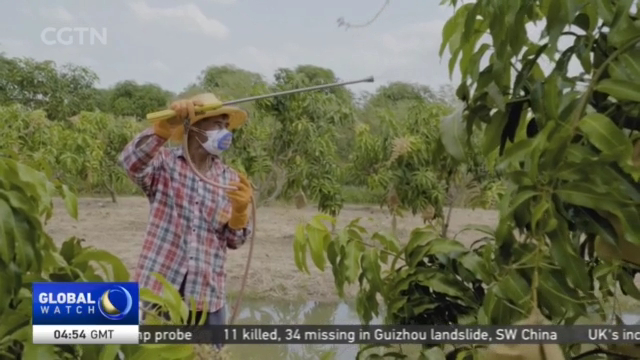
Thailand is a major exporter of rice, rubber, corn, and tropical fruits, and country's produce to the rest of the world exceeds over 15 billion dollars annually. To keep pace with demand, the country relies heavily on pesticides to control insect populations and increase the yield of crops. However, this over-reliance on pesticides has raised concerns about food safety. Our correspondent Dusita Saokaew explains.
When Sunthorn sees pests, he panics, afraid that his mangoes will not look good and traders won't buy. His immediate solution is spraying chemical pesticides. Because for him, why not? It plays a significant role in enhancing crop productivity, it ensures food stability, and reduces his income loss due to pest diseases.
SUNTHONG SAMATHIMONGKOL MANGO FARMER "The first thing people look at is the appearance, then it's the taste. Both rely purely on chemical sprays. For me, there's no other alternative."
Sunthorn has been using chemical pesticides since he's been a farmer. The majority of Thailand's 25 million farmers do the same. But years of exposure have taken its toll. Dangerous levels of toxic chemicals have been detected in the blood of 30% of farmers with more than 6,000 people falling ill last year due to their exposure.
SUNTHONG SAMATHIMONGKOL MANGO FARMER "Doctors said that my blood test shows a risky level of contamination. So I can only spray chemicals for no more than 3 hours each day, otherwise, it will be dangerous to my health."
Thailand's quest to boost its harvests has led to an insatiable appetite for agro-chemicals, quadrupling their use in the last decade. The country is now one of the world's biggest users of agricultural chemicals.
DUSITA SAOKAEW ANG THONG, THAILAND "Because many crops are picked soon after being treated with pesticides, the chemicals remains on food as it hits the marketplace and dining tables. Recent tests have found that more than 40% of fruits and vegetables sold in fresh markets just like this contain traces of toxic chemicals that are banned in most countries around the world except Thailand."
The World Bank places Thailand in the top five consumers of toxic substances.
PROKCHOL OUSAP, COORDINATOR THAILAND PESTICIDE ALERT NETWORK "We found that in one sample, there's always more than one chemical present, some even up to 21 chemicals in one fruit. For consumers, there has been a rise in children born with autism, more Thais are getting cancer, we are seeing the effects and it's serious."
This sobering reality is driven by the demand for cheap food and large yields of it. Many importing nations seek to protect their consumers by requiring that food be inspected for pesticide residue. This means Thai produce intended for export is often sent back.
PROKCHOL OUSAP, COORDINATOR THAILAND PESTICIDE ALERT NETWORK "If Thailand wants to become the kitchen of the world, and agriculture to still be the backbone of the country, if we do not begin to regulate the use of harmful chemicals, we will never reach that goal."
An ambition to become the kitchen of the world, a need to sustain its agricultural exports, the dilemma for consumers who have limited options to live healthy lifestyles, Thailand's reliance on pesticides is hard to digest and just as difficult to solve. Dusita Saokaew, CGTN, Ang Thong, Thailand.