
11:58, 29-Apr-2019
Kenyan Human Milk Bank: Project provides donated breast milk to babies without access
Updated
11:50, 02-May-2019
 []
[]
Share







Copied
03:53
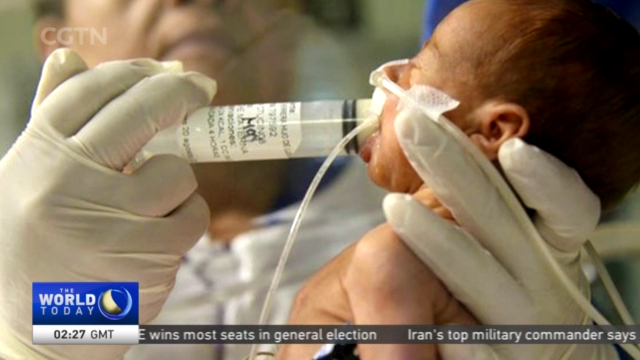
To Kenya now, the country recently became the second in Africa to launch a human milk bank. The project aims to provide donated breast milk to babies without access to their mother's milk. It's hoped the initiative will also help to reduce post-natal deaths of newborns in the country, which according to UNICEF, stands at around 22 for every thousand births.
Patricia is a first-time mother.
Like any new mother, she was looking forward to breast feeding her baby. But this was not possible. Patricia is now one of the beneficiaries of the human milk bank, at the Pumwani Maternity Hospital, in Kenya's capital, Nairobi.
PATRICIA MONAYA BENEFICIARY, HUMAN MILK BANK "I wasn't able to breastfeed my baby, three days after giving birth. A nurse approached me and asked if I would be okay to receive donated milk. I accepted as breast milk boosts the baby's immunity and lays a foundation for good health."
The project is the first of its kind in the country.
The human milk bank can help reduce child mortality in the country.
Nairobi leads with 38 deaths per every 1,000 live births.
Human milk stimulates the development of the infant immune system while providing protection from pathogens.
It also serves as the best source of nutrition during the first six months of a baby's life. The World Health Organization recommends donated milk as a lifesaving alternative.
But how safe is the milk?
Since the project started a few weeks ago, there have been more than 10 voluntary donors and over 6 babies benefiting.
Most of the recruited donors are mothers who have given birth to pre-term babies.
Some babies lack the energy to suckle, leaving their mothers with a lot of milk.
MONICA MUTHEE DONOR, HUMAN MILK BANK "I decided to donate my breast milk to help babies who are sick, orphaned or whose mothers cannot produce milk. I feel all hospitals should introduce such initiatives to help mothers in need."
There are more than 500 human milk banks in 37 countries across the globe. Brazil, which tops the list with around 220 banks, has reduced infant mortality by more than 50 percent, since introducing the program. With plans to scale up, Kenya stands a good chance of saving on the high costs of treating newborns, for illness or conditions that may develop, in the absence of access to their mother's milk. Chao Mghono, Nairobi, Kenya.