
World
14:03, 29-Mar-2018
Fear and joy as Pakistan welcomes Malala back six years after Taliban shooting
 ["other","Pakistan"]
Share







Copied
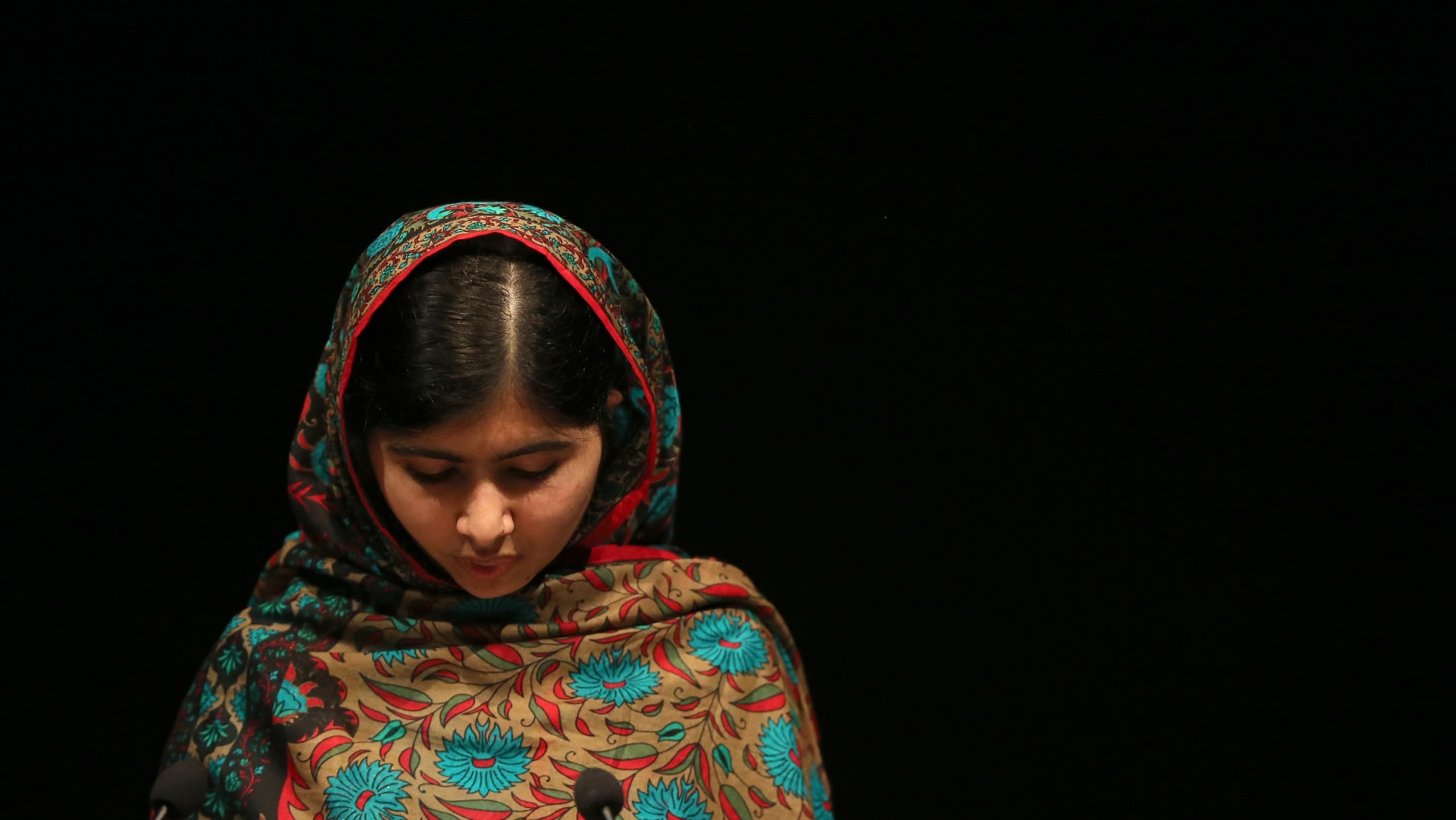
Nearly six years after being shot in the face by the Taliban, Malala Yousafzai returns to her home country as a Nobel laureate.
The four-day trip is Malala’s first visit to Pakistan since the attempted assassination. Targeted by the Taliban in 2012 for advocating for girls’ education rights, the shooting survivor has spent the last six years campaigning out of the UK.
Malala touched down in Islamabad, the capital of Pakistan, early Thursday morning and is expected to meet with Prime Minister Shahid Khaqan Abbasi the same day, according to local media reports. Details of her trip are being kept secret for security reasons.
Though the West has embraced Malala, recognizing her as a global icon for resistance and women’s education, her image in Pakistan is much more divided.
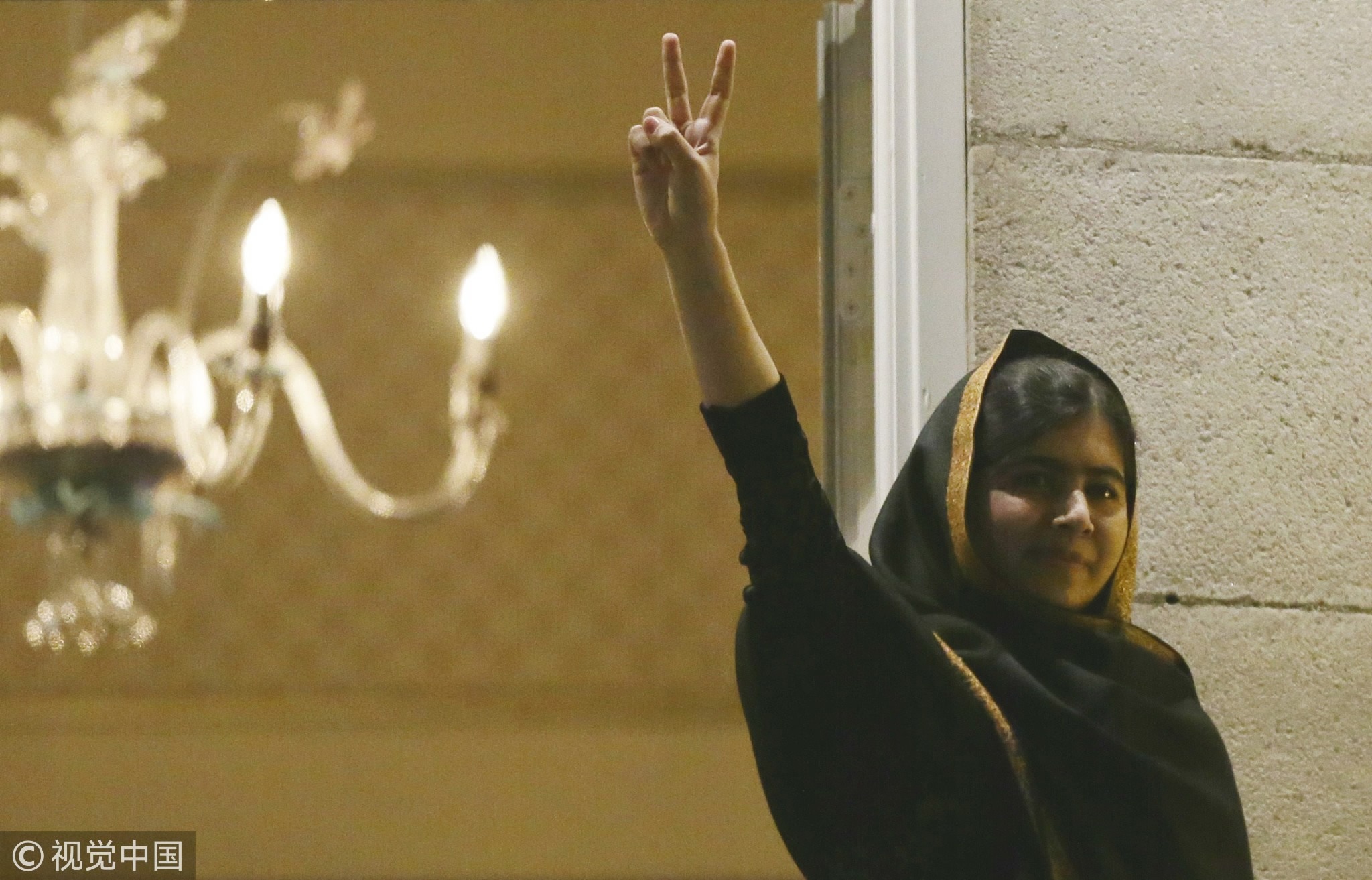
Nobel Peace Prize 2014 laureates Pakistan's Malala Yousafzai gives the V-sign as she waves to well-wishers from the balcony of the Grand Hotel ahead of the Nobel Banquet following the Nobel Peace Prize ceremony in Oslo on December 10, 2014. / VCG photo
Nobel Peace Prize 2014 laureates Pakistan's Malala Yousafzai gives the V-sign as she waves to well-wishers from the balcony of the Grand Hotel ahead of the Nobel Banquet following the Nobel Peace Prize ceremony in Oslo on December 10, 2014. / VCG photo
A broad swathe of Pakistani leadership has publicly supported her. Former Prime Minister Nawaz Sharif called Malala the “pride of Pakistan,” when she became the youngest person to win the Nobel Peace Prize in 2014, sharing the prize with Kailash Satyarth from India.
Readers of the Herald, a magazine in Pakistan voted her person of the year in 2012, the same year she was attacked. According to a 2014 Pew report, 30 percent of Pakistani people surveyed expressed a favorable opinion of Malala, compared to the 20 percent who had an unfavorable opinion. The subject of her activism also has wide support, with the majority of respondents agreeing that education is equally important for both boys and girls.
For some Pakistanis, her homecoming is a proud moment with welcoming messages praising Malala as a symbol of peace flooding social media.
However, others have reacted with disdain and ridicule, questioning the sincerity of her motives and the attention she's received. This view holds her as an agent of the West, with some even going as far as denying the actual shooting itself.
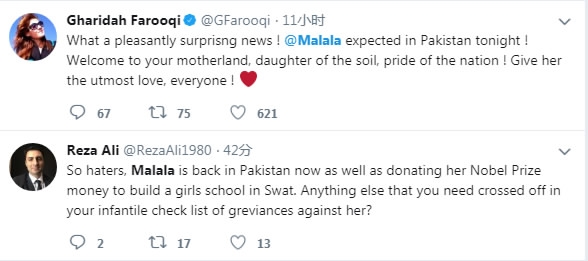
Mixed reactions to Malala's return to Pakistan on Twitter /screenshot from Twitter
Mixed reactions to Malala's return to Pakistan on Twitter /screenshot from Twitter
Malala's survival continues to put her at risk of attack. After the attempt in 2012, the Taliban stated that they would target again if she survived.
Organizers at Peshawar University were forced to cancel the launch of Malala’s memoir, “I am Malala,” in 2014 after two senior members of the Khyber Pakhtunkhwa (KP) province’s government intervened.
Reports at the time indicated that the cancellation was due to threats from the Tehreek-e-Taliban Pakistan (TTP), who have a strong presence in the KP province.
Malala has previously expressed her desire to return to Pakistan, telling David Letterman in an interview earlier this month that “I have received a lot of support in my country.”
“There is a lust for change. People want to see change in their country. I am already doing work there, but I want my feet to touch that land.”