
21:16, 01-Jul-2019
Japan Whale Hunting: Environmental groups condemn resumption of commercial whaling
Updated
16:58, 09-Jul-2019

Share






Copied
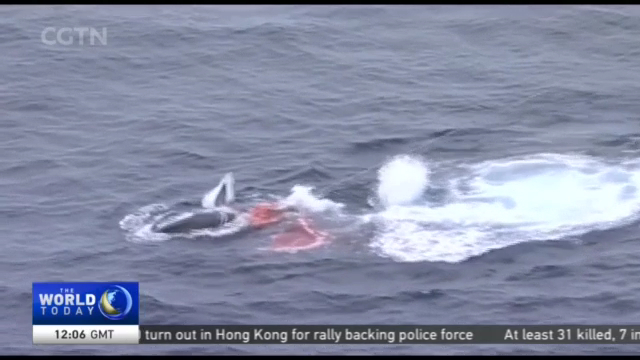
Japan's resumption of commercial whaling comes after the country stopped the so-called "scientific whaling" in the Southern Ocean, but groups like Greenpeace say oceans are too fragile to allow any whaling at all. Our correspondent Owen Poland has more in this report. The following footage may contain graphic content, viewer discretion is advised.
The Greenpeace environmental group successfully fought to stop commercial whaling in the 1980s and it says Japan's decision to once again hunt whales is a major disappointment when fish species are already under so much pressure.
JESSICA DESMOND GREENPEACE OCEANS CAMPAIGNER "They're facing climate change, over-fishing, plastics pollution, sea-bed mining. There's this whole perfect storm of threats that are happening, and what we really need to do to protect our oceans is eradicate all of the threats that we can and start with the ones that are easiest to stop. And commercial whaling is one of those."
However, the Sea Shepherd Conservation group is looking on the bright side. It says that Japan's decision to stop scientific whaling in the Southern Ocean is a major victory and that confining fishing to Japan's exclusive economic zone signals the beginning of an end to commercial whaling.
MICHAEL LAWRY SEA SHEPHERD CONSERVATION SOCIETY "Japan has retreated to their own territory and hopefully the resistance in Japan is increasing and we're going to see the end of whaling finally on this planet."
OWEN POLAND AUCKLAND "The resumption of commercial whaling in Japan comes just a few days after Iceland suspended its annual hunt for minke and fin whales amid growing concern about the negative impact on tourism. And protest groups believe there's also a growing mood in Japan that whaling is bad for that country's international reputation."
Environmental groups called for international pressure to be placed on Japan over the whaling issue at last weekend's G20 summit in Osaka. And while Japan says that fishing will be limited - and conducted on a sustainable basis using scientific evidence – Greenpeace isn't convinced.
JESSICA DESMOND GREENPEACE OCEANS CAMPAIGNER "It's extremely difficult with an animal like whales to know what the real numbers look like and so we would disagree with that view that any quota is appropriate for hunting whales."
While the consumption of whale meat is considered a cultural tradition, the reality is that few Japanese actually eat it. Statistics show that only 50 grams of whale meat is consumed per head of the population every year - compared to 32 kilograms of meat.
MICHAEL LAWRY SEA SHEPHERD CONSERVATION SOCIETY "The time for killing whales is long ceased really and this is the death throes of a dying industry."
Owen Poland, CGTN, Auckland.