
21:47, 28-Mar-2019
Power of Women: Japan to promote gender equality
Updated
21:40, 31-Mar-2019
 []
[]
Share







Copied
02:39
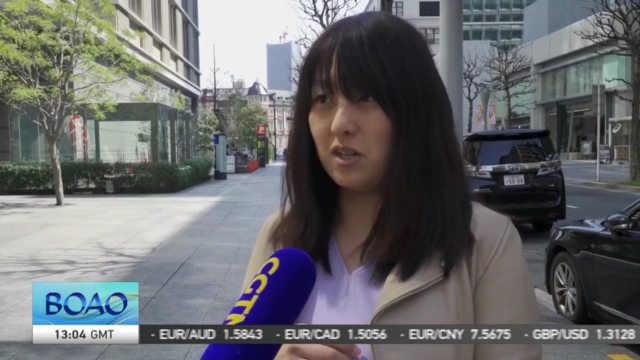
Meanwhile, a round-table meeting at the Boao Forum earlier Thursday discussed the increasing role of women in boosting economic and social development. The meeting said that women have become a key driver of the Asian economy. Countries including Japan are also planning to bring more women into the workforce.
Some say women's status in Japanese society has improved in recent years, partially due to the government's drive to promote gender equality. That claim is indeed backed by some indicators. For example, last year, for the first time in five decades, over half of the Japanese female population was employed. But many experts argue that this was partially brought about by the country's labor shortage. Japan ranked 110 out of 149 countries in the World Economic Forum's annual World Gender Gap Index last year.
TERRENCE TERASHIMA TOKYO "Six years has passed since Prime Minister Shinzo Abe announced plans to create what he called 'a country in which women can shine'. Despite some progress, many women still feel they're struggling for equality."
New female college graduates feel employment opportunities are still rather limited for them.
RESIDENT "I think there's still a strong belief that men are superior to women."
In a massive scandal that recently came to light, Tokyo Medical University admitted to manipulating all entrance exam reports for more than a decade, to restrict the number of female students and ensure more men become doctors. And many say, job openings in the private sectors are also more targeted towards male candidates.
RESIDENT "I think there have been improvements compared with the past, but we still feel there are more opportunities for men."
Japanese women are increasingly vocal about their demand for more opportunities in higher corporate positions. The ratio of Japanese women in management and other leadership positions remains 12 percent, less than half of the global ratio of more than 27 percent.
RESIDENT "I would like to see more women offered management positions, but household chores can be a hurdle. I want to see more support in that aspect so that women can contribute to higher employment."
A government survey has shown the time women spend doing household chores is 5.5 times more than that of men.
Experts say reform is needed in households, as well as in corporate mentality, for Japanese women to contribute to the womenomics policy adopted by Shinzo Abe. Terrence Terashima, CGTN, Tokyo.