
Politics
12:50, 13-Apr-2018
Enhancing connectivity between Sichuan Province and Austria
 ["china"]
Share







Copied
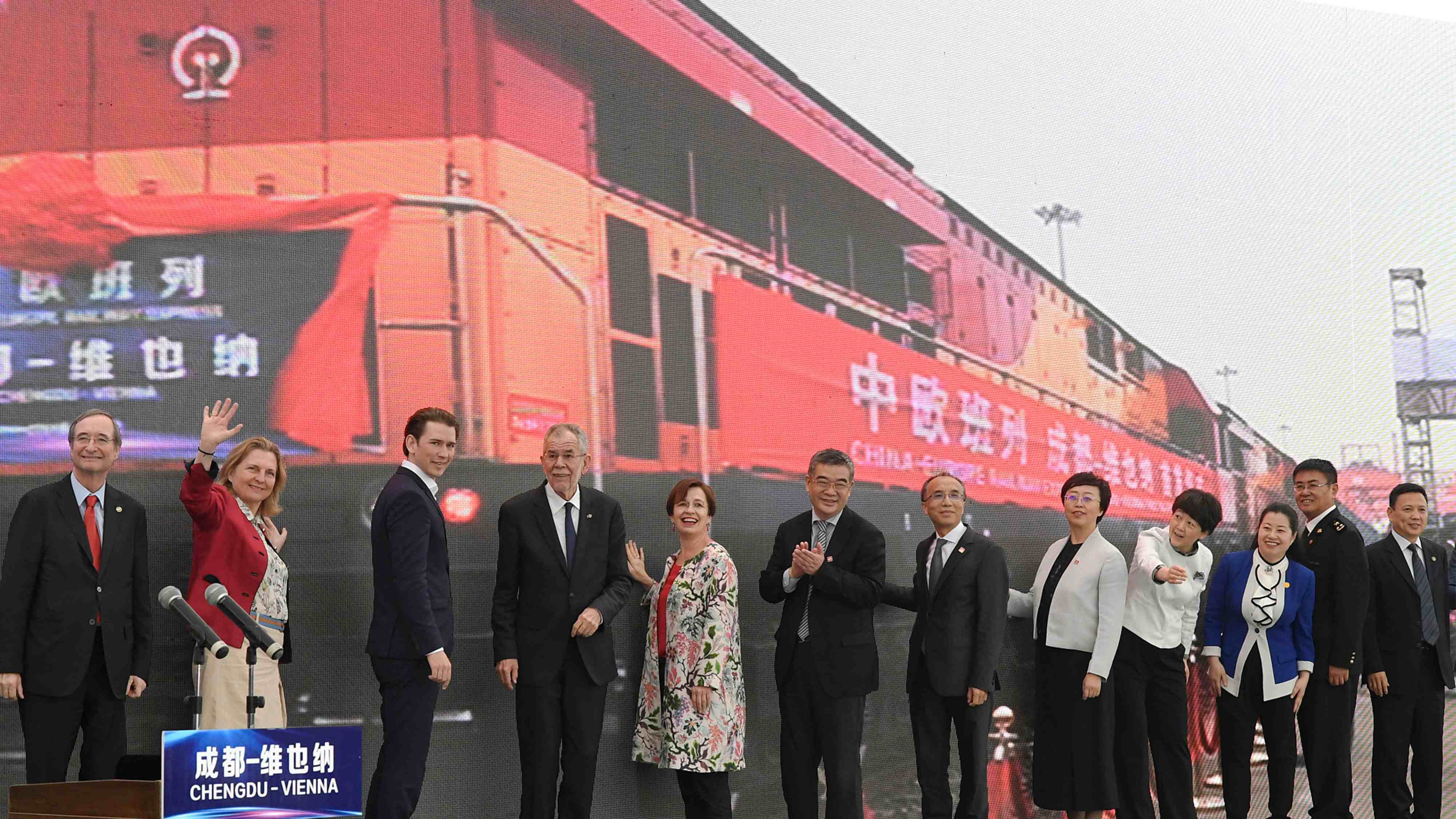
On April 12, Austrian President Alexander Van der Bellen headed a delegation including Austrian Chancellor Sebastian Kurz and members of the business community to promote bilateral trade and tourism in southwest China's Sichuan Province.
At the launching of the first cargo train from Chengdu to Vienna, the Austrian president made sure to mention that the train would significantly shorten the journey from Chengdu to Vienna by several weeks.
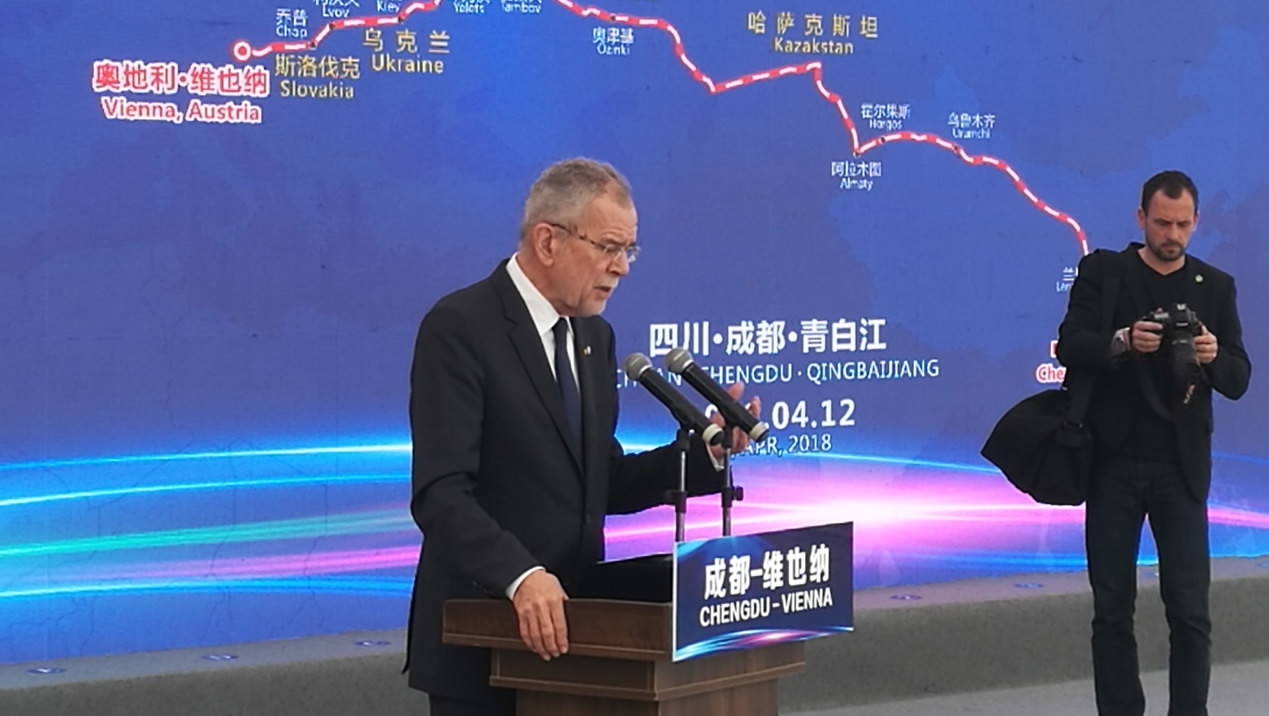
Austrian President Alexander Van der Bellen speaks at the launching ceremony. /CGTN Photo
Austrian President Alexander Van der Bellen speaks at the launching ceremony. /CGTN Photo
Currently, ten Austrian companies have established subsidiaries in Sichuan.
“Since time is one of the most valuable goods in our modern age, I am certain that this new way of transportation will further facilitate trade between Austria and the province of Sichuan,” Austrian President Alexander Van der Bellen said.
It takes the cargo train 13 days to reach Vienna, and it has 41 carriages, carrying such goods as LED screens, daily necessities, and tires.
Austrian Railway Corporation CEO Andreas Mattha said that Chengdu and Vienna are both beautiful cities that have strong economies, therefore, the train is a symbol for the partnerships for the two countries.
After the ceremony, the delegation visited the Qingcheng Mountain and the giant panda conservation center. The scenery is one of the birthplaces of Taoism in China. When the Austrian delegation arrived at Taoist temple Jianfu Palace, the visitors witnessed a special welcoming and praying ceremony.
The Jianfu Palace was founded in the Tang Dynasty (618-907).
And Austria and China have been cooperated on giant panda research since 2003, on breeding, disease control, feeding management and science popularization education.
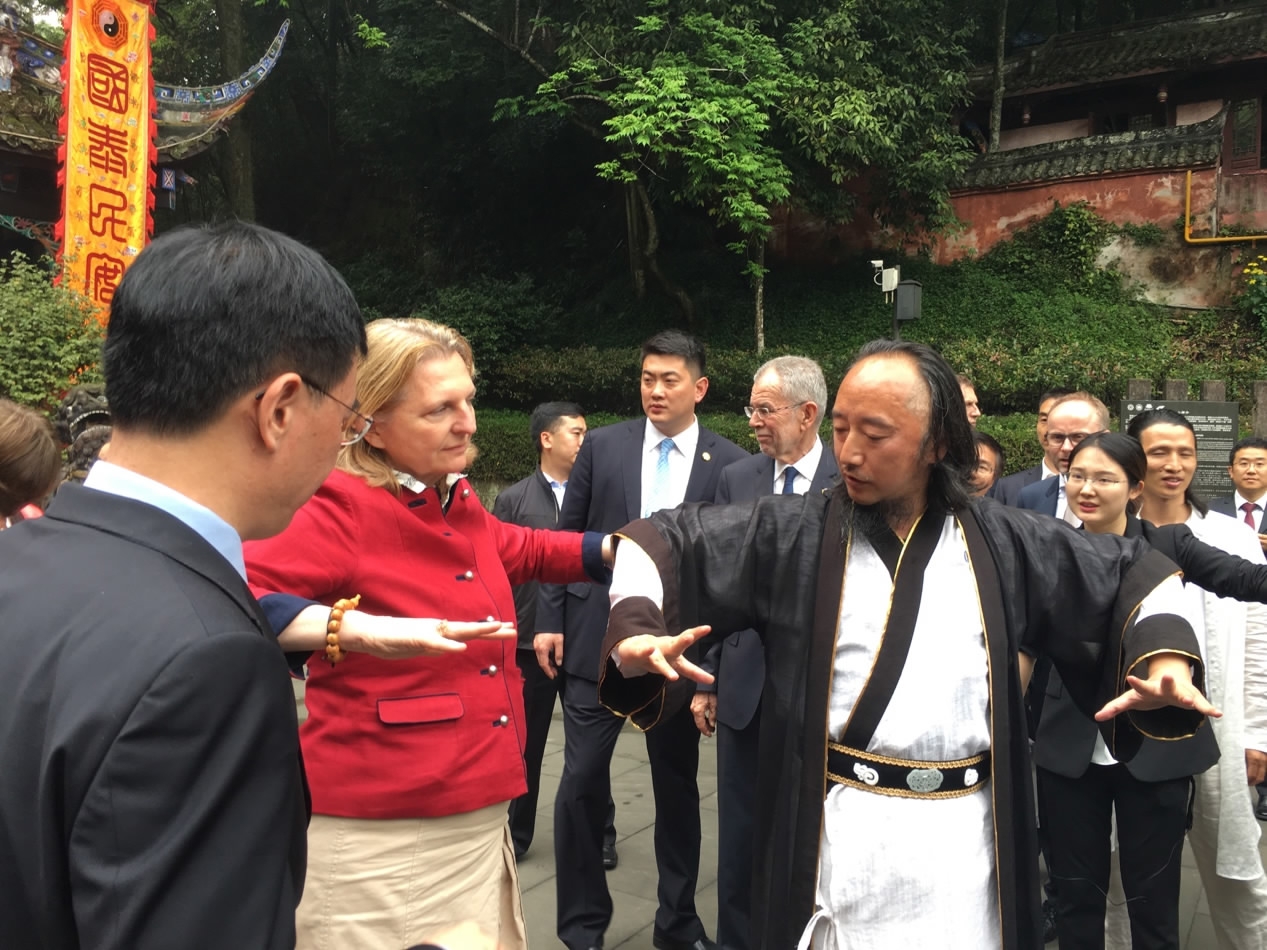
Dr. Karin Kneissl, the Federal Minister for Europe, Integration and Foreign Affairs is learning Qingcheng Taichi from the head of the Qingcheng Taichi inheritor – Liu Suibing. /CGTN Photo
Dr. Karin Kneissl, the Federal Minister for Europe, Integration and Foreign Affairs is learning Qingcheng Taichi from the head of the Qingcheng Taichi inheritor – Liu Suibing. /CGTN Photo
In recent years, tourism has become a pivotal part for the two countries' bilateral cooperation. China and Austria are both rich and complementary to each other in tourism resources. In 2017, over 67,000 Austrians visited China, an increase of 2.5 percent year-on-year.
Austria's economy is heavily reliant on exports. In 2017, Austrian established nine new enterprises in Sichuan, and trade volume between the two countries rose by 15.5 percent the same year.