
11:35, 06-Jul-2019
Statelessness in Africa: Multiple generations failing to obtain citizenship
Updated
16:51, 09-Jul-2019

Share






Copied
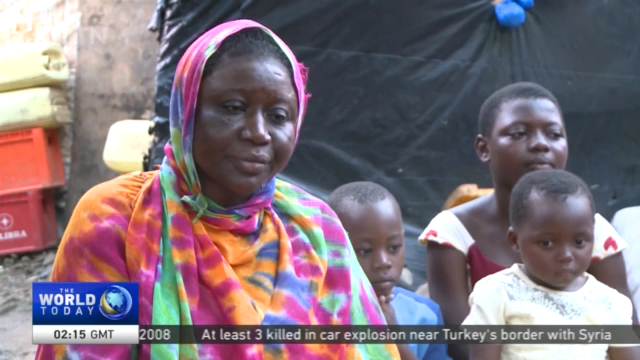
Africa is home to the highest number of stateless people in the world, but governments have only recently recognized this as a serious problem. War; discrimination on ethnic, religious and racial lines; and the emergence of new states, has left countless people without legal identification. In search of recognition, many in Cote d'Ivoire are experiencing first-hand the hardships of statelessness. CGTN's Daniella Pearson has more.
It is in this slum in the Ivorian capital Abidjan where Tirogo Benoit lives with his family. Benoit was born in Cote d'Ivoire and has lived here all his life. But because his parents were from neighboring Burkina Faso, he is not legally recognised as a citizen here. His wife, Sangare Abiba, whose parents are from Mali, faces the same problem.
SANGARE ABIBA STATELESS PERSON IN COTE D'IVOIRE "We need Ivorian citizenship to obtain identity documents for our children. With citizenship, our children can go to school and have a better future. You see, today, without citizenship, their future is in jeopardy. Here in Cote d'Ivoire they say we are Malians. When we go to Mali they say we are Ivorians. In the end, we no longer know which country we are from."
TIROGO BENOIT STATELESS PERSON IN COTE D'IVOIRE "We have provided all the required documents, but the naturalization procedure is still deadlocked. When we go to court, we are always given new appointments and it never ends. We have never been able to have even the beginning of a solution to our problem."
Cote d'Ivoire only grants citizenship through lineage, at least one parent has to be Ivorian. Benoit and Abiba's four children are therefore also at risk of statelessness. It is not enough for them to have been born in Cote d'Ivoire. In addition, the country of their grandparents - Burkina Faso and Mali - might also not recognize them as citizens this many generations on.
This family is one among many, who live, work, and spend their lives here, but are not recognized as an Ivorian citizens. The UN refugee agency estimates that there are more than 700,000 stateless people in Cote d'Ivoire. Despite Cote d'Ivoire agreeing to two international statelessness conventions in 2013, the situation for stateless people here remains unchanged.
LANKOUADE CLEMENT STATELESS PERSON IN COTE D'IVOIRE "I no longer know what to do to get this national identity card. When I find work, I can't even receive my salary directly because, since I don't have an ID card, I can't have a bank account of my own. Very often, my salary is transferred to an intermediary's account who in turn gives it to me."
TIROGO BENOIT STATELESS PERSON IN COTE D'IVOIRE "I want the state of Cote d'Ivoire to have compassion on us. Allow us to have the necessary documents to prove that we too live in this country. We want to be recognized as Ivorian citizens."
Today, the exact number of stateless people in the world is unknown. UNHCR puts it in the millions, including one in three children. In Cote d'Ivoire, appeals from stateless people for legal documentation remains unsuccessful. And people like Benoit and his family continue to live their lives in limbo. Daniella Pearson, CGTN.