Opinions
19:06, 11-Nov-2017
Understanding China’s future through its ‘contradictions’
 ["china"]
Share







Copied
Highlight- The New Principal Contradiction in Chinese Society
China’s development has entered a new era in which China faces multiple, complex challenges both at home and abroad.
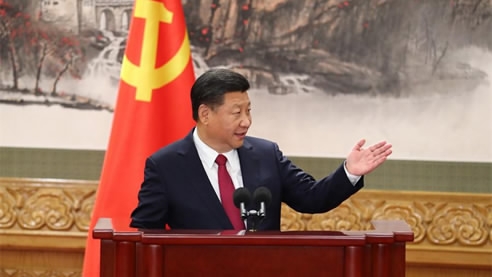
Chinese political thinking often frames the different stages of a society’s development through the idea of a "principal contradiction". The “principal contradiction" Chinese society is now facing has evolved. At the 19th Communist Party of China (CPC) National Congress, General Secretary Xi Jinping stated that the new "principal contradiction" is "the contradiction between imbalanced and inadequate development and the people's ever-growing needs for a better life".
Robert Lawrence Kuhn raised this question with Wu Changqi, professor at Guanghua School of Management, Peking University: “As an economist, when you first heard about the new principal contradiction in Chinese society at the 19th CPC National Congress, what was your first reaction?”
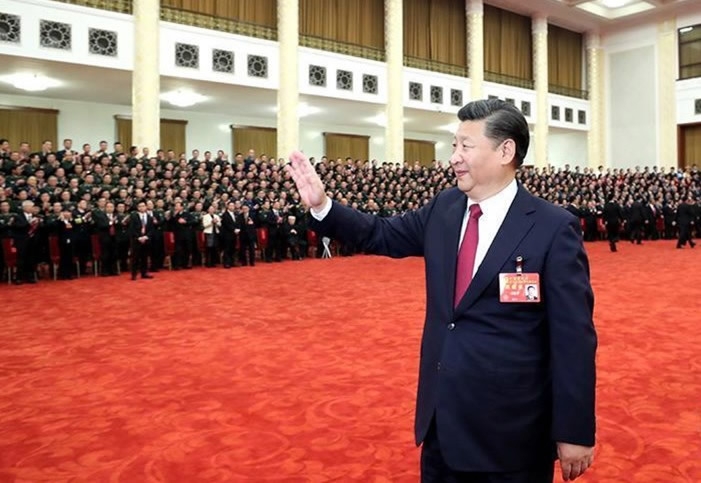
Chinese President Xi Jinping waving at representatives of the 19th CPC National Congress. /Xinhua Photo
Chinese President Xi Jinping waving at representatives of the 19th CPC National Congress. /Xinhua Photo
“I think this is based on the sound judgement about current stage of the development of China because indeed the situation now is very much different from when China started economic reform, that is the almost 40 years ago. At that time, we had a shortage economy with scarcity and poverty. That was throughout China. But currently, as we see, after record-breaking economic gains in the past almost 40 years, China has reached a certain level of prosperity. That’s why the shortage issue has been solved; rather we have an abundant supply of the necessities, the food and clothing, and the housing. Those problems have been solved essentially. Most essential needs for society have been met by the efforts, by the political senses in the past 40 semi-years. But you know that’s why people’s expectations continue to rise. It is rising expectation for better lives and must be met with increasingly sophisticated goods and services. This is what we called goals of the new era.”
Highlight- The Impetus Brought by New Principal Contradiction
Due to the nature of the system - socialism with Chinese characteristics based on Marxism - the setting of a principal contradiction gives an overall impetus or power to deal with certain types of topics. So as for different aspects of old and new principal contradictions, Robert Lawrence Kuhn asked John Gong, director of the Center of Telecommunication, Information and Media Economics Research: “How does the new contradiction drive specific policies differently than the old contradiction?”
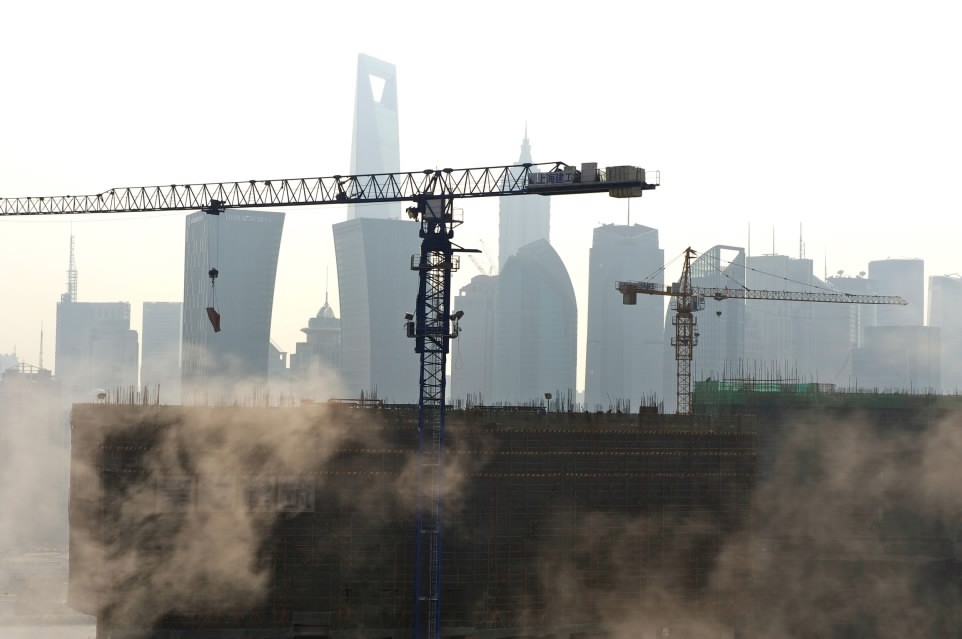
A construction site in Shanghai /VCG Photo
A construction site in Shanghai /VCG Photo
“I think that the big difference is priorities. Previously, China was keen on development no matter what cost it is. For example, environmental issues, we just bypassed these things and we want to get rich, double GDP at any cost. Now we say we are looking forward to a different development path. You know, we are not just looking at the numbers but we also look at the quality of this. What do we mean by quality? I think the judgment of growth is a bit different now. It’s emphasizing what we call ‘quality growth’ in terms of bringing happiness to people in all aspects.”

Highlight- The Necessity of State-Owned Enterprises Reform
Since China began its reform and opening-up in 1978, reforms of state-owned enterprises have been carried out. Robert Lawrence Kuhn discussed state-owned enterprises reform with Wang Depei, vice president of China Society of Economic Reform: “Why do state-owned enterprises need reform?”
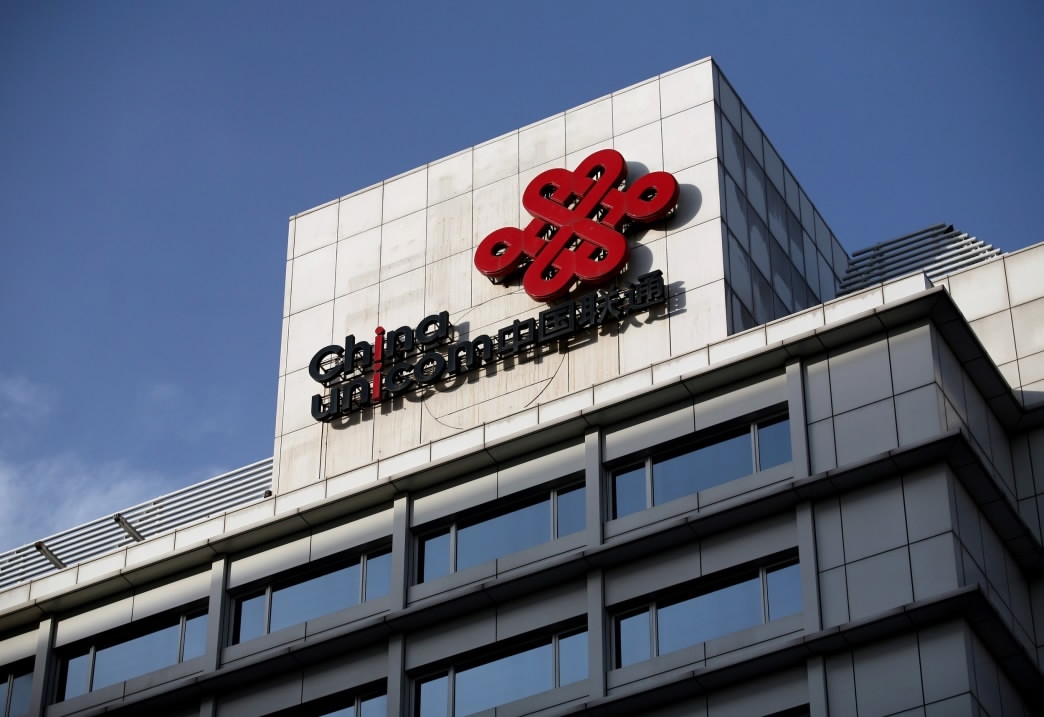
China Unicom, a state-owned enterprise under reform. /VCG Photo
China Unicom, a state-owned enterprise under reform. /VCG Photo
“In China, state-owned enterprises undertake public welfare, such as coal, electricity, tap water and public transportation. China’s state-owned enterprises can fall into two categories. One serves as public welfare and the other market-based. The market-based state-owned enterprises can be subdivided into two types. One runs natural monopolies and the others compete in the market. National enterprises undertake difficult tasks in fulfilling some national functions. These nationalized enterprises then cannot pretend to be enterprises to compete in the market. This is not easy. As for marketization, oriented enterprises must act as enterprises for that purpose… The line between the government and enterprises is blurred. Take central enterprises for example; are they enterprises or government agencies? Sometimes you cannot tell. This was fine in the past. Now Chinese enterprises are going global. If they’re involved in lawsuits overseas, who should represent them in court: the secretary of the party, the legal representative, or the chairman of the board? This allows for no ambiguity. Thus, there must be a clear line between enterprises and government. They should be separated from each other. In this phase, although the government and enterprises separate from each other, the reform of the corporate system is not over yet. The corporate system form in the half of 21st century includes limited liability enterprises. The system is universally applied worldwide. China’s market economy is not different from the rest of the world. The market economy is the same everywhere. Thus, the corporate system in the market economy should also be the same everywhere.”

Highlight- The Way of State-Owned Enterprises Reform
As China now pushes forward state-owned enterprises reform, there is one major issue in the way: interest groups that control very large assets - and they are also very powerful. Robert Lawrence Kuhn asked Zheng Xinli, former deputy director of Policy Research Office of the CPC Central Committee: “In general terms, interest groups are very powerful and they control very large assets. So what is the process for even the leader of the country to deal with such an embedded structure?”
“The reforms need to be pushed forward steadily because some state-owned central enterprises in particular are very powerful in their industry. To advance our reform, it has to be done in the steadiest manner possible. We cannot adopt shock therapy like the former Soviet Union did. That harmed productivity. That’s why we started reforming central enterprises on a pilot basis. The pilot is China Unicom, a mobile communication enterprise. The reform of China Unicom, if successful, will be extended to all central enterprises. The overall principles guiding reform are stability and prudence. In the course of the reform, we still need to grow our economy. We are doing a good job.”