
13:37, 02-Apr-2019
World Autism Awareness Day: Experts say key is to start intervention early
Updated
13:30, 05-Apr-2019
 []
[]
Share







Copied
02:29
The medical community's understanding of autism continues to grow. And while there is no cure yet, experts say starting intervention early is the best treatment.
At Shanghai's Haichang Ocean Park, a school of beluga whales entertain a group of autistic children. Experts say social activities tailored for such groups of people have gained popularity across Chinese cities.
DU YASONG, CHIEF PHYSICIAN CHILD & ADOLESCENT PSYCHIATRY, SHANGHAI MENTAL HEALTH CENTER "Currently China doesn't have its own statistics on autistic children. The United States CDC puts it at one in sixty-eight, and it is rising every few years. That's partly because the autism spectrum has widened, so more people fall into it. If we estimate that 1 percent of Chinese children have autism, we'd have 4 million."
Medical experts say starting intervention before two to three years old is currently the best solution.
YANG CHENGXI SHANGHAI "Although the disorder is deemed largely incurable, many social institutions are experimenting with different treatments that aim to increase the social skills of these children."
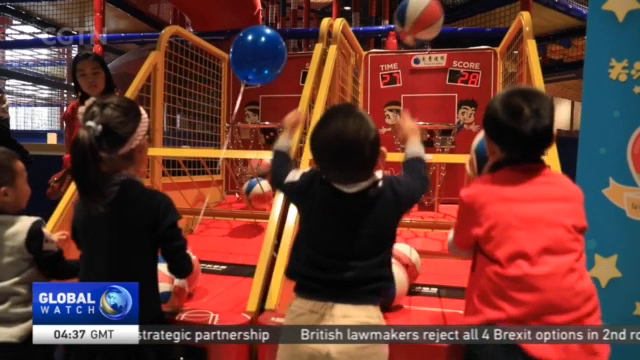
The Children's Hospital of Fudan University in Shanghai has a basketball team of autistic kids that train once a month. Creating social interaction is the goal.
PROFESSOR XU XIU, CHIEF OF CHILD HEALTH CARE CHILDREN'S HOSPITAL OF FUDAN UNIVERSITY "Our program helps with their body coordination, and we encourage them to talk. This is an effective behavioral intervention exercise."
Experts say the key is to start young when a child's brain is more impressionable. But a lack of awareness from parents and sometimes denial due to social stigmas, make many autistic kids miss this window. Nevertheless, social training has shown to help even adults with autism. This charity coffee shop in Shanghai offers beverages for free if customers chat with autistic baristas.
CAO XIAOXIA, FOUNDER LOVE COFFEE "These kids learn how to make coffee very quickly and can be very meticulous. What they struggle with is communicating with people around them. If we want to make them employable, we should start early."
However, a mimicked social environment is different from the real thing. How helpful these programs are once the kids enter society still depends on the individual. Vocational training is one aspect, but experts say what's more important is a society with less discrimination and more acceptance.
YCX, CGTN, SHANGHAI.