
Business
16:53, 15-Feb-2018
Huawei: Security warnings aimed at blocking firm's growth in the US
 ["china"]
Share







Copied
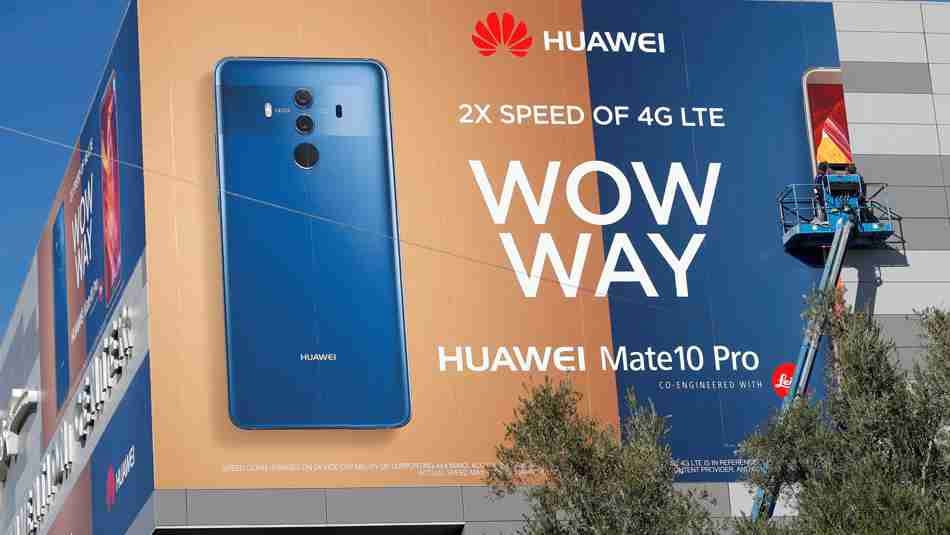
Chinese telecom giant Huawei has rejected the alarm raised by Washington’s intelligence community that the firm poses cybersecurity threat to the US, saying the accusations are aimed at blocking the Chinese smartphone maker’s growth in the American market.
Huawei’s response came after a group of US intelligence chiefs advised consumers against the use of Chinese smartphones made by Huawei citing misuse of private information and national security threats, hindering the hopes of the Chinese brand in gaining traction in the world’s second largest smartphone market.
Top intelligence officials including the head of the CIA, FBI and NSA on Tuesday warned that allowing Chinese companies to gain a foothold in the US market might give rise to the malicious modification or threat of information. They also expressed concerned about the ‘capacity to conduct undetected espionage’ as FBI director Chris Wary testified at a Senate Intelligence Committee hearing in Washington.
In a terse response, Huawei said the testimony was an “aimed act of inhibiting [the firm’s] business in the US”, asserting that it poses no greater cybersecurity risk than any other information and communications technology vendor. The Chinese company said that many of the supply chains and production facilities employed are identical to the ones used by other manufactures.
China’s ZTE, another phone vendor which has jumped its share of hurdles in the US and only had its name removed from a US trade blacklist less than a year ago after pleading guilty to violations of sanctions on Iran, is also being shunned as a security threat.
Even as the smartphone business booms in China’s domestic market with homegrown names like Oppo, Vivo and Xiomi leading the growth and even making considerable headway in less developed markers, the Shenzhen–headquartered Huawei is no stranger to setbacks in the US, which boasts of a substantial wealthy consumer base that is too large to ignore.
In January, Huawei’s first major deal to clinch a partnership with a US mobile carrier fell though at the last minute, citing pressure from Washington because of security concerns over “Huawei’s role in Chinese espionage”, said a Reuters report.
The collapse of the deal earlier this year coincided with a proposed bill by congress which aims to effectively banned government agencies from using Huawei devices, citing the potential cyber threats due to the company’s close ties with the Chinese military and government.
Reuters Photo.
Reuters Photo.
Two US senators have even gone so far as to call Huawei effectively an arm of the Chinese government, and “more than capable of stealing information from US officials by hacking its devices”
Allegations that the firm is using its devices to gather espionage and possibly exploit US telecoms networks have been repeatedly denied by Huawei, whose only explicit ties with Chinese authorities are a contract building a telecommunications system with the PLA in the early nineties, and founder Ren Zhengfei’s three–year stint working on a PLA engineering project. He was never given a military rank.
Last month, Huawei CEO Richard Yu remarked at the Consumer Electronics Show, that “American phone buyers can't have the best and widest choice of device if Huawei products – those of the world's third–biggest phone vendor – weren't on offer."
But Huawei may have to do a lot more persuading before absolving the “unique challenges” it faces in the US.
"This is a challenge I think that is only going to increase, not lessen over time for us," said Adm. Michael Rogers, the NSA's director. "You need to look long and hard at companies like this."
Difficult as the path may be, persuading a nation that it wants nothing more than a slice of the market has been done before. In 2015, Huawei was finally given the green light by the GCHQ – Britain’s NSA equivalent after years of scrutiny concluded there was no real security threat.
One possible way to keep the conversation going for the ambitious phone maker, suggested Willam Yu, an economist with the UCLA Anderson Forecast, is by investing in factories and providing jobs in the US. “By doing so, they will benefit the US economy and mitigate US security concerns.”