
21:47, 17-May-2019
Asian Cuisine Festival: Promoting tea cultures among different countries and regions
Updated
21:40, 20-May-2019
 []
[]
Share







Copied
03:26
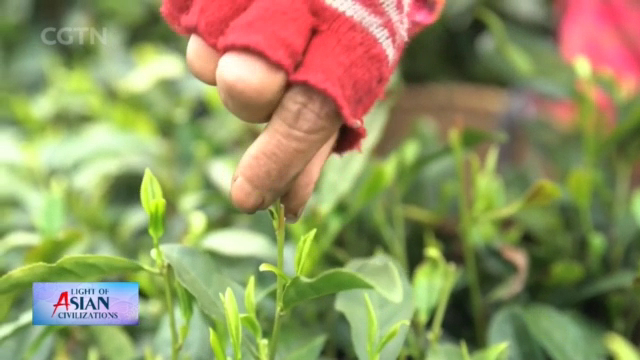
As a part of the Conference on Dialogue of Asian Civilizations, cuisine festivals are being held in the Chinese cities of Hangzhou, Guangzhou, and Chengdu. Our reporter Wu Lei visited the one in eastern China, and took a special interest there in one of the continent's most popular beverages - tea. However, he found it was an industry that was being overwhelmed by modern society, and producers were busy looking for answers.
Tea may represent a slow lifestyle, but the making of it is a race against time.
It takes half a day to roast just one kilo of the leaves by hand, a combination of patience and labor.
But this kind of hand roasting practice is disappearing in the face of modern technology.
QIU XIAOHUA TEA ROASTER "Machine-frying is five times faster. It may over-fry some of the leaves or break the shape of them. However, most buyers cannot tell the difference, except real tea lovers."
At an international tea forum held in Hangzhou city of eastern China's Zhejiang province, a tea expert from Sri Lanka also shared their challenges of protecting the tea culture.
DR. L.S.K. HETTIARACHCHI, ADDITIONAL DIRECTOR TEA RESEARCH INSTITUTE OF SRI LANKA "The prime challenge we face right now is the inadequate number of workers, how to get them to go to tea fields and harvest, and keeping the sustainability into account."
These tea organizations from China, Thailand, Sri Lanka and South Korea have decided to work closely to promote tea cultures.
In addition to training more tea workers, they also hope to work together to expand tea consumption among younger generations.
DR. PIYAPORN CHUEAMCHAITRAKUN, HEAD OF TEA INSTITUTE MAE FAH LUANG UNIVERSITY, THAILAND "The Thai people, we have been not much consumed or drunk tea beverage that much, but we have another way to promote the tea, how to increase the tea consumption by increase the tea cuisine, or we use the tea products to promote the tea tourism. This is a good way to increase tea consumption."
China was the first country in the world to have planted tea and remains the original homeland of tea culture. And that culture has spread beyond Asian countries to the rest of the world.
WU LEI HANGZHOU "Most Chinese people drink tea without anything but water, while people from other countries like to add sugar, milk, even fruits and herbs. Many say the colorful tea culture has shown how civilization has become richer with more exchanges."
That is why Chinese experts say the key to further promoting tea cultures is to adapt it into modern ways of life.
WU XIAOLI, DIRECTOR CHINA NATIONAL TEA MUSEUM "Different countries have various cuisine cultures based on their geological and historical reasons. But in this fast changing world, Chinese tea lovers also can learn from other countries' ways of tea drinking and tea products."
Nowadays many Chinese businessmen have seized the chance to innovate different flavors of tea, and bubble tea has become one of the most popular drinks among China's younger generations. And people believe the sustainability of the tea culture will rely on more exchanges and mutual learning. WL, CGTN, HZ.