
09:13, 04-May-2019
US Sanctions on Iran: Turkey says it cannot diversify oil imports easily
Updated
09:10, 07-May-2019
 []
[]
Share







Copied
03:37
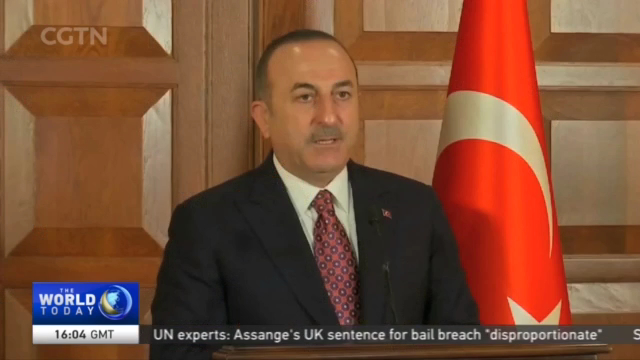
The deadline for sanction waivers for countries including China who import oil from Iran has come and gone. Turkey, one of those affected, says it would not be able to diversify its oil imports on such short notice. CGTN's Michal Bardavid has more.
Last year the United States reinstated sanctions against Iran and withdrew from the 2015 nuclear deal the Obama administration had signed with Iran together with other world powers. The U.S. had given eight countries six months of time to end its oil imports from Iran. That deadline ended on May 1st. Some countries such as India and Japan have signaled they would bow down to U.S. pressure. But so far, China and Turkey remain defiant.
MICHAL BARDAVID ISTANBUL "Turkey has been carrying intense political negotiations with U.S. officials. Ankara has been trying to convince Washington to allow its oil refiner Tupras to continue importing oil from Tehran. And as the U.S. deadline passed, Turkey's foreign minister made a statement regarding Turkey's current stance."
MEVLUT CAVUSOGLU TURKISH FOREIGN MINISTER "It does not seem possible for us to diversify the sources of the oil we import in a short time. The technology used in our refineries is not compatible with crude oil that is exported from many countries."
Cavusoglu also added that if Turkey was forced to renew its technology in order to diversify its sources to comply with U.S. sanctions, refineries would need to be shut down for some time which would be costly for Turkey. Experts emphasize that Iran is crucial for Turkey's energy needs.
OZAN SAKAR POLITICAL ECONOMIST "Turkey provides 40 percent of its electricity with natural gas, which is dependent on imports. The same goes for petrol. Turkey imports about 17 percent of its natural gas from Iran. It cannot suddenly change this energy mix. These processes take a long time."
But the U.S. is determined to cut Iran's oil exports, with the hopes of delivering a major blow to its main source of income. However, that could destabilize Iran which could also affect the region.
OZAN SAKAR POLITICAL ECONOMIST "Currently, the state in which Turkey's neighboring countries such as Syria and Iraq are in its evident. If Iran is also drawn into a process of destabilization in the region, this would create a serious security risk for Turkey. Thus, Turkey would involve itself in this destabilization process by standing against it."
However, this could also be risky for Turkey as well, especially economically. The Turkish Lira has been weakening against the U.S. dollar. It has lost over 10 percent in value this year which comes following a depreciation of about thirty percent in 2018. Though there are some financial reasons for the downfall, political tension is part of the reason as well. Turkey is already in conflict with Washington over its refusal to back down from the S-400 deal it has signed with Russia. If Turkey decides to disregard U.S. sanctions and continues to import oil from Iran, more troubling times will likely be ahead for the Ankara-Washington ties and for Turkey's economy. Michal Bardavid, CGTN, Istanbul.