
17:53, 15-Mar-2019
Highlight - China commits to deepen reform and unlock market dynamism to enable its economic transformation
Updated
12:02, 19-Mar-2019

Share






Copied
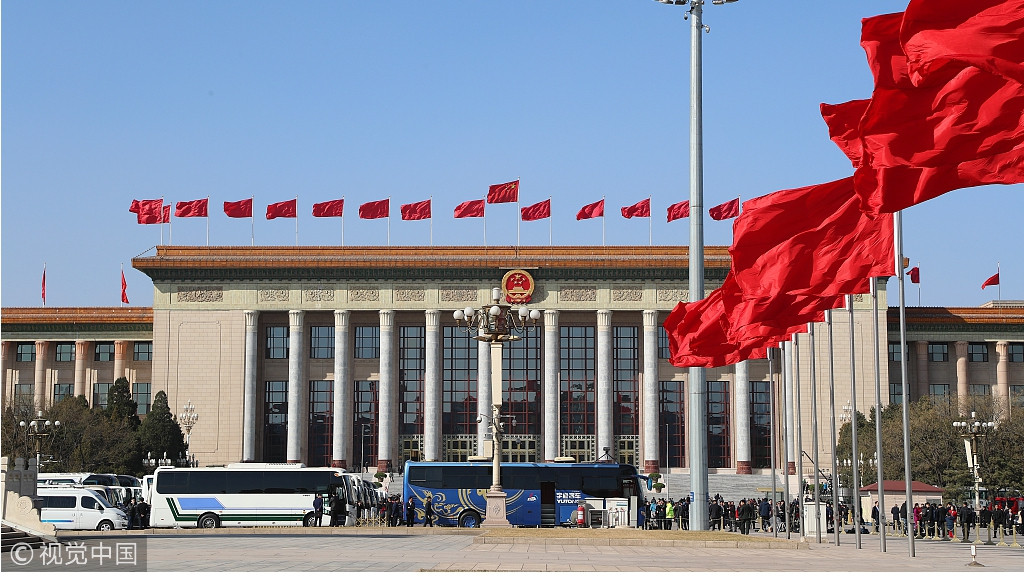
China's annual Government Work Report delivered by Premier Li Keqiang at the opening meeting of the 13th National People's Congress indicated that China faces weighty tasks, severe challenges and high demands this year as its slow economic growth in 2018 as well as the complicated and challenging external environment brings about new downward economic pressure.
During this economic transition process, China is confronted with diverse challenges such as the SOE reform, local debt, financial risks, leverage, overcapacity and so on.
Among all these issues, SOE supply-side structural reform was labelled China's "main task”.
Justin Lin Yifu, Member of the Standing Committee of the 13th CPPCC National Committee, Vice-Chairman of Economic Committee, spoke about SOE reform with Robert Lawrence Kuhn.
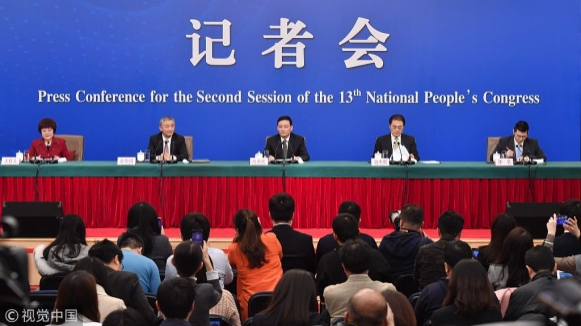
Press conference at the Second Session of the 13th National People's Congress on "Reform and development of SOEs" held by The State-owned Assets Supervision and Administration Commission of the State Council (SASAC) March 9, 2019. /VCG·Photo
Press conference at the Second Session of the 13th National People's Congress on "Reform and development of SOEs" held by The State-owned Assets Supervision and Administration Commission of the State Council (SASAC) March 9, 2019. /VCG·Photo
At this year's Two Sessions political meetings, China pledged to deepen reforms in key sectors, vowing to make big improvements in the development environment for private sectors so as to unlock market dynamism.
According to Justin Lin Yifu, the most important thing in China's reform is to create level playing fields for all types of enterprises.
To better carry forward the SOE reform, he divided the state-owned enterprises in China into three categories: the natural monopoly sectors, the competitive sectors, and the national defense related sectors (which are more capital-intensive and need to be subsidized).
As for the natural monopoly sectors, Justin Lin Yifu pointed out that what really matters is to monitor these enterprises and prevent them from capturing monopoly powers.
Considering the large scale of state-owned enterprises, the way of preventing or mitigating potential risks is to create a level playing field. And that should be the overall direction of SOE reform.
It is natural that China, as a developing country, will face problems during its economic transition process. China project confidence that it overcome these problems and maintain its growth momentum in this year and the coming years. How they will do so is the big question.