
14:02, 26-Mar-2019
Building Homes from Seaweed: Inventor uses seaweed to build low-income homes in Mexico
Updated
14:00, 29-Mar-2019
 []
[]
Share







Copied
03:02
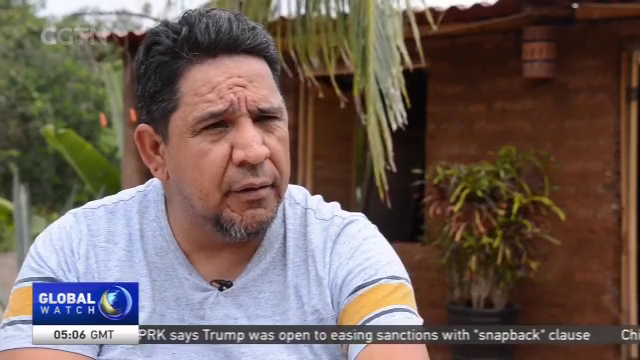
A local resident in the Yucatan peninsula in Mexico has discovered the special value of seaweed as building material for houses. And now it's seen by many as a path to better living standards for the peninsula's rural communities. Check out how one resident is trying to turn all this seaweed into wealth.
Sargazo, Caribbean seaweed. Washing up on Mexico's Yucatan peninsula-home to the world-renowned beaches of Cancun, Cozumel and Riviera Maya.
It stains the pristine white sand, smells dreadful as it rots in the hot sun, and worst of all, chases tourists away.
But one local man has discovered tourism isn't the only reason to clear the beaches: he's building houses with seaweed.
OMAR VASQUEZ SARGAZO BRICKS INVENTOR "I'm just that kind of person. I don't like to worry, I just like to do things."
Omar Vasquez discovered that by allowing the plant to biodegrade, and then mixing it as a primary ingredient in a traditional adobe, or mud brick, that the resulting material was durable and weather resistant.
OMAR VASQUEZ SARGAZO BRICKS INVENTOR "Sargazo is strong. If you try to rip it apart, it's hard. So, that's why I started putting the clay, with sargazo and it worked."
ALASDAIR BAVERSTOCK RIVIERA MAYA "Away from the all-inclusive resorts, the Yucatan peninsula is one of the most marginalized regions of Mexico, with 42% of the population living in poverty. These bricks, made from the seaweed that local authorities can't get rid of fast enough, are seen as a path to better living standards for the peninsula's rural communities."
Monica Gomez now lives in one of the seaweed houses, after a community outreach program built it for her family.
MONICA GOMEZ MAYAN RESIDENT "When it's cold outside, the house is always warm, and when it's hot outside, it's cool indoors. Now I have a place to live with my kids, without having to suffer the cold, or to have to live with my mother."
Local authorities say it may take a while before seaweed brickmaking is profitable.
OSCAR ALVAREZ GIL QUINTANA ROO STATE ENVIRONMENT "It is very expensive to clean, so it will be great if we can reach a point at which it's generating a sustainable business, which pays for its own removal from the beaches."
At least one Yucatan entrepreneur is trying to turn all this seaweed into wealth. For the tourism industry that can't happen soon enough.
Last year, the state of Quintana Roo removed around 150-thousand cubic meters of seaweed, but only from the beaches. Thousands of tons more remained in the water.
Alasdair Baverstock, CGTN, the Yucatan, Mexico.