
18:06, 28-Feb-2019
Full Episode – 40 Years and Counting Ⅳ: China’s Social Reform

Share






Copied

By Robert Lawrence Kuhn
In this 40th year of China’s reform and opening up, President Xi Jinping calls for comprehensively deepening reform and further opening up. That’s why we title this series, “40 Years and Counting: Transforming Reform and Opening up for the New Era.” What lessons have been learned? What challenges lie ahead?
To appreciate the importance of social reform, we explore people’s demand for better healthcare, education, and social security, a cleaner environment, and reduced disparities between rich and poor. The best way to view social reform over the past four decades, and into the future, is through the lens of what is called “the principal contradiction”, a concept that defines the most significant or pressing issue that needs to be addressed.
During most of the four decades of reform and opening up, the principal contradiction was “the ever-growing material and cultural needs of the people versus backward social production”.
Now, even as China looks to achieve its goal, by 2020, of becoming a moderately prosperous society, there is growing dissatisfaction with social conditions, such as high rent and pollution in urban areas and subpar healthcare and education in rural areas. Thus, in President Xi Jinping’s “new era”, the principal contradiction has changed: it is now “between unbalanced and inadequate development and the people’s ever-growing needs for a better life”. Xi calls the change a "historic shift that affects the whole landscape.”
China’s new principal contradiction, while typically terse and elliptical, frames a rich tapestry of risks and opportunities, strategy and tactics, policy drivers and targeted reforms – all of which will shape China’s prospects for the foreseeable future.
For those who see the distinction between the new principal contradiction and the old one as without a real difference miss an opportunity to discern what is really happening in China. After 40 years of economic boom, China has made it possible for the vast majority of 1.4 billion people to live adequate lives. Requirements for better lives, however, are increasingly broad.
As President Xi said: “Not only have the people’s material and cultural needs grown; their demand for democracy, rule of law, fairness and justice, security, and a better environment are increasing.” The message is that while economic growth remains necessary, it is no longer sufficient.
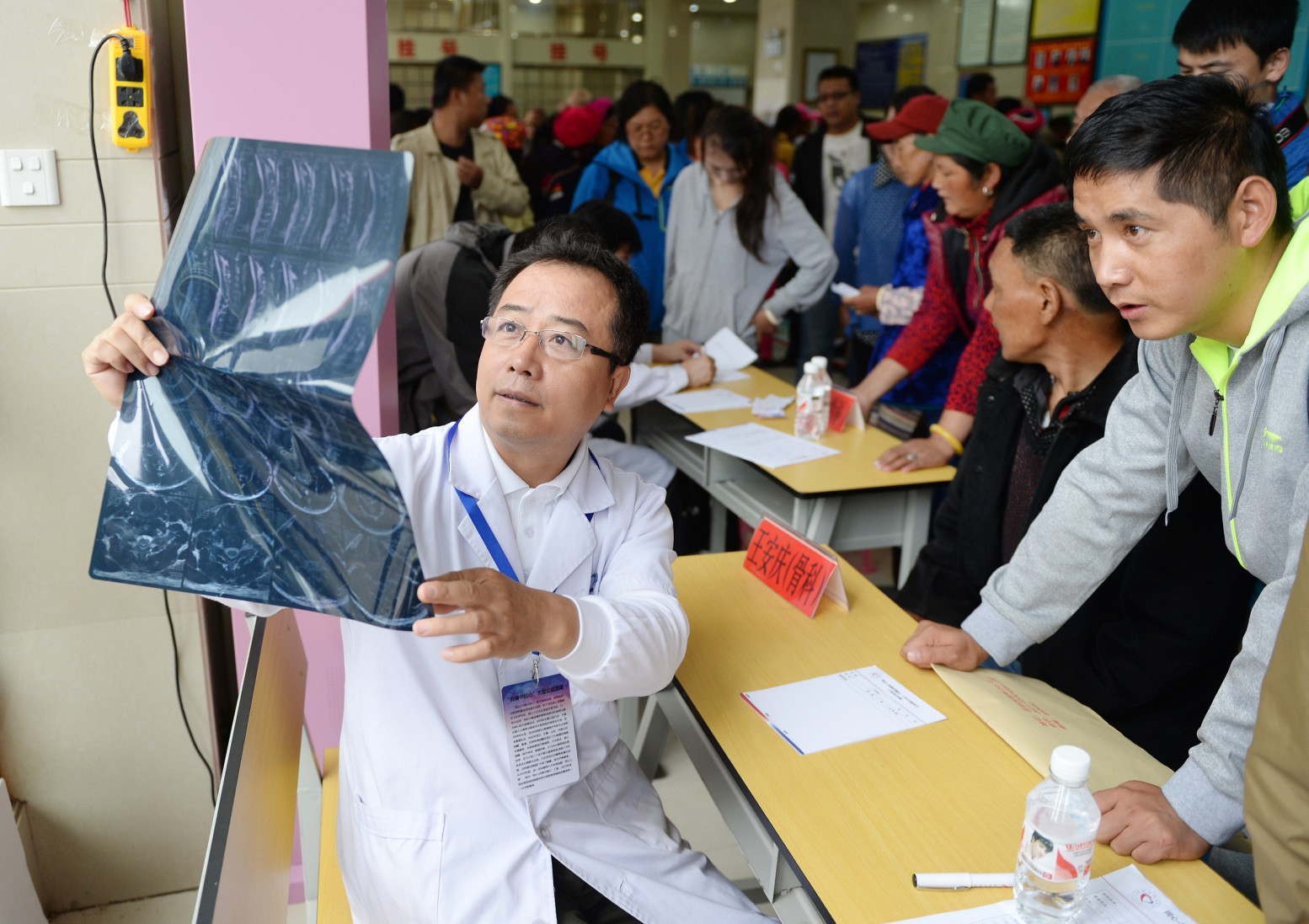
Medical experts from Beijing visit Yunnan Province and conduct an on-site clinic. / VCG Photo
Medical experts from Beijing visit Yunnan Province and conduct an on-site clinic. / VCG Photo
This new principal contradiction, replacing quantitative GDP growth with qualitative quality-of-life improvement, is what now drives policy.
Healthcare in rural and inland regions is especially challenging. Part of healthcare social reform is the partnering of developed regions and less-developed regions. For example, I saw how Shanghai’s advanced hospitals partner with rural hospitals in Yunnan Province: Shanghai sends dozens of doctors per year to Yunnan for visits and extended stays and also trains Yunnan doctors in Shanghai. As doctors learn to work together in person, they can continue via telemedicine, significantly upgrading the standard of healthcare for rural residents.
Opening up is also about “opening up of people’s minds”. Success will be measured more by the satisfaction of the people than by the growth of the economy. Will “satisfaction” be harder to judge? Chinese people are not shy. That’s Closer to China.