
09:11, 19-May-2019
International Museum Day: Chinese museums and their uncertain future
Updated
09:10, 22-May-2019
 []
[]
Share







Copied
03:28
With China said to be the world's second-largest art market after the United States, it's no surprise that more privately-owned museums are popping up across the country and each with its own unique theme. But many are living precariously due to limited funding, and all are striving to make ends meet in their own ways. Here's CGTN's Li Jianhua with more.
The one and only ancient outfit made of jade plates and sewn with silk threads, the Nanyue King was once shrouded in the clothing over two-thousand years ago. Dimly lit, the museum is drawing an increasing number of visitors.
This horn-shaped Jade cup, one of the most precious treasures in all of China, is never allowed out of the country.
Miscellaneous artifacts, jade work in this museum especially, never fail to wow tourists. Regardless, funding is still an obstacle for the state-sponsored museum.
WANG WEIYI CO-DIRECTOR, MUSEUM OF NANYUE KING "Our biggest advantage is the abundant treasures, and we have a trove of them here. Our promotion of artifact-inspired souvenirs is quite advanced in Guangzhou. But when it comes to fundraising and souvenir development, we are still lagging behind Beijing and other international museums abroad. We should work to keep par with social development."
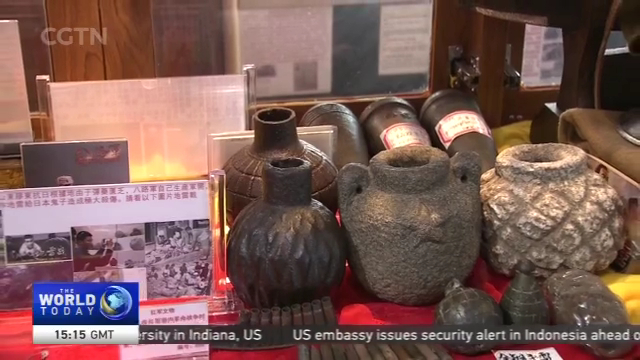
Now many privately-owned museums are popping up across China. The nation is home to some 1,500 private museums, the world's second-largest art market after the U.S. We visited a private museum that collects items from the second world war and China's civil war around the 1940s. The owner, a big fan of warfare, converted the second floor of his house into a museum last year.
WU HUISEN PRIVATE MUSEUM OWNER "I've devoted all I have to my museum. I don't drink, smoke, or travel. Everything I have is here."
This museum is free to the public. Now and then some visitors come for a visit – some are new, while some are his old friends. Wu says Chinese youngsters lack knowledge of their own history.
WU HUISEN PRIVATE MUSEUM OWNER "I didn't aim to make a profit by running the museum. It's free. What I want is to give younger generations a real sense of history. I've spent about 300-thousand US dollars on the museum."
However, not all museums in China are free, due to lofty expenses for maintenance and funding shortages. China's Forbidden City has been selling artifact-inspired souvenirs to make profits, making nearly 400 million dollars in 2017, twice the revenue from ticket sales. The British Museum in the same year raked in about 200 million dollars by selling souvenirs.
LI JIANHUA GUANGZHOU "China, with its long and rich history, is home to tons of museums. Despite many museums being state-sponsored, a lot of privately-owned ones are emerging - many of whose owners are diehard fans of particular fields. State-owned museums are getting by, but how privately-owned ones sustain their development is an issue. LJH, CGTN, GUANGZHOU."