
13:30, 31-Mar-2019
Secrets Of Maya Ruins: Archaeologists explore the ancient city of Chichen Itza
Updated
13:20, 03-Apr-2019
 []
[]
Share







Copied
02:59
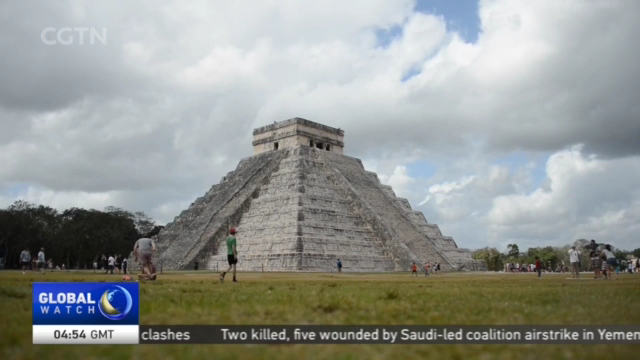
In Mexico, the archaeological ruins of Chichen Itza draw millions of tourists every year. It's a city built by the ancient Maya, then mysteriously abandoned to the jungle hundreds of years ago. Archaeologists continue working today to learn the true story of its demise. CGTN's Alasdair Baverstock reports from Mexico.
Chichen Itza, a city built by the ancient Maya in the jungle heart of the Yucatan Peninsula. The Temple of Kukulcan draws millions of visitors every year, and to this day, for archaeologists, the abandoned city continues to give up secrets. The Balamku Cave was uncovered just last year within the ancient city, revealing a treasure trove of ancient Maya artifacts, in a project led by archaeologist Guillermo de Anda.
GUILLERMO DE ANDA ARCHAEOLOGIST "This cave, Balamku, is going to help us to rewrite the history of this city."
The team found incense burners, water carriers and pots, evidence of religious ceremonies.
GUILLERMO DE ANDA ARCHAEOLOGIST "We have found seven offerings. All of them in very good state of preservation, it looks like they were deposited by the ancient Maya yesterday."
Initial studies say the find indicates a period of drought in the city.
GUILLERMO DE ANDA ARCHAEOLOGIST "Why did they take this water to go in there? To this place where mortals, the people on the surface, were not going to see? What they were doing is trying to call the attention of the water god, we believe, to produce rain."
ALASDAIR BAVERSTOCK CHICHEN ITZA, MEXICO "This ancient city of Chichen Itza was abandoned by the Ancient Mayans more than 600 years ago. Yet they left behind evidence of a highly advanced culture with knowledge of astronomy, economics and agriculture. And yet while these ruins of ancient cities may be abandoned, modern-day Mayan culture is alive and well here in the Yucatan Peninsula."
Mario Dzul is Maya, and after years has finally saved up to build his house, which he's doing in the traditional style.
MARIO DZUL MAYA "I'm proud of being Maya, and I want my culture to survive, that's why we're doing this. We learned these techniques from my grandmother, who learned them from hers. They are traditions passed down through many generations."
As archaeologists continue to discover the secrets left behind by an ancient civilization, they are looking at the roots of a culture that continues to survive in the 21st century. Alasdair Baverstock, CGTN, The Yucatan, Mexico.