
22:25, 18-Mar-2019
Thailand Election: Are conditions ripe for more street protests?
Updated
22:20, 21-Mar-2019
 []
[]
Share







Copied
02:56
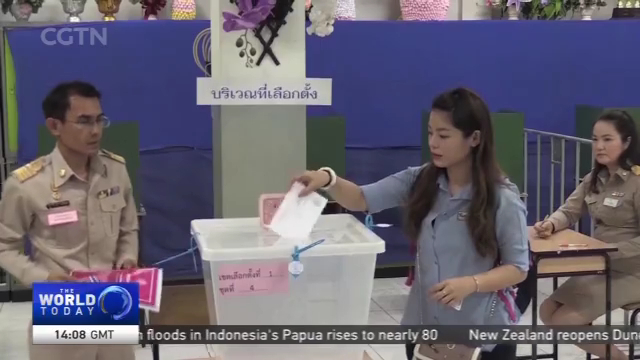
In Thailand, early voting ahead of next weekend's general election has already been held in some areas. However, many of the parties are unhappy with how the current constitution still allows the military to have significant influence in government, right up to the appointment of the prime minister. Social unrest has followed elections in the past, and Tony Cheng looked at how the current inequalities in the election process could mean the country is set for more.
Early voters queuing to cast their ballots ahead of Thailand's general election next Sunday. After 5 years of military rule, polls suggest a turnout as high as 80%. Thais, it seems, are keen to return to civilian government. It's a big change from 5 years ago when protesters took to the streets to force the last government to step down. The Yellow shirts, or PDRC as they became known, shutdown Bangkok and disrupted elections in 2014, opening a power vacuum for the military coup. Since then, many of their most ardent supporters have become disillusioned. Panithi Sanprach led protests to oust the government, but now he regrets allowing the military to take power.
"It's been clear since 2015 that the military wants to extend their control, but we can't do anything about it because they control the courts too."
Regardless of the election result, the military will still maintain considerable influence. The constitution they pushed through in 2016 ensures they exert control over future legislation, and important political appointments like the Prime Minister's post. In the center of Bangkok, Democracy monument, built to mark the end of absolute monarchy, is being repaired. The symbolism is clear.
TONY CHENG BANGKOK "This General election may well return a result that many people are not happy with, particularly the appointment of a Prime Minister not chosen by the majority of the electorate, and if that happens, will we see a return to the street protests of the past?"
The answer to that is likely to lie with the red shirts on the other side of the Thai political divide. They've protested vigorously after successive governments influenced by Thaksin Shinawatra have been ousted or disqualified. Today, however, they seem satisfied to let the election process play out, even if it's flawed.
LEK BANGPHI RED SHIRT "I think the election isn't free or fair, but it's better than having nothing. If they keep us in the dark, then we won't know anymore what real democracy is."
SONGKRAN PLUBNGEUN RED SHIRT "If they come out on the streets again, I won't support them, but I don't think it's going to happen. If it does, it will only be a small group."
For the moment, these red shirts are willing to follow a more harmonious path, just happy for the chance to change things at the polls rather than on streets. Tony Cheng, CGTN, Bangkok.