
13:21, 22-Mar-2019
Mexico Infrastructure Project: Massive tunnel to help Mexico City drainage system
Updated
13:20, 25-Mar-2019
 []
[]
Share







Copied
02:49
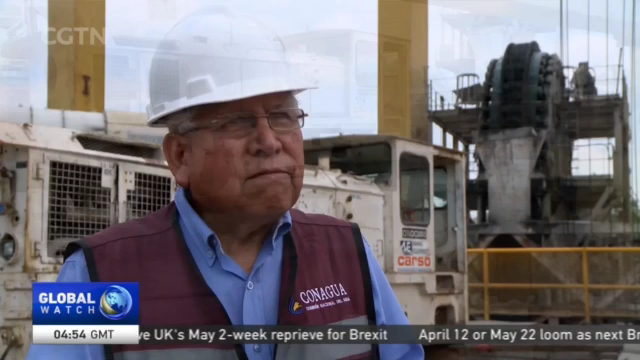
Near Mexico City, construction crews are working around the clock - underground - excavating and lining a 62-kilometer long tunnel that will play a key role in the city's much-needed drainage system. CGTN's Franc Contreras was near the town of Jaltenco and gained rare access to the 2-billion-dollar mega-infrastructure project.
FRANC CONTRERAS JALTENCO, STATE OF MEXICO "We are on a section of this underground tunnel now that is located 90 meters below the surface of the earth, so big you can drive a train through it. This is the last and final section of this mega works project that will become the drainage system for the Mexican capital."
During the past 10 years, tunnel digging crews supervised by Mexico's National Water Commission have been working here around the clock, seven days a week, deep under the surface of the earth.
When completed, this massive drainage system will be 62-kilometers long.
Engineer Mario Andres Terres supervises this section of the tunnel construction. He's helped manage the project and says the biggest challenge now - breaking through millions of tons of solid volcanic rock.
MARIO ANDRES TERRES MEXICAN TUNNEL ENGINEER "Basalt is a commonly known rock that comes from volcanic lava. The fact that it so hard makes it difficult to cut. Our machines are designed to break this tough rock into chips and turn it to gravel."
The ancient Mexican capital was originally built nearly 700 years ago upon a system of lakes connected by water canals. Water management has always been a critical part of life here.
In the summer, heavy rains regularly bring massive flooding, and this inundation of water has plagued Mexico City for decades.
Another engineer managing this project, Jose Li Espinosa, says once the drainage tunnel is operating, flooding will no longer be a problem.
JOSE LI ESPINOSA MEXICAN TUNNEL ENGINEER "This tunnel will have the capacity to drain all rainwater before it turns to floods each year. And it will be connected to the other parts of Mexico City's existing drainage system of water collection sites and tunnels."
This underground infrastructure project is scheduled for completion in July, just in time for the rainy season. Franc Contreras, CGTN, near the town of Jaltenco, State of Mexico.