
18:04, 28-Feb-2019
Highlight - How does the Belt and Road Initiative benefit China’s development?

Share






Copied

The Belt and Road Initiative was first put forward by China’s President Xi Jinping in 2013 in Kazakhstan. It calls for regional integration to create a cohesive economic area through the building of infrastructure, increasing trade, and enhancing cultural exchanges. While overseas projects have always been the center of attention, China’s various localities are seeking to leverage the Belt-and-Road initiative in order to build momentum for local development. As for how the Belt and Road Initiative affects reform and benefits China, Professor Zhao Lei, Institute for International Strategic Studies of the Central Party School of the Communist Party of China, spoke about two aspects with Robert Lawrence Kuhn.
Zhao Lei said that first, Chinese cities should open up more and attract talent they need in the process of developing the Belt and Road Initiative. The Initiative was proposed on September 7th, 2013, in Kazakhstan. As one of the five countries in Central Asia, Kazakhstan is a land-locked country, bordering the five provinces of northwestern China, namely Xinjiang, Shaanxi, Gansu, Ningxia and Qinghai. Those provinces are regarded as having begun the reform and opening up process later. That is because they lacked the opportunity of opening up, and related businesses and services. So the Belt and Road Initiative facilitates the activation of reform and opening up in these relatively underdeveloped provinces in the new era.
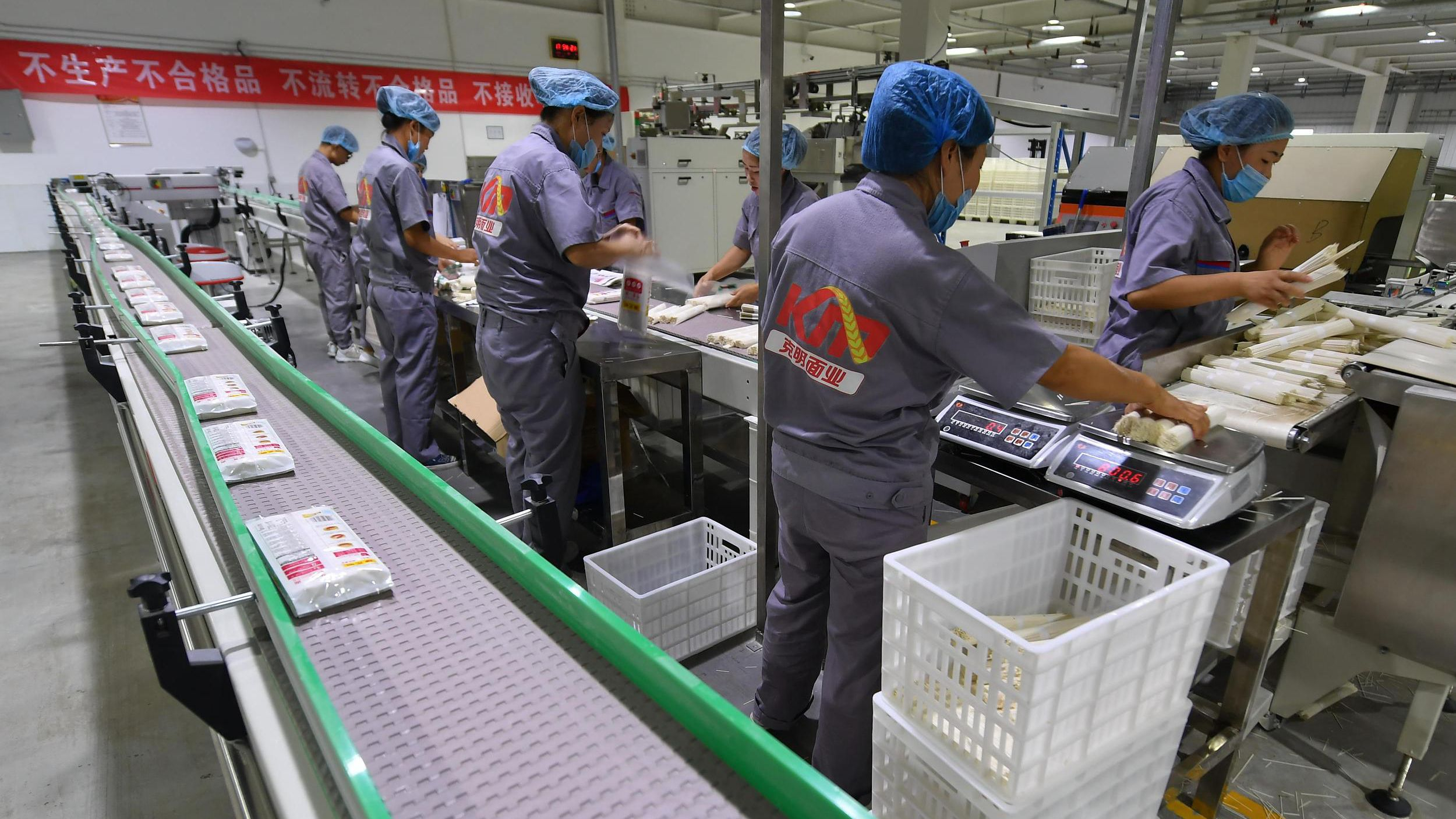
Production lines of Xinjiang Kemen Noodle Manufacturing Company, where output is being stepped up. The wheat flour is from Kazakhstan. Urumqi, Xinjiang, August 13, 2018. / VCG Photo
Production lines of Xinjiang Kemen Noodle Manufacturing Company, where output is being stepped up. The wheat flour is from Kazakhstan. Urumqi, Xinjiang, August 13, 2018. / VCG Photo
Second, more importance should be attached to private enterprises. In the Belt and Road development, state-owned enterprises are vanguards and private enterprises are like “fresh troops”. In the past five years, to some extent, state-owned enterprises have made strong gains. But judging from the direction of Belt and Road development, it is likely that the Belt and Road Initiative cannot succeed without good private enterprises. The participation of private companies will improve the international community’s impression of the Belt and Road Initiative and of China, improving favorabilities.