
Evolution
11:44, 27-Jan-2018
Resetting clock on modern human evolution
 ["other","Middle East"]
Share







Copied
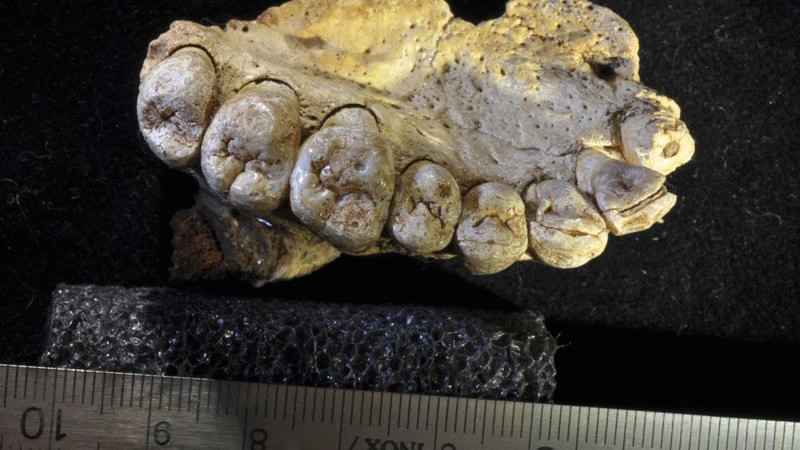
A jawbone discovered in a Northern Israel cave has archeologists and anthropologists re-calculating the length of time humans have been on earth. Scientists say the jawbone dating – between 170-200,000 years ago – proves humans were around earlier than was previously thought.
That may translate into Homo Sapiens being around a full fifty thousand years earlier than modern science predicted until now.
“The entire narrative of the evolution of Homo sapiens must be pushed back by at least 100,000-200,000 years,” researcher and head of the Dan David Center for Human Evolution and Biohistory Research at Tel Aviv University Prof Israel Hershkovitz said.
“This has changed the whole concept of modern human evolution,” he said.
Why is the discovery significant?
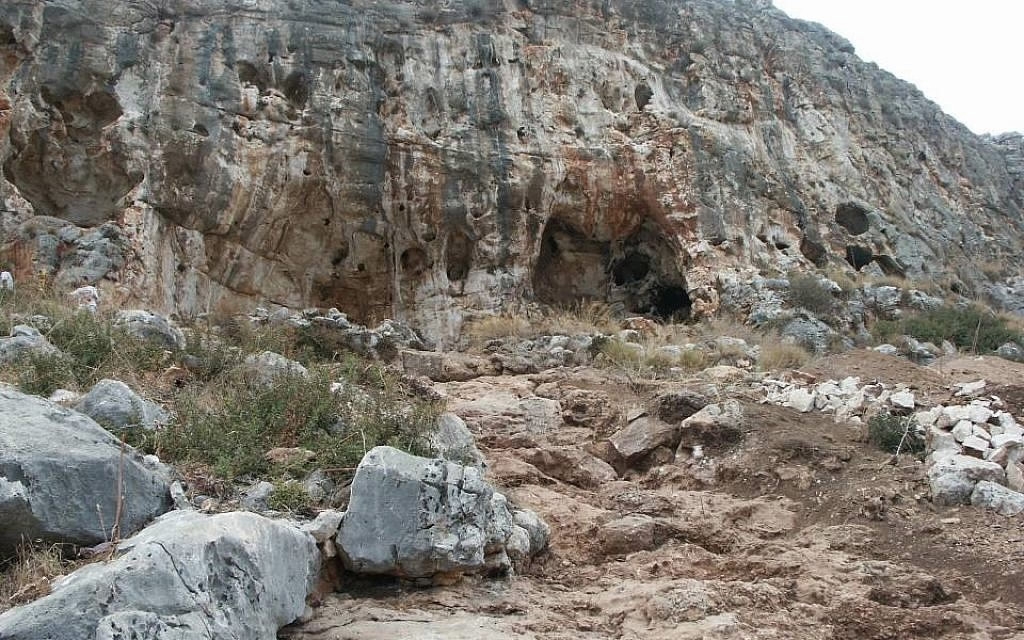
The discovery also implies that humans did not evolve in isolation. /Photo via Tel Aviv University
The discovery also implies that humans did not evolve in isolation. /Photo via Tel Aviv University
For the past half-century, scientists believed that modern humans appeared in Africa, the “beginnings of humanity,” roughly 160,000-200,000 years ago.
Early migration records outside of Africa were previously dated to around 90,000-120,000 years ago, through fossils discovered ninety years ago in digs at other Israel caves.
The implication is that the history of homo-sapiens needs to be pushed back to half a million years ago.
The discovery also implies that humans did not evolve in isolation but, instead, as part of a process of interaction with other hominin or “human” linked groups.
The jawbone: discovery details
The jawbone was found during a 10-year series of excavations started by archaeologist Hershkovitz and University of Haifa professor Mina Weinstein-Evron.
The duo set out to look for the origins of modern Homo Sapiens and “found something even more surprising,” Weinstein-Evron told the press.
The jawbone was discovered in the petrified soil in 2002. Dating and typifying it took a team of inter-disciplinary international scientists fifteen years. The process of removing sediment took an entire year and dating took several years.
Dating analysis took several years of almost daily work and included a radiation dating technique that took a year to perform.
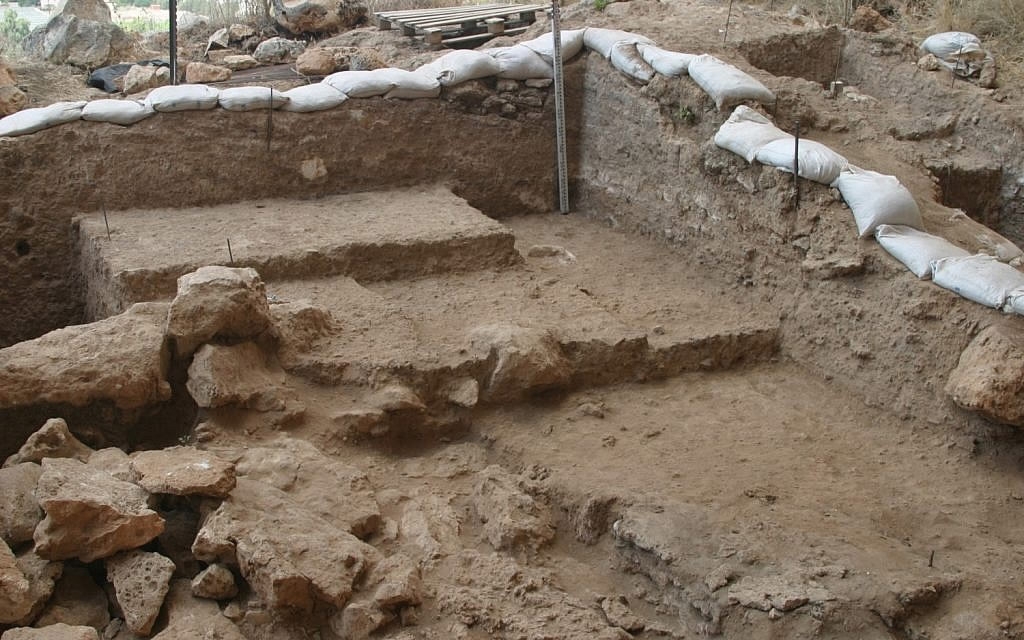
Archeological Dig /Photo via Tel Aviv University
Archeological Dig /Photo via Tel Aviv University
To prove the jawbone belonged to a Homo sapien, the bone was scanned.
The dating completed, he said, adding, “we had to prove that the specimen belongs to our species, Homo sapiens.” To that end, the bone was scanned using 3D analysis.
The team ultimately collectively confirmed the fossil’s properties and dating.
Tools of the times
Discovered in the same cave: hand axes, sophisticated flint tools… a visual display of human evolution.
“We found evidence for everything in the cave…” said Weinstein-Evron.
Hershkovitz says that the tool sophistication attests to intellectual capabilities of the times.
"I personally believe they were as smart as we are today, but that’s just a guess,” said Hershkovitz.
Scientists say the jawbone discovery does not enable specification of who the early modern humans were or what they were capable of.
(Cover Photo via Tel Aviv University)