
Politics
11:40, 05-Apr-2018
Brazil Supreme Court rejects Lula's bid to delay prison
 ["china"]
Share







Copied
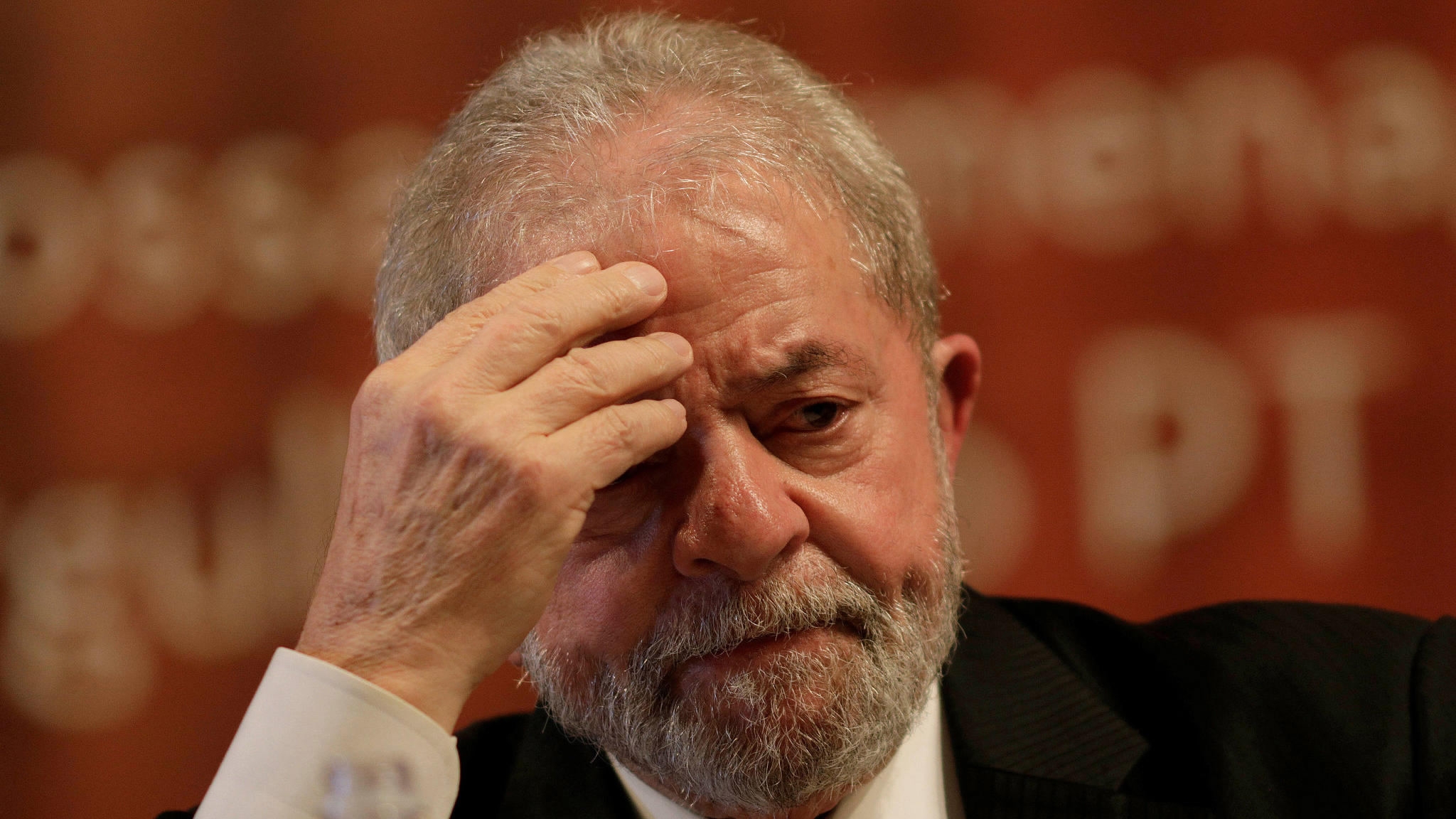
Brazil's Supreme Court on Wednesday rejected former president Luiz Inacio Lula da Silva's bid to delay a 12-year prison sentence for corruption in a 6-5 ruling.
Lula, who was Brazil's most popular leader on record and is the frontrunner ahead of the October 7 polls, could be arrested anytime in the next few days.
The 11 judges deliberated for more than 10 hours from Wednesday into Thursday on Lula's request to avoid going to prison while he mounts fresh appeals.
The pivotal vote was cast by Justice Rosa Weber against Lula's request to avoid jail and begin serving his 12-year sentence for accepting bribes. Weber was seen as the only swing vote and her decision sealed Lula's fate.
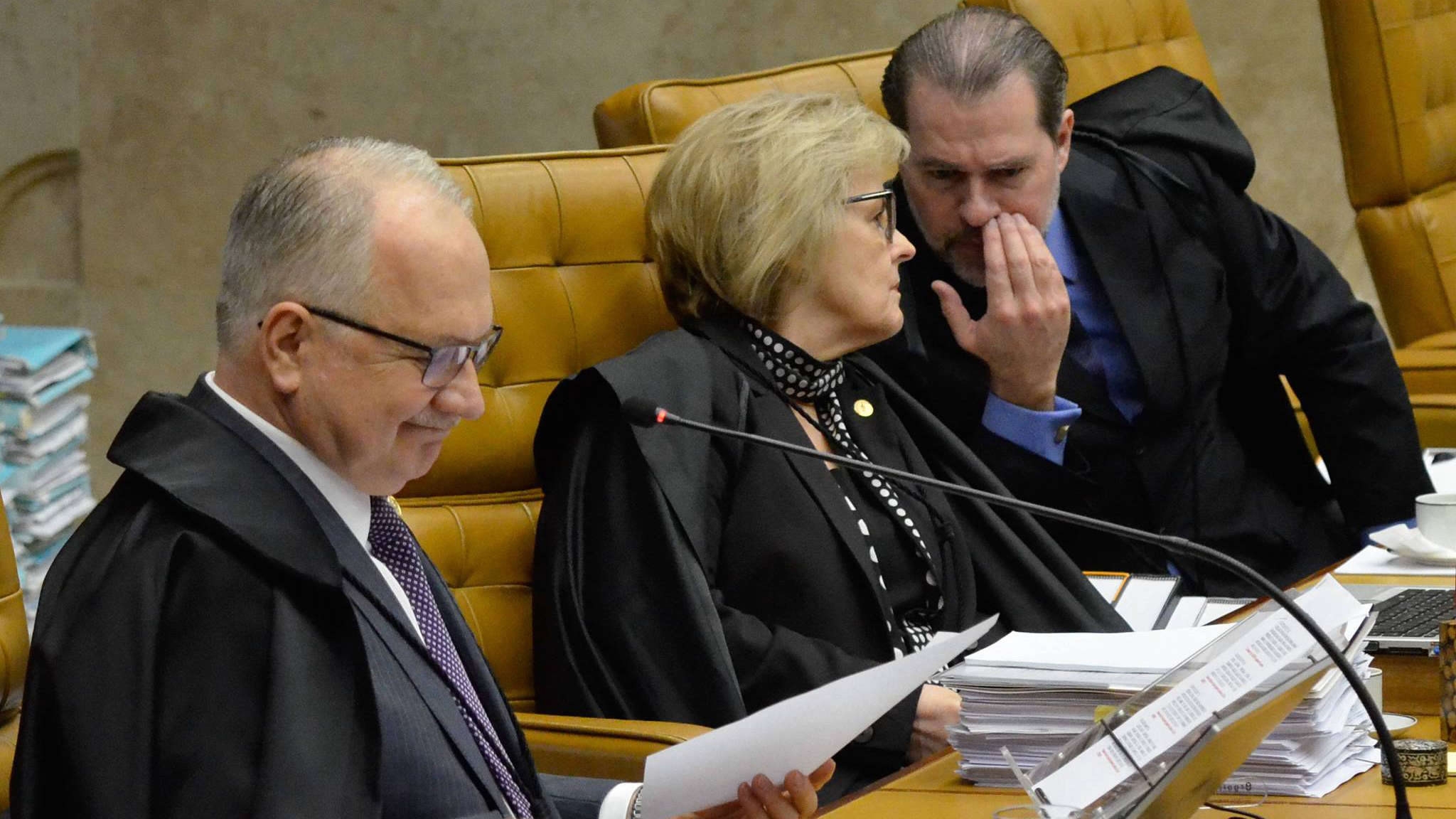
Ministers Edson Fachin, Rosa Weber and Dias Toffoli discuss during the habeas corpus trial of former president Luis Inacio Lula da Silva, April 4, 2018, in Brasilia. /VCG Photo
Ministers Edson Fachin, Rosa Weber and Dias Toffoli discuss during the habeas corpus trial of former president Luis Inacio Lula da Silva, April 4, 2018, in Brasilia. /VCG Photo
Lula's conviction was upheld on a first appeal. Under Brazilian electoral law, a candidate is forbidden from running for elected office for eight years after being found guilty of a crime. Some exemptions have been made in the past, and the ultimate decision in Lula's case would be made by the top electoral court if and when Lula officially files to be a candidate.
Lower court judges, the country's top prosecutor and business groups urged the court to abide by its own 2016 ruling that defendants can be jailed if a conviction is upheld on a first appeal, as Lula's was earlier this year.
Lula was sentenced to 12 years and one month prison after being convicted last year of accepting a seaside apartment as a bribe from a major construction company seeking government contracts. He appealed in a lower court but lost.
Under current law, that meant he should go immediately to prison, even while conducting further appeals in two higher courts. However, Lula applied to the Supreme Court for habeas corpus, allowing him to remain free during the appeals, potentially keeping him out of jail for a long period.
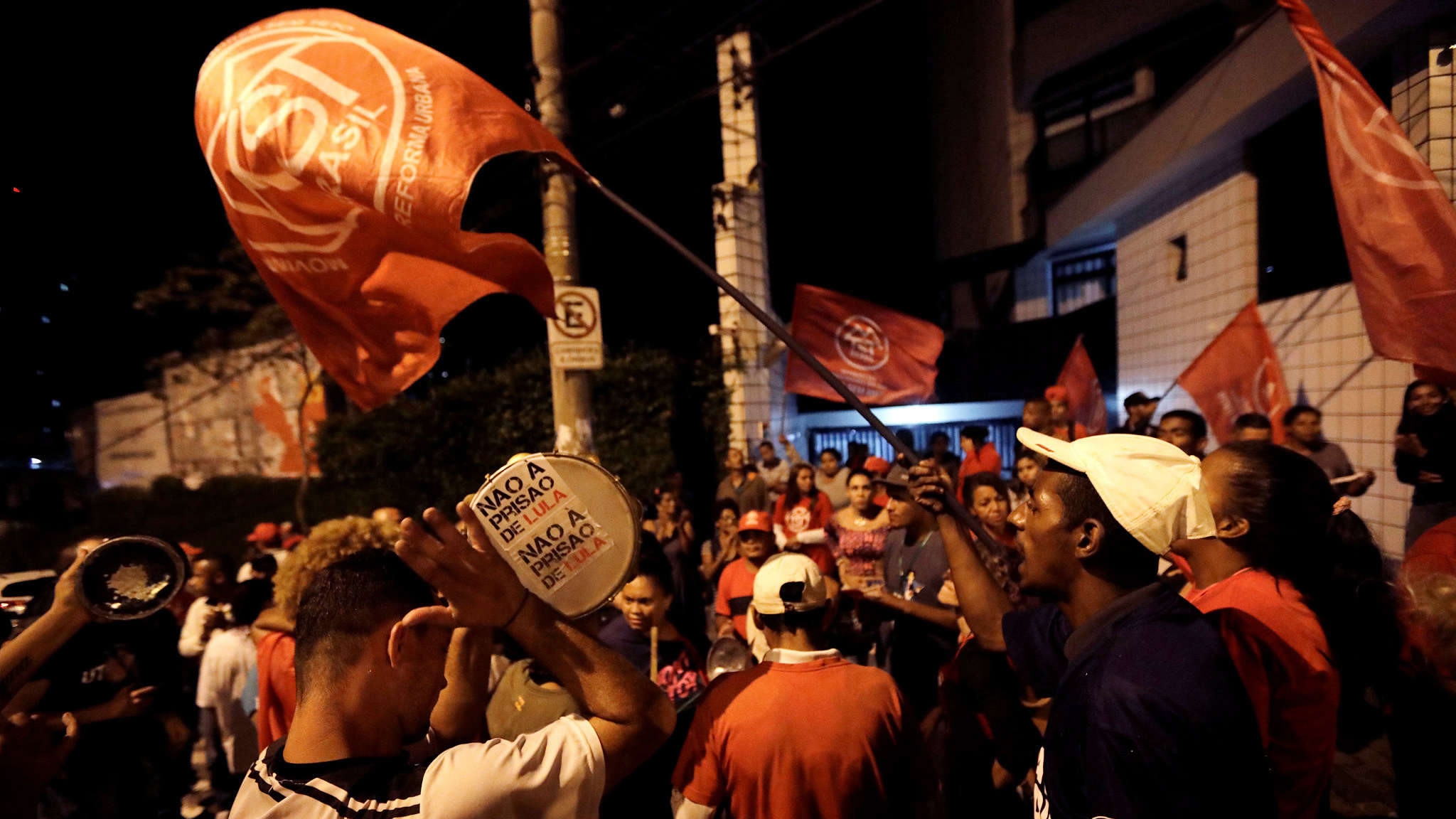
Supporters of former Brazil president Luiz Inacio Lula da Silva shout slogans in front of his flat while the Supreme Court issues its final decision about his habeas corpus plea, in Sao Bernardo do Campo, Brazil, April 4, 2018. /VCG Photo
Supporters of former Brazil president Luiz Inacio Lula da Silva shout slogans in front of his flat while the Supreme Court issues its final decision about his habeas corpus plea, in Sao Bernardo do Campo, Brazil, April 4, 2018. /VCG Photo
Late Tuesday, up to 20,000 people demonstrated in Brazil's biggest city, Sao Paulo, to demand Lula go to prison and be barred from the election, with smaller rival rallies gathering in Brasilia on Wednesday.
More than 5,000 judges and prosecutors sent the Supreme Court a petition for Lula to be imprisoned immediately and justices have received thousands of emails on the subject.
Military weighs in
Tensions increased on Tuesday when the commander of Brazil's army weighed in with tweets calling on the court to stand guard against impunity.
General Eduardo Villas Boas wrote that the army along with "all good citizens, repudiates impunity and respects the Constitution, social peace and democracy."
Villas Boas wrote that the army would stick to its constitutional role. But retired officers have warned that the military would not take lightly to the Supreme Court, which has rejected nearly all similar appeals in the past two years, ruling that Lula could remain free on appeal.
Army reserve general Luiz Lessa told the Estado de S.Paulo newspaper on Tuesday the military would have to intervene if Lula was allowed to become a candidate in the election. The army said that was his personal opinion.
Lula oversaw years of robust growth and falling inequality during a commodity boom and has said he wants to run again for the presidency in October.
His supporters see the conviction as a ploy to stop him returning to power. The Workers Party said the Army commander's comments widely reported by Brazilian media had brought undue pressure to bear on the Supreme Court to rule against him.
16952km
Source(s): AFP
,Reuters