
21:29, 20-Jun-2019
U.S.-China Trade War: China could realize scientific, technological independence
Updated
17:18, 09-Jul-2019

Share






Copied
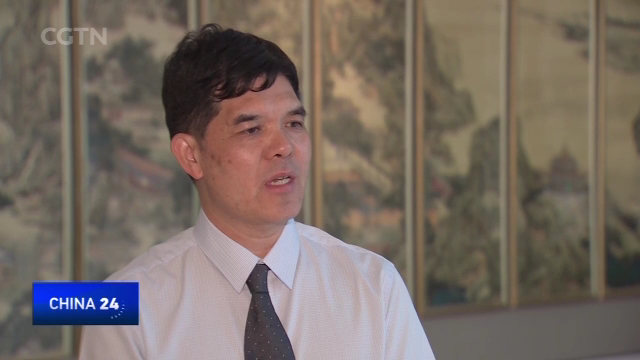
On Thursday, the Seminar on Key Issues in China-U.S. Economic and Trade Frictions was held in Beijing. CGTN's Liu Yang has more.
In the latest flare-up initiated by the U.S., Washington increased additional tariffs on 200 billion U.S. dollars worth of Chinese imports from 10 to 25 percent and has threatened to impose tariffs of 25 percent on essentially all remaining Chinese goods sold to the U.S. valued at roughly 300 billion dollars. The issue has drawn attention from both academics and media. Experts are mostly focusing on possible solutions, as well as the implications for the global economy. Economists say mixed integration of industrial chains, supply chains, and the interests of the value chain, is the impetus for globalization. They add that China should increase the industrial chain of cluster brands, increase the supply chain supporting system, and improve the fusion of the value chain.
BI JIYAO, VICE PRESIDENT CHINESE ACADEMY OF MACROECONOMIC RESEARCH "The long-term restrictions on the exports of high-tech products to China by the U.S. have restricted China's expansion of imports. China does not actually pursue a trade surplus, and we actively expand imports. However, the U.S. limits the exports of these products on the grounds of so-called national security, which is also the cause of the trade deficit between China and the U.S."
YE FUQING, FOREIGN ECONOMICS INSTITUTE CHINESE ACADEMY OF MACROECONOMIC RESEARCH "The outbreak of trade friction initiated by the U.S. has brought a very negative impact, has severely disturbed the order of the international economy and trade, and destroyed the global industrial chain. It also means severe consequences for many economies."
Economist Chen Dongqi says to reduce the cost of China's tariffs on exports to the U.S., China needs to increase the price of products exported to the U.S. Also, the expansion of new export spaces from non-US economies is a rare opportunity for China to realize the independence of science and technology and the rise of high-tech enterprises.
HUANG HANQUAN, HEAD OF INDUSTRIAL & TECH. ECONOMICS CHINESE ACADEMY OF MACROECONOMIC RESEARCH "The world's high-tech industry is now highly integrated. The trade friction has spread to areas like science and technology. The impact of the supply chain will impact national companies and other enterprises involved in this, not just companies in China and the U.S., but also Japan, South Korea, Europe, and elsewhere."
Dealing with the U.S. technology blockade, Chinese enterprises are advised to adjust and optimize their supply chain quickly, look for external substitutes, focus on breaking through the bottleneck of critical technologies, and form the ability to control core technologies and its market.
LIU YANG BEIJING "Experts say another round of tariffs on Chinese goods could cost the U.S. economy one trillion U.S. dollars over the next decade. On Tuesday, Chinese President Xi Jiping said he is willing to meet with Trump on the sidelines of the G20 Osaka Summit in Japan next week, and exchange views on fundamental issues related to the development of China-U.S. ties. Liu Yang, CGTN, Beijing."