
14:13, 11-Jan-2019
Vehicle Emission Control: China phasing out fossil fuel vehicles
Updated
14:02, 14-Jan-2019
 []
[]
Share







Copied
03:31
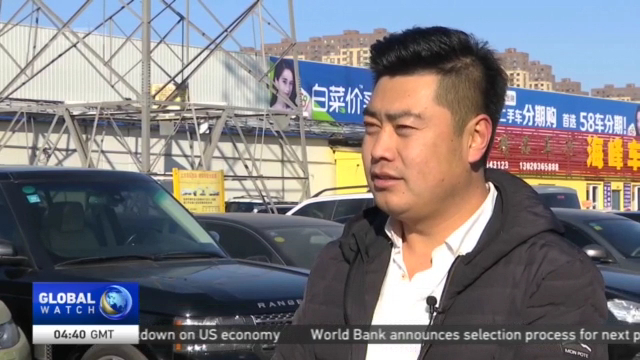
China's renewed commitment to tackle air pollution affects the kind of car you may own. New companies in China that only manufacture fossil fuel vehicles will now not be granted business licenses. The new rule, which went into effect on Thursday, comes down from the Development & Reform Commission. CGTN's GUAN YANG explores what it will mean moving forward from the northeastern city of Shenyang.
Used-car dealer Ni Long doesn't know what to do with this 5.0-liter V8 Range Rover from 2012. He has removed the car battery since hardly anyone was asking to take it for a test drive. After eight years in business, Ni made good money from selling luxury cars with large engines, but not anymore.
NI LONG USED CAR DEALER "The car is in good shape, but it has been sitting in the parking slot for six months. It has cost me a fortune on maintenance, tax and insurance."
Many believe that if someone can afford luxury on wheels, they can afford the other costs that come with it. But high emissions from large engines pose major environmental threats, the latest ban on new fossil-fuel car production facilities shows China's seriousness in tackling pollution. As for drivers, most are following the trend.
NI LONG USED CAR DEALER "Nowadays, we prefer cars with smaller engines, as they have very quick turnover. And for buyers, the smaller the engine, the less they pay on fuel and taxes."
GUAN YANG SHENYANG, LIAONING PROVINCE "With a growing number of cars on streets across China, vehicle emissions are becoming increasingly problematic. Policy makers are looking to phase out inefficient and fuel based cars, reducing emissions is perhaps the only way forward for the country's automotive industry."
Shenyang's local auto giant Brilliance group, best known for its 15 year partnership with BMW, is no longer producing fossil-fuel cars with an engine displacement of over 2 liters. Senior engineer He Junlin says, aside from fuel-efficiency and emissions controls, consumers are also concerned about the overall driving experience they get from smaller-engine cars.
HE JUNLIN, SENIOR ENGINEER POWERTRAIN DEPARTMENT, BRILLIANCE AUTO GROUP "The consumers, they still want to feel the G-force, even if it's a 1.2-liter 3-cylinder car they are driving, and they want the turbo-charged models at the same time to ensure smoothness and less noise."
The ban also raises the bar on entry requirements for new NEV production facilities. This comes as the central government is actively pushing the development of NEVs, with the goal of 1 in every 5 cars being new energy powered by 2025.
HE JUNLIN, SENIOR ENGINEER POWERTRAIN DEPARTMENT, BRILLIANCE AUTO GROUP "We've seen NEV firms in China suck up government subsidies without producing any viable vehicles, so I think the new rules are to make the NEV sector more regulated. The subsidies should only be granted to companies that deserve them."
According to mid- and long-term development targets, the auto industry will focus on light-weighting, fuel consumption reduction and the development of NEVs. Fossil-fuel car makers are advised to gradually adjust production strategies, experts say the sooner, the better.
GUAN YANG, CGTN, SHENYANG.