
16:11, 25-Apr-2019
Highlight – China seeks more people-to-people exchanges with Europe

Share






Copied
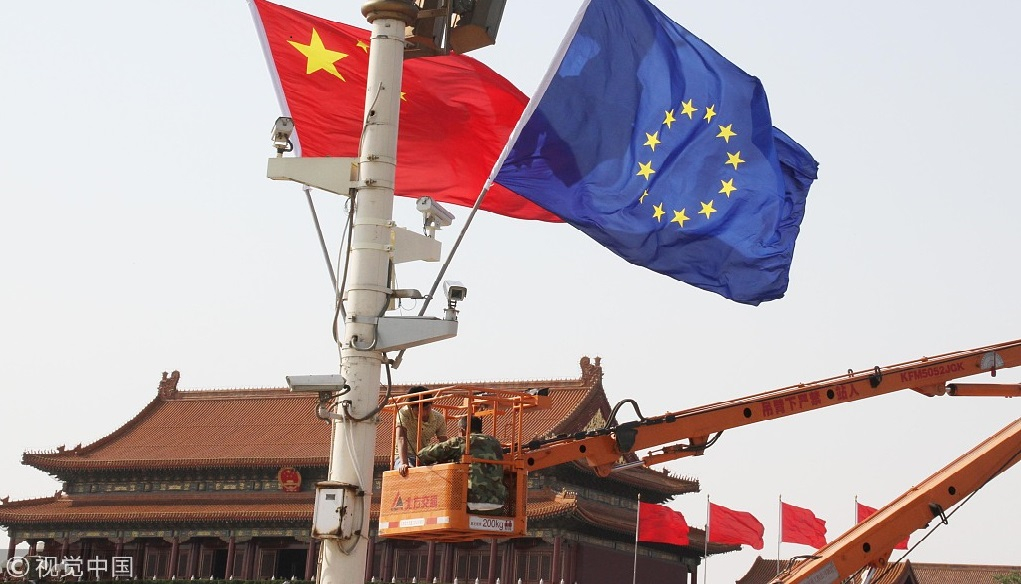
China says it seeks to nurture friendship and promote mutual understanding.
With an emphasis on exchanges of civilizations, China has established people-to-people dialogue mechanisms with Russia, the US, France, the UK, the EU, Indonesia, South Africa and Germany, as well as people-to-people programs with 188 nations and regions and 46 key international organizations.
During his European visit in March 2019, President Xi Jinping emphasized the importance of people-to-people exchanges. As much as economic development and mutual beneficial, and win-win cooperation - both exemplified by the Belt and Road Initiative – are said to be prime elements of Xi Jinping thought on diplomacy for the new era, another that may seem smaller is people-to-people exchanges, inclusiveness and mutual learning.
However, President Xi really puts them on the same level. What does this mean, particularly in terms of China-Europe relations and people-to-people exchanges? Robert Lawrence Kuhn discusses this issue with Shada Islam, Director, Europe and Geopolitics at Friends of Europe.
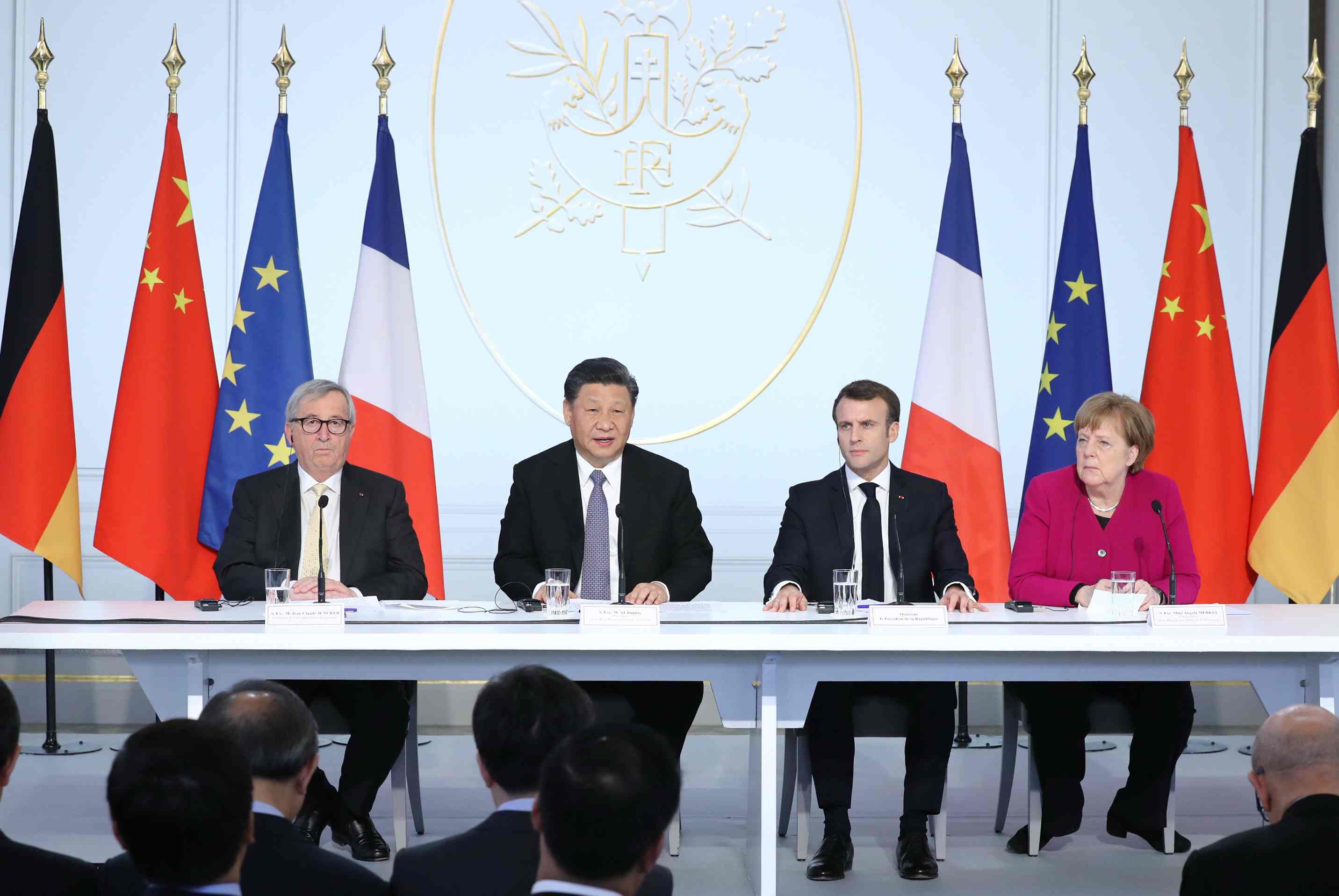
Chinese President Xi Jinping, French President Emmanuel Macron, German Chancellor Angela Merkel and European Commission President Jean-Claude Juncker attend the closing ceremony of a global governance forum co-hosted by China and France in Paris, France on March 26, 2019. / Xinhua Photo
Chinese President Xi Jinping, French President Emmanuel Macron, German Chancellor Angela Merkel and European Commission President Jean-Claude Juncker attend the closing ceremony of a global governance forum co-hosted by China and France in Paris, France on March 26, 2019. / Xinhua Photo
According to Shada Islam, Europeans should attach more importance to cultural exchanges especially among educational institutions. Also, communication between China and the EU should not be limited to traditional topics like classical Chinese music or Chinese opera.
Modern cultural elements like pop stars and rock stars are also significant carriers of international communication, and can help people to know China better.
Islam adds that although Europeans have learned much about the old China, or the antique China, they need to know more about the young, dynamic China. It's a pity, she says, that sometimes people still regard China as lagging behind in technology.
Europeans need to know how far China advances in many digital and IT skills. Presenting China's development and modernization to the world will enable people around the globe to learn more about the modern, pop, young China.