
13:43, 02-Apr-2019
Star Children: Kids with autism getting growing social exposure in China
Updated
13:40, 05-Apr-2019
 []
[]
Share






Copied
03:01
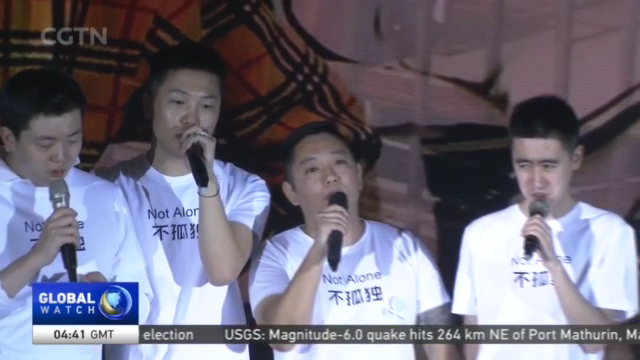
The good news though is China has made great strides in research and educational rehabilitation in recent years. CGTN's Jen Kwan has more on this progress.
Many say the social stigmas surrounding autism can be worse than the condition itself.
These children don't seem to be bothered by their environment. They appear to have their own world. Yet, very few of them are able to take care of themselves. Children with autism are often referred to as "children of the stars". Despite their limitations, many of them prove to be gifted in several aspects.
ZHANG YU MOTHER "My son especially likes geography. He loves to travel and he can recognize all the flags of countries in the world."
"My son loves painting. It gives him a lot of room to display his talents."
According to China's Health Planning Commission, one out of 100 newborn babies could be diagnosed with autism. In the United States, the figure was close to 2 percent last year among children aged between 3 and 18. As parents get older, grown-ups with autism tend to be a challenge for most families.
ZHOU JING, DIRECTOR OF AUTISTIC CHILDREN REHABILITATION FUND CHINA SOCIAL WELFARE FOUNDATION "The first three batches of people in China identified as autistic are currently over 20 years old. Most of them are still at home and have no employment. Because no company is willing to accept them."
Thirty years ago, most people in China were unfamiliar with autism. But in recent years, the country's research and educational rehabilitation efforts for people with autism continue to grow.
LI DONGYAN MOTHER "I personally feel that society is becoming more and more concerned about autistic children, compared to when my son was young. For example, we only need to pay a small tuition fee for him to study painting."
Many therapeutic programs have been launched to provide targeted training to children and adults with autism. These help them develop their strengths and social skills.
LI YINUO, CO-FOUNDER ETU EDUCATION "Often times people understand autism as a condition for a small number of people, which indeed, if you look at the broader sense of the population, I think the concept behind the activity like this is 'how do you have a more inclusive environment to support people with special needs?' Although 'special needs' sounds SPECIAL, in education, everyone is special."
By looking at their artworks, it can be said that children with autism share the same, or even stronger, desires to express themselves and be a larger part of society. And a growing number of educators and medical professionals in China are helping them adapt and realize their dreams. Jen Kwan, CGTN.