
19:32, 16-Mar-2019
Opium to Coffee: UN helping Myanmar farmers make the switch
Updated
19:30, 19-Mar-2019
 []
[]
Share







Copied
02:35
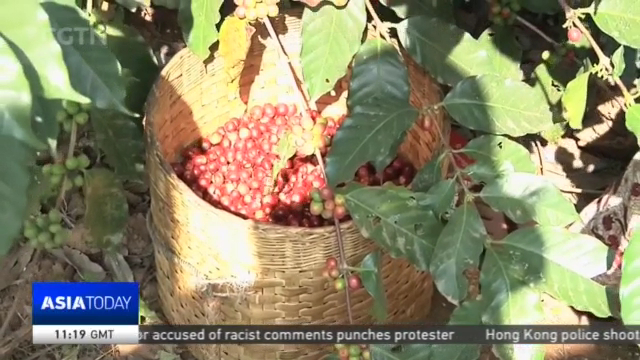
Opium has been a cash crop in northeastern Myanmar's Shan State for a long time. But some of the farmers who have traditionally grown poppies now have something else brewing. Dave Grunebaum explains.
Nang Yee Yee Aye is on her coffee farm picking beans. But just a few years ago these 3 ½ acres looked like this: a field of opium poppies, the base ingredient for heroin.
NANG YEE YEE AYE FARMER "We used to grow opium for the sake of our family's livelihood."
Nang Yee Yee Aye lives in this home with her husband and two children. Opium did not make them rich, but it helped them earn significantly more money than they could without it. But she admits she was never at peace growing opium.
NANG YEE YEE AYE FARMER "There are a lot of consequences. It takes away people's lives. Plus, we had to worry about the authorities destroying our poppy fields."
Declining demand for heroin also makes the risks less appealing. So about five years ago, Nang Yee Yee Aye joined a United Nations Office on Drugs and Crime program to switch from opium to coffee.
TROELS VESTER UN OFFICE ON DRUGS AND CRIME "Coffee and opium is grown at exactly the same altitude, opium is grown from 1300 meters to 1800, so is coffee."
The UN program now works with about 1000 families in Myanmar's Shan State, providing seeds, equipment and training. The sweat comes from the farmers who've also formed a cooperative to sell their coffee beans together.
NANG YEE YEE AYE FARMER "We feel proud about what we're doing."
The first crop of coffee beans produced by these former opium farmers goes on sale in France next week. But Nang Yee Yee Aye and other farmers in her village acknowledge they're not making as much money from coffee as they did with opium."
DAVE GRUNEBAUM SHAN STATE, MYANMAR "For this program to be sustainable the farmers have to earn enough year after year to support their families and not return to opium or any drugs to make money. So, it will be years until we know for sure if it's a success."
TROELS VESTER UN OFFICE ON DRUGS AND CRIME "Why this program is different? No program in the past was able to create a product to bring to the international market which meant prices being offered to the farmers for their product were simple local prices in Myanmar, simply too low and could not compete with the opium economy. That's the main thing."
Nang Yee Yee Aye says the farmers in her village are committed to staying away from anything illicit. If their switch to coffee is a success they won't reconsider.