
14:59, 05-Jul-2018
Refugees in Tunisia: Tunisian authorities table draft law on migrant, refugee rights
Updated
14:43, 08-Jul-2018
 []
[]
Share







Copied
02:26
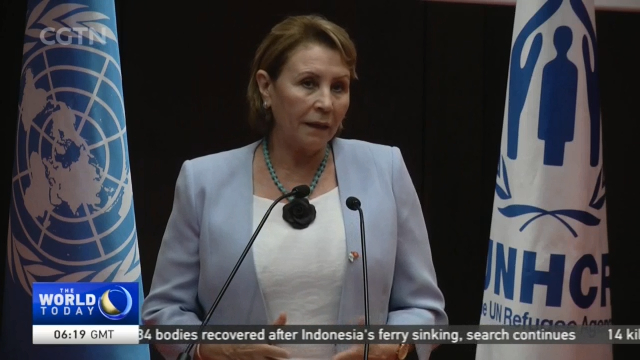
North African nations are trying to curb the influx of migrants and refugees from conflict-ridden parts of the continent. In Tunisia, authorities have released a study on refugees in the country. They've also roped in charities and NGOs to help the government handle asylum seekers entering the country. Adnen Chaouachi has the story.
The Tunisian Ministry of Justice has drafted a law on refugee rights in the North African state based on international law and in line with international standards.
NAZIHA LAABIDI TUNISIAN MINISTER OF WOMEN, FAMILY & CHILDREN "The UNHCR office participated in the consultation meetings devoted to the drafting of this law. The government and the ministry's departments deal with refugee issues on the basis of humanitarian and human rights dimensions far from all forms of discrimination."
There are over 1,000 Syrian refugees in Tunisia. The majority are living in good conditions thanks to growing solidarity among the Syrian refugee community.
MAHMOUD YASSINE REFUGEE FROM SYRIA "I fled Syria with my family. I opened my own restaurant in downtown Tunis with support from the Syrian community. Now I live comfortably and I help other refugees from my home country."
There are dozens of refugees from Sub-Saharan Africa. The majority had attempted but failed to cross the Mediterranean Sea to reach the Italian Island of Lampedusa.
KABUIN KENNETH CARL REFUGEE FROM CAMEROON "Back at home, due to some political issues, It was so hard for me. I had to leave my country. I went through a very rough time to get to Libya. The way was very rough and very dangerous."
According to the UN refugee agency, the number of refugees in Tunisia is very low, although it amounts to about 68 million people worldwide, according to statistics conducted last year by the United Nations.
ADNEN CHAOUACHI TUNIS "Tunisian Foreign Minister Khemais Jhinaoui declared that Tunisia has rejected an EU project to establish permanent camps for illegal migrants from Sub-Saharan Africa on its soil which could become refugee camps in the coming years. Tunisian authorities maintain that they are only responsible for illegal migrants from Tunisia. I'm Adnen Chaouachi, CGTN, Tunis."