
Astronomy
17:58, 31-Jan-2018
The ultimate guide to watching the blue blood moon
 ["china"]
Share







Copied
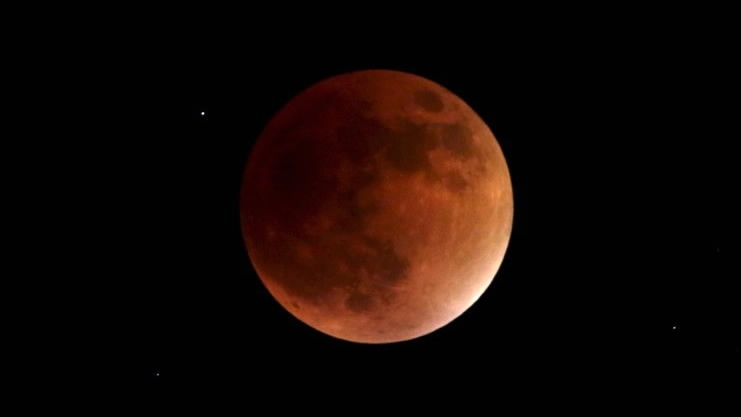
Astronomy fans around the world will have the rare opportunity to witness an all-in-one supermoon, blue moon and total lunar eclipse, also known as the “super blue blood moon”, on Jan. 31.
Just how rare is this celestial trifecta? Major media outlets around China have been saying it’s a once-in-152-year opportunity, but that’s missing the whole picture.
NASA Photo
NASA Photo
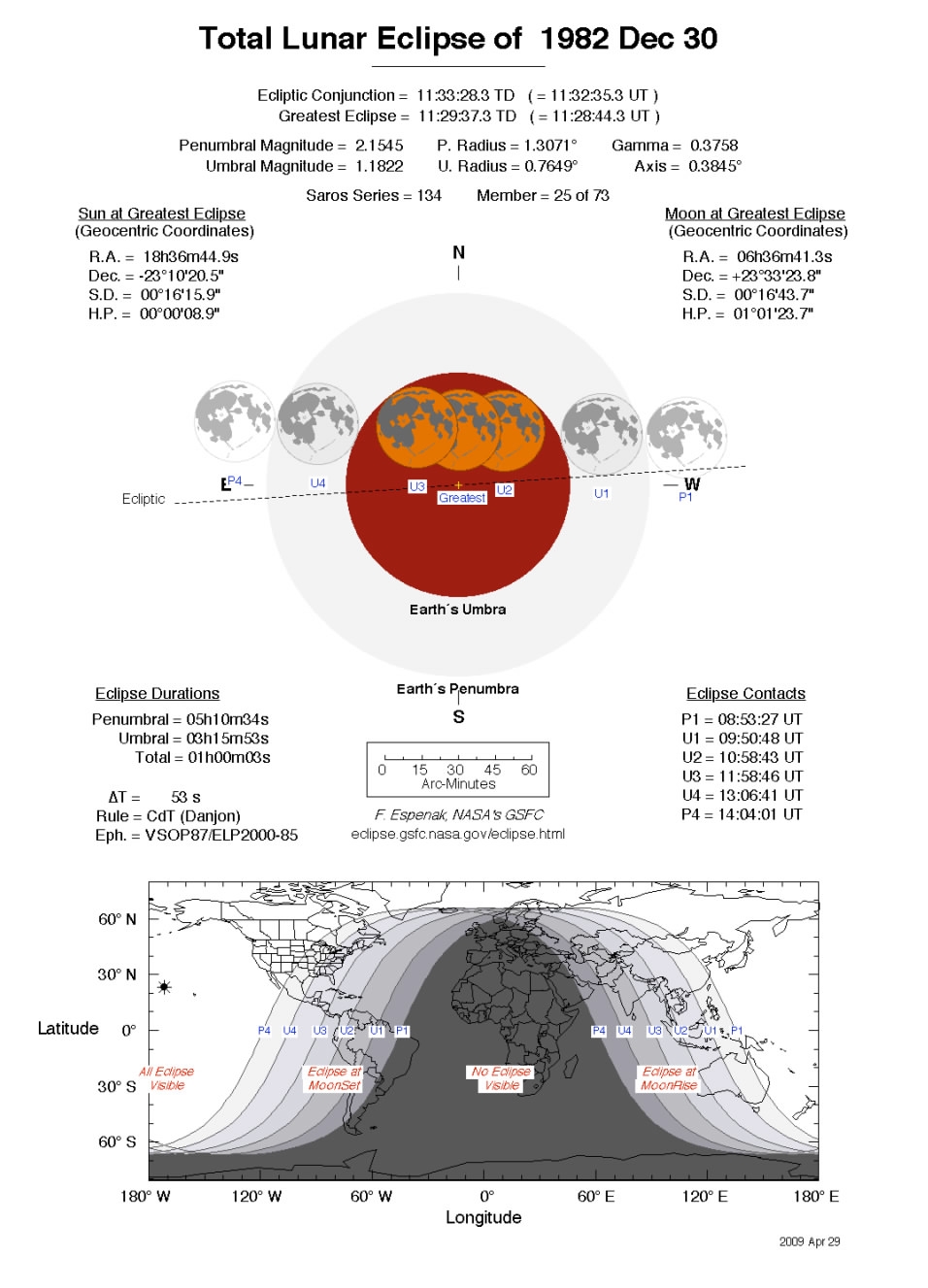
For parts of the Americas, it has been over 15 decades since their last date with the whole package, which happened in 1866. But in Japan, South Korea, and most of China’s northeast, people had the chance to watch the event 35 years ago, on Dec. 30, 1982.
Here’s our ultimate guide to seeing the three-in-one moon this time:-
If you’re in China…
Even if there are a few clouds, most Chinese regions will have a view of the complete process of total eclipse. Due to geographical limitations, the view may be restricted to a partial eclipse in some of westernmost China.
The eclipse is expected to start at 6:51 p.m. Beijing time, and at around 7:40 p.m. we will see the beginning of totality – the first contact between the moon and the Earth – and a black shadow will appear around the moon. At around 8:50 p.m., a red moon will surface and it will last about an hour.
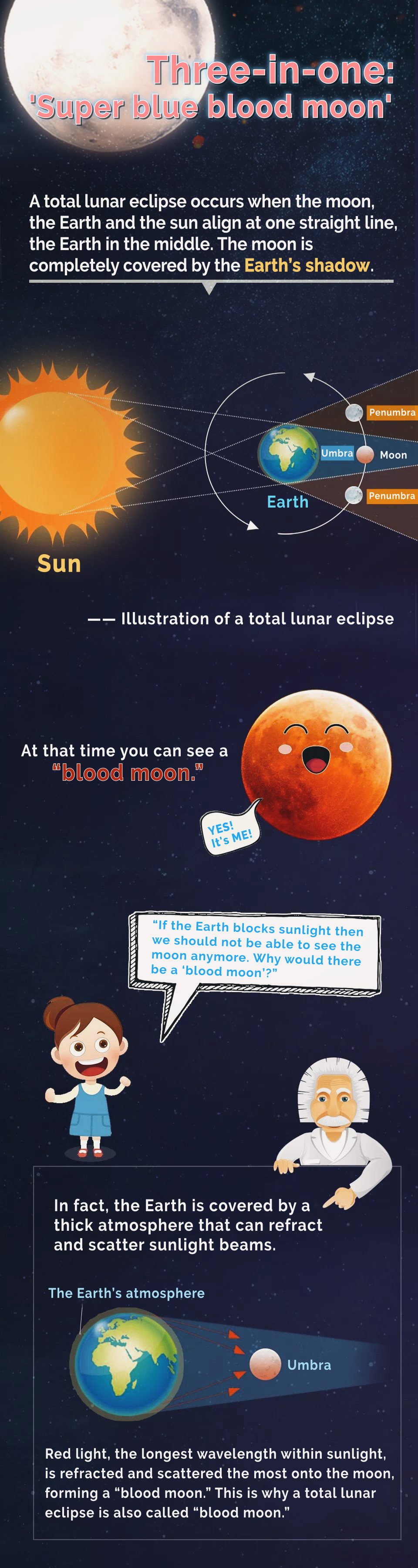
"Sunlight, through refraction in the Earth's atmosphere, will have a reddish tinge that will shine on the moon. So in the middle of the total lunar eclipse, we will still see a blood moon. The blood moon will be very visible depending on the weather," said Zhu Jin, director of the Beijing Planetarium.
Zhu said the blood moon will last for one hour and 16 minutes and will provide stargazers and photographers with a very good opportunity for observation and pictures.
"For an astronomical phenomenon like the total lunar eclipse, our eyes are quite adept at observation. Of course, with a telescope, we can see the surface of the moon in a clearer and more detailed way. This is a very good moment for photography, especially if you have a long lens, or a digital SLR camera or a mini digital SLR, with a long lens. With great scenery, you will be able to take amazing pictures," according to Zhu.

CCTV Graphic
CCTV Graphic
...and if you’re in other parts of the world
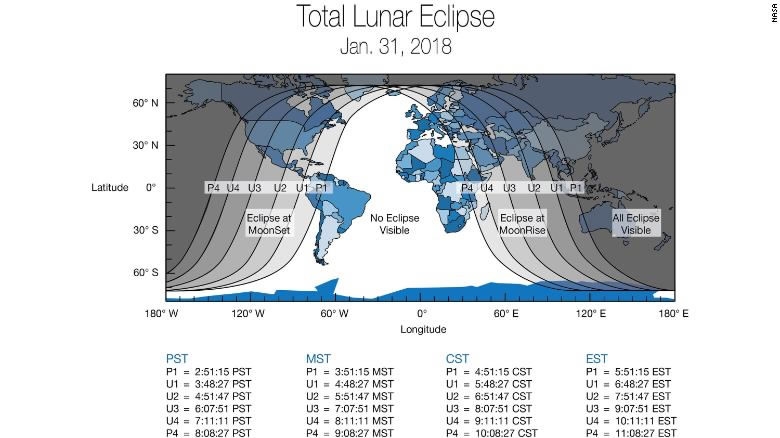
On the night of Jan. 31, there will be a total lunar eclipse in some areas, including in most of North America, Asia, and Australia. Most of South America, Africa and Europe will miss the chance to see the eclipse this time.
NASA Photo
NASA Photo
Check out the information NASA has laid out to decide when to catch the event.