
19:41, 17-Mar-2019
Myanmar Drug Control: Crop substitution programs underway in northeastern Myanmar
Updated
19:40, 20-Mar-2019
 []
[]
Share







Copied
02:27
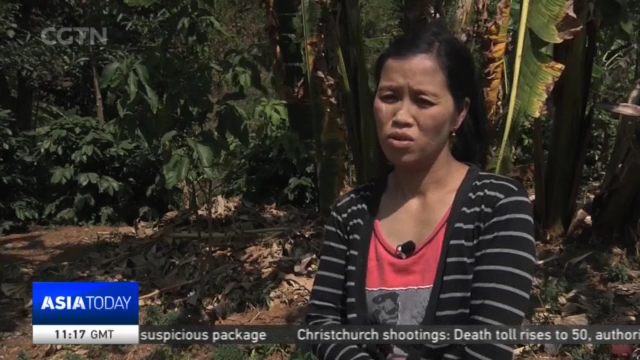
Northeastern Myanmar is a major player in the illegal, global drug trade. Efforts are underway to help transition workers in the underground drug economy to legal jobs. But as Dave Grunebaum reports, that only scratches the surface in tackling the problem.
These coffee plants are on land that used to grow opium poppies, the base ingredient for heroin. The United Nations says the amount of land in northeastern Myanmar used to cultivate opium poppies dropped by 10-percent from 2017 to 2018. The reasons include decreasing demand for heroin as well as crop substitution programs such as this one.
NANG YEE YEE AYE COFFEE FARMER "More farmers are getting interested in switching from opium to coffee. Sometimes they ask me about it."
But stories like this are small in scale compared to the amount of money in Shan State's illicit economy, which in addition to opium includes the bigger business of methamphetamines. All together it's a multi-billion-dollar industry that's connected to transnational crime syndicates.
TROELS VESTER UNITED NATIONS OFFICE ON DRUGS AND CRIME "The economy in Shan State when it comes to the drug economy is massive."
In many of the drug producing areas, ethnic minority insurgents have been fighting Myanmar's military and militias connected to the military for decades.
DAVE MATHIESON ANALYST "For the past 50 years, drugs and conflict have been intertwined in Myanmar and they can't be separated. And to say one is fueling the other kind of misses the point because the conflicts are about politics. They're about unresolved political conflicts."
TROELS VESTER UNITED NATIONS OFFICE ON DRUGS AND CRIME "To keep a conflict running you need money, you need it on all sides to buy weapons, to buy access, to buy the way forward. This requires money and drug provides that."
DAVE GRUNEBAUM SHAN STATE, MYANMAR "On the other side of these mountains they're still cultivating opium and producing methamphetamines. These are essentially lawless areas and the drugs produced there flow across the region."
DAVE MATHIESON ANALYST "When you have a drug economy that is so big that is probably greater than the size of the formal economy in Shan State, it has the effect of crowding out the potential for reform. When there's so much money being made by so many different actors why would they want to change it."
And despite high profile seizures and displays, the drug business is resilient because there's so much money at stake. Dave Grunebaum, CGTN, Shan State, Myanmar.