
17:18, 24-May-2019
Turkish Economy: Turkey facing international political pressure
Updated
17:10, 27-May-2019
 []
[]
Share







Copied
03:37
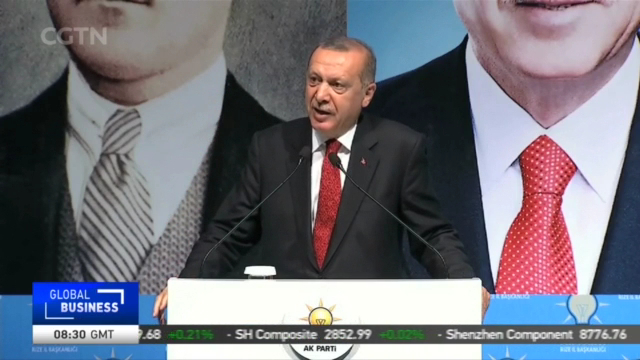
Moving to Turkey now. The Turkish government is at odds with NATO ally- Washington over a major weapons deal with Russia while local politicians are fighting to become Istanbul's next mayor. Both battles are creating pressure on Turkey's economy that's mostly affecting the citizenry. CGTN's Michal Bardavid has the details.
Forty-four year old Yasemin is a Turkish citizen living in Istanbul. She works as a midwife and has a 5-year-old son, Alp. Like many Turkish mothers, she spends most of her time taking care of him. Her biggest financial concerns are expenses related to his upbringing.
YASEMIN AGAZAT TURKISH CITIZEN "The school that Alp goes to has increased its price by 27 percent this year; this is not a small amount. Even though the tuition is in liras, the school raised the price by the maximum amount possible. Our kitchen expenses have also increased; and I've noticed that the prices of some supplementary vitamins and minerals that come from abroad have doubled."
For many Turks – the biggest pain is also felt in the kitchen. Inflation in Turkey is hovering around twenty percent – and has affected food prices.
A devaluation of the Turkish currency has been putting pressure on inflation. The Lira has lost nearly thirty percent of its value in 2018 and about twelve percent this year.
The government is dealing with different issues on various fronts – both domestic – and foreign.
Tension with the U.S. has been continuous – as Washington has repeatedly expressed concern over Turkey's deal to purchase an S-400 missile defense system from Russia. Despite threats from U.S. officials the Turkish government has insisted it will not back out of the deal. Turkey's Defense Minister Hulusi Akar has said Turkey was preparing for potential sanctions.
MICHAL BARDAVID ISTANBUL TURKEY "Meanwhile the country's high election board has recently made a controversial decision to annul the result of the March 31st Istanbul Mayoral elections – now set for a rerun on June 23rd. Some experts emphasize that political uncertainty is making investors anxious and therefore hurting the economy."
Turkey has been taking several measures to stabilize the lira, a tax of 0.1 percent has been established on foreign exchange sales – which was previously at zero. Also, individuals purchasing foreign exchanges over one-hundred thousand dollars will now have to wait one day for the transfer to finalize.
But some economists believe that in the short term – the solutions to Turkey's economic problems are in the hands of politicians.
OGUZ DEMIR ECONOMIST "Steps need to be taken for democratic concerns to be lifted, for the concerns regarding the country's justice and legal system to be lifted, for the polarization among the nation to be decreased. Even though the consequences are economic, the deeper causes are political; so for the result to change, political steps are needed."
So far, the Turkish lira has been one of the worst performing currencies of 2019. Talks of potential U.S. sanctions and a very high stake Istanbul Mayoral election coming up is certainly putting even more pressure on the country's economy. Michal Bardavid, CGTN, Istanbul.