
14:02, 26-Mar-2019
Fruits of Labor: Collector preserves 1,300 rare varieties for future generations
Updated
14:00, 29-Mar-2019
 []
[]
Share







Copied
02:46
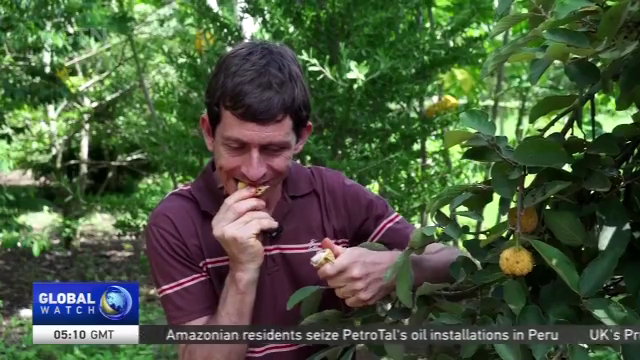
In Brazil, rich natural resources bear plenty of fruit for the economy. And one man has especially taken this to heart. Here's Paulo Cabral in Brazil.
How many different kinds of fruit can an average person name? Maybe a few dozen. But ask Helton Muniz for the names of all the fruits he has in his orchard and he will list 13-hundred varieties. He's been planting since 1995. Add to that a couple hundred seedlings still sitting in his greenhouse. Helton is a fruit collector. Most of the varieties here - many of them rare - are wild species he found while exploring the Brazilian woods.
HELTON MUNIZ OWNER, RARE FRUIT RANCH "This is an ancient wild variety of pineapple. Because all the fruits we eat nowadays are actually crossovers of different varieties of native, wild species to improve them to become the fruits we eat now."
Other plants are from seeds sent to him by people who knew of his work. Some of them are different varieties of well-known fruits like this bright pink pitaya sprouting from a cactus - the color looks almost artificial. But others are different all together.
PAULO CABRAL CAMPINA DO MONTE ALEGRE, SAO PAULO, BRAZIL "Helton tells me that this one is what they call sweet lemon, He says it tastes a bit like a lemon candy or a lemon pie. Have one here, let me try it. And it really does! You get that lemon taste but sweetened."
HELTON MUNIZ OWNER, RARE FRUIT RANCH "Fruits are a big asset of mankind because it's the most important food we have. Our body is all prepared to get its nutrition from fruits."
Helton does not charge visitors who come to see and taste the fruits - but he sells books with details on his orchard and seedlings of the rare varieties he cultivates. They go for about 10 dollars each.
Helton was born prematurely and suffers from a coordination disability. But it's a challenge he has faced every day.
HELTON MUNIZ OWNER, RARE FRUIT RANCH "I do many things that able-bodied people can't do because sometimes they don't have the courage to do it. Courage is what matters. You struggle and you get by."
Helton's orchard is preserving biodiversity. It's also a place where he can taste and show people new flavors that nature has to offer. Paulo Cabral, CGTN, Campina do Monte Alegre, in Brazil.