
17:43, 21-May-2019
Soybean Farming in Northeast China: China aims to reduce reliance on American imports amid trade war
Updated
17:40, 24-May-2019
 []
[]
Share







Copied
02:59
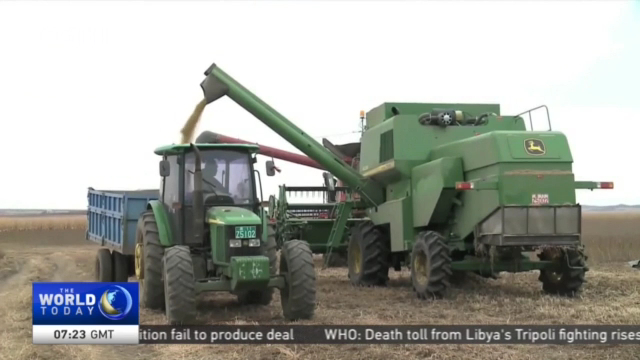
China aims to expand the land area it uses to grow soybeans. The Ministry of Agriculture says that figure will reach 10 million hectares in the next three years. CGTN's GUAN YANG files this story from the northeastern Liaoning Province and finds out what the soybean farmers have to say.
Soybeans grow fast - one week after Li Yanguang sowed his seeds, the oil crop started to sprout. In order to keep a good soil nutrient level, farmers like Li only plant soybeans in the same fields once every three years.
LI YANGUANG, SOYBEAN FARMER CHANGTU COUNTY, LIAONING PROVINCE "Crop rotations are important to us. After planting soybeans, we will plant corns in these fields the following year to ensure high yields for both crops."
Since last year, China has been giving more subsidies to soybean producers than corn farmers, one reason being to reduce its huge corn stockpile; another is to reduce its reliance on soybean imports - after the country responded to US import taxes with 25% tariffs on American soybeans.
GUAN YANG CHANGTU COUNTY, LIAONING PROVINCE "China plans to expand the amount of land it uses to grow soybeans. However, during this year's spring plowing season, despite the subsidies offered for growing soybeans, some farmers in NE China still have other concerns."
Although Beijing promised higher subsidies for soybean farmers, the exact amount per hectare differs from region to region, as the local governments get to lay out the incentive schemes.
Here in Changtu county, the farm manager pointed out some setbacks they've faced.
WU YANLIANG, MANAGER FENGMANYUAN FARM, LIAONING PROVINCE "The incentive scheme was usually given after the harvest season, which means, farmers don't really know how much subsidies they will get at the beginning of the plowing season if they choose to grow soybeans, this can hold them back."
And in Heilongjiang province, a region that produces over half of the country's soybeans, the subsidies for the crop last year were nearly 10 times higher than those for corns. But in Liaoning, the incentives were not as attractive.
WU YANLIANG, MANAGER FENGMANYUAN FARM, LIAONING PROVINCE "Our farm is located at the heart of the corn-belt region, the soils here are more suitable for growing corns. Also, after doing the math, the investments on machinery for switching to soybeans and the subsidies nearly cancel out."
Despite the challenges, it's hoped the efforts to encourage more soybean production will reduce China's dependence on foreign supplies. The country is the world's largest consumer of the crop and the destination for well over half of American exports. GUAN YANG, CGTN.