
18:50, 26-Jun-2019
Beyond Boundaries: Cartier designs at Palace Museum showcase Chinese influence
Updated
17:08, 09-Jul-2019

Share






Copied
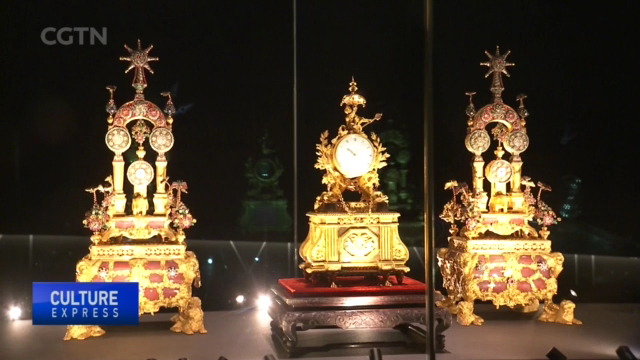
French luxury brand Cartier is well known for its jewellery and watches. And for more than a century, many of its designs have been inspired by Chinese culture. Now, an exhibition at the Palace Museum in Beijing traces how Chinese elements have been used and developed in western fashion designs. LI QIONG reports.
More than 800 pieces dating from the 14th century to today are gathered together, mainly from the Cartier Collection and the collections of the Palace Museum. Watchmaking used to serve as a means of collaboration between East and West. The Chinese-inspired Cartier clocks and the European-style timepieces from the Palace Museum's collections are the very embodiment of this dialogue.
GUO FUXIANG CURATOR "When western watchmakers turned their eyes on the Chinese market more than three hundred years ago, they started to produce watches and clocks that, on the one hand, targeted Chinese consumers. On the other hand, they targeted European consumers by creating designs with Chinese elements. And Cartier's production years later has carried on these designs. So this exhibition aims at tracing the origin of the initial collaboration between East and West."
At first, the applications of Chinese elements were simply copying some Chinese-style patterns, matching the decorative colors based on Chinese tastes, or making things in pairs, a sign of good luck in China. But as exchanges expanded, the understanding of Chinese culture has gone beyond the looks.
ZHANG QIONG CURATOR "The Carp clock impressed me when I first saw it. I was shocked by how precisely they understand the Chinese element of the seawater and cliff pattern. It's used on clothing for emperors and high officials, symbolizing long-lasting rule. It echoes clocks, or time, which are also long-lasting. If it's not a coincidence, then the designer must have had great knowledge about Chinese culture."
At a time when businessmen were able to travel by sea, a flood of Chinese goods were arriving in the West.
Materials such as lacquer, coral, and jade, and motifs such as Chinese characters, appealed to western designers.
This is a Cartier bridge case produced in 1927, displayed next to a black lacquered box from the early Qing Dynasty. The functions of each might be different, but they look alike in almost every way.
LI QIONG BEIJING "Chinese inspiration was first seen in Cartier designs as early as in the 1870s. It was later confirmed in the early 20th century after a Cartier employee made a trip to China. Ever since then, a large number of Chinese-inspired pieces have been produced with dragons or other traditional Chinese patterns, like what we see here today. Sometimes it's really hard to tell from their looks who the designer is, from China or from Europe."
In the exhibition hall, many of Cartier's Chinese-style designs can be traced to their origin by comparing them to a Palace Museum display. It's believed to be a positive way to preserve cultural heritage beyond boundaries. The exhibition runs through the end of July at the Palace Museum. LQ, CGTN, BJ.