
19:21, 29-May-2019
Theatrical Links: Chinese, Japanese drama traditions combined in new show
Updated
19:20, 01-Jun-2019
 []
[]
Share







Copied
03:52
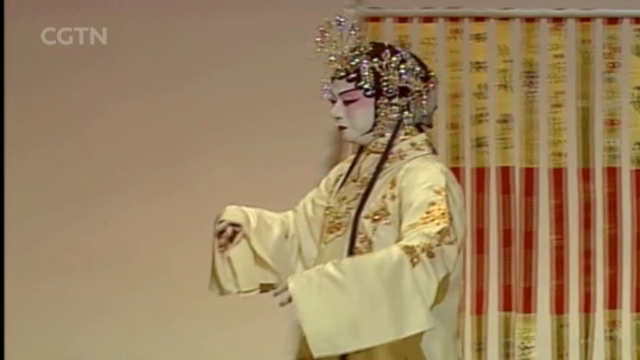
The Shanghai Kunqu Opera Troupe recently staged an experimental piece in central China's Wuhan. It served as a reminder of the shared ties in theater between China and Japan: While drawing on the physical training methods of Japanese drama master Suzuki Tadashi, it also maintains the stage aesthetics of traditional Chinese opera: one table and two chairs.
The experimental Kunqu chair piece was adapted from work of the French playwright Ionesco. The two-hour performance centers around an elderly couple on an isolated island, where they only have a chair and each other to express their solitude and discuss the meaning of life.
Besides the absurdity of Ionesco's original script and the simplicity of Chinese Kunqu Opera, the play also features Japanese theater master Tadashi Suzuki's training method, with intensive breath control and horizontal movement. In 2015, he came to Gubei Water Town at the foot of the Great Wall in Beijing and felt an instant connection.
He said that it is not just a place for sightseeing. Here you can see the Great Wall and the history of China, but it is also a place that can compete with the ancient Greek theater. Since then every April, Suzuki has hosted master classes here. Over one hundred Chinese theater students have participated. Suzuki revealed that it's not just the body movement that he tries to teach the students, but also the ability to understand the theatrical expressions.
TADASHI SUZUKI DIRECTOR, SUZUKI COMPANY OF TOGA "Peking opera master Mei Lanfang is a staple in the theater world. We heard that he would practice his footsteps on ice, and I've seen footage of him practicing, his control over body movement is quite impressive."
During his prolific career, Mei Lanfang went to Japan three times and has a loyal following in Japan's theater scene. Revered Japanese Kabuki artist Tamasaburo Bando also started coming to China to learn traditional opera.
JING FEI DIRECTOR, BEIJING FOLK OPERA ASSOCIATION "In 1986, Bando was quite popular in Japan as a Kabuki artist and he came to Beijing to learn Peking Opera, to learn the play about Yang Guifei, notorious beauty and concubine of the great Tang emperor Xuanzong (reigned 712–756). And together with his team, they adapted the Peking Opera version to Kabuki."
In 2007, the then-57-year-old Tamasaburo Bando joined hands with Suzhou Kunqu Opera House for a rare blend of Peony Pavilion. It combined their countries' quintessential art-forms: Kunqu being the oldest form of Chinese opera -- and the Kabuki theater tradition. Bando, known for his female Kabuki roles, played the melancholic Du Liniang, who dies during her attempts to try to recollect a romantic dream.
TAMASABURO BANDO KABUKI ARTIST "Some words of the Suzhou dialect couldn't be found in the Japanese phonetic system, so it's really a learning process for me, both the lines and the performance. Everything was done to the last detail, all for the big premiere in Kyoto."
The China-Japan co-production of Peony Pavilion later toured in Beijing, Suzhou and Shanghai, and has opened a new chapter in theater exchanges between the two countries. Shen Li, CGTN.