
13:21, 28-Jan-2019
Venezuela Economy: Economic meltdown in oil-rich country
Updated
13:20, 30-Jan-2019
 []
[]
Share







Copied
02:17
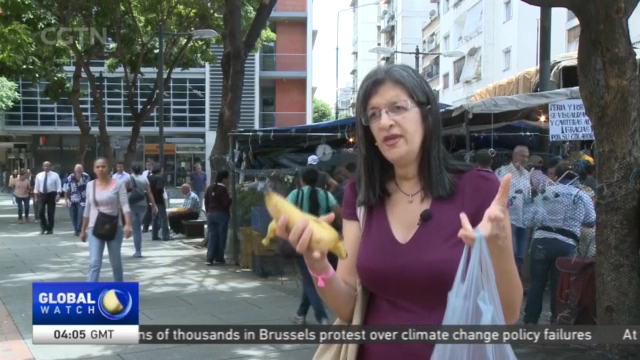
Venezuela has seen an astonishing rate of hyper-inflation, crippling shortages of food and medicine and as a result, a mass exodus. CGTN's Juan Carlos Lamas has the story.
Money --- how to get it and what it will buy --- two big issues for Venezuelans lining up at cash machines to get bills which lose value by the minute. The minimum wage has gone up six times in 2018 alone, yet that salary --- the equivalent of just under nine dollars a month-- won't even buy the few goods available on grocery store shelves.
ANA CEDENO SOCIAL WORKER "Two bananas and seven tomatoes - this is all the food I could buy with my salary for the next month."
Venezuela's National Council of Commerce and Services estimates between 40 and 45 percent of businesses across the country have closed down. And a massive exodus continues. The U.N. estimates three million Venezuelans have fled the country's economic and political chaos since 2015.
For many of those who stay, survival depends on relatives living abroad and the remittances they send.
MARLENE ARELLANO PENSIONER "Everything is so expensive. Buying groceries, medicine, going to the doctor --- it would all be impossible without my family's help and the money they send me, impossible."
For those who rely only on their salaries, picking through garbage is sometimes the only way to find food. The UN estimates about ten percent of Venezuelans suffer from malnutrition.
JUAN CARLOS LAMAS CARACAS "With the world's largest proven oil reserves, Venezuela has for years relied on oil revenue for everything from education to medical care and subsidies for food and gasoline."
President Nicolas Maduro blames Venezuela's economic downturn on the sanctions imposed on Venezuela by other countries what he calls an economic war waged by the US and Europe. Juan Carlos Lamas, CGTN, Caracas.